
Sanctions in a Digital World
UK businesses are sleepwalking into new sanctions risk
For many years, sanctions risk was assessed largely through a business's direct exposure to sanctioned countries, entities and individuals. That was never totally straightforward, but the boundaries were clearer and businesses knew where and what to look at.
These boundaries are, however, becoming increasingly hard to navigate and the landscape is changing faster than many businesses realise. A business operating in the UK can now face sanctions exposure through distributors, intermediaries and complex supply chains, sometimes without ever actually dealing directly with a sanctioned jurisdiction. At the same time, entirely new sanctions regimes are emerging, and the enforcement machinery is sharpening. UK businesses that assume their existing compliance arrangements are adequate may find themselves coming unstuck in ways which have quite material and negative ramifications.
Understanding the different types of sanctions
The term "sanctions" covers several quite distinct legal regimes - each with different triggers, obligations and consequences.
The type most people are familiar with is financial sanctions. These target specific designated individuals, entities and governments. They typically take the form of asset freezes and prohibitions on making funds or economic resources available to listed persons. They apply regardless of the nature of a business's activity: a professional services firm, a bank or a landlord can all find themselves caught if they have any dealing with a designated person.
Trade sanctions operate differently. Rather than targeting named individuals, trade sanctions prohibit the import or export of specified goods, technology, and services to or from particular countries or territories, irrespective of whether the counterparty is itself a designated person. The UK currently maintains trade sanctions against a wide range of jurisdictions, including Russia, Iran, Syria, Myanmar, North Korea, Sudan and the non-government controlled territory of Ukraine.
Export controls are distinct from, but operate alongside, trade sanctions. Unlike trade sanctions (which focus on where goods come from or go to), export controls regulate what is being exported and how it may be used. Export controls most obviously apply to the sensitive goods, software, and technology which have a military or national security purpose as well as dual-purpose items which have both military and non-military applications. AI technology and infrastructure are increasingly being defined by many sovereign nations as sensitive to national security and therefore caught by export controls.
The changing landscape
The breadth of this regulatory package gives rise to complex compliance and regulatory challenges for UK businesses operating across a wide range of sectors and industries. When those businesses are multinational, the risk profile increases exponentially as each country has a sanctions regime which varies in scope and geographical range. Complex international supply-chains can expose a multinational business to sanctions risks in multiple different jurisdictions.
Policymakers are increasingly focused on the routes through which goods and technology may reach those destinations indirectly to identify potential loopholes to close in order to prevent sanctioned goods from reaching restricted markets via third countries. The introduction this year of the UK's Sanctions End-Use Controls (SEUC) is a prime example of this playing out in the UK. Rather than concentrating solely on direct trade with sanctioned countries, this regime is aimed at preventing the circumvention of UK trade sanctions by diverting export through non-sanctioned countries.
The SEUC applies to goods or technology not otherwise subject to strategic export controls (e.g. not already on the UK's military or dual-use lists). It currently covers twelve regimes, including Russia, Belarus, Iran, North Korea, Myanmar, and Syria, with Russia presenting the highest circumvention risk.
The implications of this reach far beyond the businesses that traditionally consider themselves exposed to sanctions risk. Organisations across a wide range of sectors are being asked to think not only about who they sell to, but also about where their products may ultimately end up and how they may be used once they leave their direct control.
The West Bank: A signal of things to come
The increasingly volatile and fragmented geopolitical environment is driving much of this changing landscape. Governments around the world are making greater use of sanctions, trade controls, investment screening and industrial policy to achieve their geopolitical objectives, creating new compliance and regulatory challenges for businesses operating internationally.
The UK Government's recently-announced sanctions package targeting trade connected to illegal Israeli settlements in the West Bank is a prime example of this. Whilst the legal detail of this sanctions package is yet to be published, based on what was announced it is not a conventional sanctions regime targeting a state or a listed terrorist organisation. It is a targeted intervention aimed at specific economic activity - settlement expansion. The package will likely be a hybrid of financial and trade sanction as it is reported it will include import bans on settlement goods and a broader sanctions regime directed at businesses and individuals involved in settlement expansion.
For businesses, the most significant legal issue is likely to be the definition of what constitutes a settlement-linked activity. Unlike many sanctions regimes that focus on a readily identifiable individual or organisation, settlement-related restrictions may depend on geographic origin, beneficial ownership, project location, supply chain involvement or commercial relationships. Determining whether a particular product, service or investment has a sufficient connection with settlement activity may therefore be considerably more complex than traditional sanctions screening.
Businesses importing agricultural products, manufactured goods, food products, technology or construction materials, the question of whether goods in their supply chains originate from, or are in some way connected to, those settlements is fast becoming a live compliance issue, not merely an ethical one. Similarly, financial institutions, private equity investors, insurers and lenders may face increased expectations to understand whether counterparties have direct or indirect exposure to settlement projects.
Regardless of the legitimate geopolitical motivations for this expansion in trade regulation, policy-makers need to balance this against trade openness, which is another important UK policy interest. The international trading system depends on businesses being able to understand the rules so they can trade with a reasonable degree of certainty. As sanctions and export controls become broader, more complex and more fragmented between jurisdictions, that certainty is eroded. The challenge for policymakers is therefore not just a question of how to extend controls in line with broadening national security and other policy interests, but how to ensure that restrictions on trade remain targeted, proportionate and sufficiently clear to preserve legitimate trade.
The end of plausible ignorance
The importance of these developments lies not just in its substance but in what it signals: sanctions are no longer the preserve of defence and energy companies with obvious exposure to conflict zones. They are now a feature of the compliance landscape for mainstream commercial businesses across almost every sector.
Many of the businesses that could be impacted are not large multinational groups with established in-house compliance teams. More often, they are successful mid-sized companies whose primary concern has historically been managing commercial relationships rather than mapping the eventual destination of every product within a global supply chain.
These businesses are not acting irresponsibly. Rather, they are operating in a world where the assumptions that underpinned international trade for many years are being challenged by a more fragmented geopolitical environment. The era of plausible ignorance is rapidly coming to an end. Until very recently, global trade allowed businesses to focus primarily on their direct counterparties while giving comparatively little thought to what happened further down the supply chain. As governments intensify efforts to prevent sanctions circumvention, that approach will become much harder to defend.
Lawyers and the companies they advise need to understand what their sanctions risk is in order to develop and implement an appropriate compliance strategy. However, it is a fast-paced arena and policy is constantly evolving. Businesses do not need to become experts in geopolitics, nor can they be expected to investigate every link in every supply chain. They must, however, recognise that the expectations placed upon them are changing. Those that fail to adapt to this new reality may discover that sanctions risk arises in places they never anticipated.
This publication is intended for general guidance and represents our understanding of the relevant law and practice as at November 2026. Specific advice should be sought for specific cases. For more information see our terms & conditions.


Get in touch




Related services
Get in touch


Insights & events
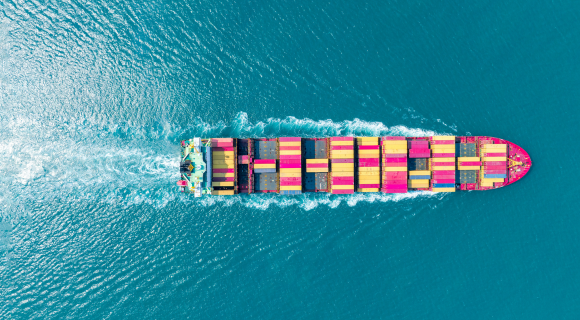
UK businesses are sleepwalking into new sanctions risk

Tightening the net: rising evasion risks and escalating penalties

UK Subsidy Control: Government responds to the CMA's first statutory review

The ESG risks and implications of not knowing your supply chain


UK Government Appoints TLT for Trade Negotiations | TLT
TLT appointed to UK government's post-Brexit trade law panel

