From replacement to repair: what the EU Right to Repair Directive means for businesses
The EU's Right to Repair Directive entered into force across Member States on 31 July 2026, introducing a range of measures designed to encourage repair and extend the lifespan of consumer products. The reforms form part of the EU's broader push towards a more circular economy, with a focus on reducing waste and promoting more sustainable patterns of consumption.
The Directive sits alongside other recent EU sustainability initiatives, including the Ecodesign for Sustainable Products Regulation (ESPR) and the Empowering Consumers for the Green Transition Directive (otherwise known as the EmpCo Directive or Green Transition Directive). Together, these measures are intended to make products more durable and repairable, while providing consumers with better information about the products they buy.
As discussed in our article on the Green Transition Directive, businesses are already preparing for significant new pre-contractual information requirements relating to reparability and the availability of spare parts/repair services, as well as new harmonised notices for legal guarantees and GARAN labels for qualifying commercial guarantees of durability. The Right to Repair Directive builds on those reforms by seeking to make repair a more accessible and attractive option for consumers.
Affected product categories and economic operators
The Directive introduces a number of new rights and obligations across the product lifecycle. The changes primarily affect manufacturers but also have implications for importers (where there is no EU authorised representative), distributors (where there is no EU established importer), sellers and repair service providers.
The key obligations of economic operators are currently limited to products for which ecodesign requirements have already been set (as listed in Annex II of the Directive). These include washing machines, washer-dryers, dishwashers, refrigerators, vacuum cleaners, electronic displays, smartphones, tablets, servers, data storage products and certain goods incorporating batteries used in light means of transport such as e-bikes and e-scooters.
However, businesses whose products are not currently in scope should not assume that position will remain unchanged. Annex II can be updated as new repairability requirements are introduced under the EU's ecodesign framework meaning that, as the ESPR develops, additional product categories may become subject to repair obligations.
Key requirements:
The headline change is a new obligation on manufacturers to repair certain products if the consumer requests the repair, unless genuinely impossible to do so.
The repair must be carried out:
- Free of charge or at a reasonable price; and
- within a reasonable time.
Manufacturers that make spare parts and tools available should also ensure that such parts are made available at reasonable prices.
While the Directive makes clear that pricing should not discourage consumers from seeking repairs, exactly what constitutes a "reasonable" price is likely to be shaped by future guidance and enforcement.
In practice, the duration of the repair obligation will depend on the period for which spare parts must be made available under the relevant product-specific legislation and may vary depending on the product concerned.
The Directive is not limited to creating repair obligations. It also seeks to remove barriers that may discourage repair.
Manufacturers must not use contractual terms, hardware restrictions or software techniques that impede repairs unless those measures are justified by legitimate and objective reasons, including the protection of intellectual property rights.
The rules are also intended to prevent practices that discourage the use of compatible spare parts or suggest that using an independent repairer will automatically affect a consumer's ability to obtain repairs from the manufacturer in future.
This aspect of the regime may be particularly significant for manufacturers of consumer electronics, smart devices and connected products, where software restrictions and repair access controls are common.
The Directive amends the existing EU Sale of Goods regime by stating that where a consumer chooses repair rather than replacement under the two-year legal guarantee framework, the consumer benefits from a one-time extension of 12 months to their legal guarantee period.
The extension applies to the entire product and only arises once, even where multiple repairs are carried out during the legal guarantee period.
Importantly, the extended protection applies only to goods purchased from 31 July 2026 onwards. Businesses selling directly to EU consumers should therefore ensure that their warranty documentation, customer service processes and consumer communications accurately reflect the updated position, including any transitional distinctions between goods sold before and after that date.
Businesses subject to the repair obligation will also face new transparency requirements. Manufacturers must make information about their repair services available to consumers in an easily accessible manner and must publish indicative pricing information for typical repairs on a website.
In addition, repairers may choose to use the European Repair Information Form, a standardised document intended to help consumers compare repair services more easily. Where the form is provided, the repair offer will generally remain valid for at least 30 days.
Businesses offering repair services should consider whether adopting the form could improve transparency and consumer confidence.
Consumers will be able to find repair providers more easily through a new online European Repair Platform, which will be established as an extension of the “Your Europe” portal. This could become a useful visibility tool for repairers and manufacturers offering repair services. The platform is expected to become operational in January 2028.
What does this mean for businesses?
The practical impact of the Directive will vary depending on the products being sold and the role a business plays within the supply chain. However, businesses that manufacture, import, distribute or sell products to EU consumers should consider the following questions:
- Do any of your products currently fall within the scope of EU repairability requirements?
- Could future ESPR measures bring your additional products within scope?
- Are your spare parts, repair networks and logistics arrangements capable of supporting long-term repair obligations?
- Do any software features, contractual terms or warranty communications risk being viewed as discouraging independent repair?
- Are your websites and customer-facing materials ready to provide the repair information required by the Directive?
- Have you accounted for the extended legal guarantee period where consumers choose repair?
Businesses should also keep a close eye on national implementation and enforcement developments. Member States are responsible for introducing penalties for non-compliance, which must be effective, proportionate and dissuasive. The Directive is also being added to the legislation enforceable by the Consumer Protection Co-operation (CPC) Network and by way of collective actions under the Representative Actions Directive, increasing the potential for coordinated cross-border enforcement.
What's next?
The Right to Repair Directive represents another significant step in the EU's broader consumer sustainability agenda. Together with the Green Transition Directive and the ESPR, it sends a clear signal that regulators expect products to last longer, be easier to repair and be supported by clearer consumer information.
For many businesses, compliance will require more than updating consumer-facing information. Product design, spare parts strategies, after-sales support arrangements and customer journeys may all require review. Businesses that begin preparing now will be best placed to navigate both evolving consumer expectations and increasing regulatory scrutiny.
If you would like to discuss how the EU Right to Repair Directive may affect your business, please get in touch with TLT's consumer law team.
This publication is intended for general guidance and represents our understanding of the relevant law and practice as at August 2026. For more information see our terms & conditions.


Get in touch
%20%C3%94%C3%87%C3%B4%20790px%20X%20451px%2072ppi9.jpg)
%20%E2%80%93%20790px%20X%20451px%2072ppi%20LONDON9.jpg)
Related services
Get in touch

Insights & events

HMRC’s proposed new duty to correct and the rise of tax governance: what employers need to know

The EU's empowering consumers for the Green Transition Directive: What your business needs to do before September 2026
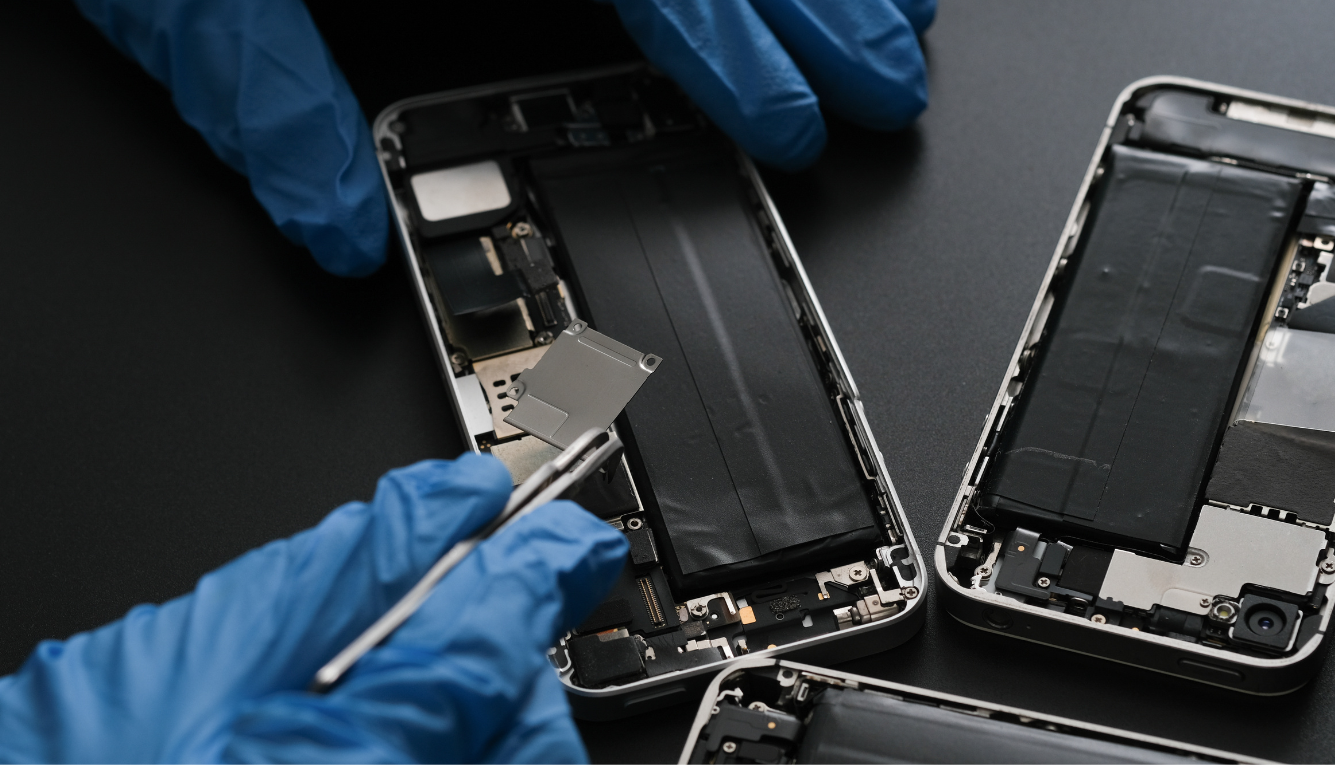
From replacement to repair: what the EU Right to Repair Directive means for businesses

CMA launch consumer protection investigation into Microsoft 365 subscriptions

DMCC Act subscription contracts regime brought forward by the PM: What do businesses need to know?

CMA v Emma Sleep: High Court rejects the CMA's fixed volume requirement for reference pricing

Directors' duties: Lessons from Saxon Woods v Costa

DMCCA penalty #3: CMA fines StubHub over drip pricing

DMCCA penalty #2: CMA fines Marks Electrical for use of automatic opt-ins for additional charges

CMA v Emma Sleep: let the reference pricing battles begin

CMA secures High Court Order against Emma Sleep over misleading sales promotions

Beyond the DMCC: Is the UK bracing for a consumer class action wave?

CMA issues first fine for breach of consumer law under the DMCC Act in drip pricing case

Agentic AI: CMA publishes guidance on consumer law and DMCCA risks


FATF Horizon Scan: AI & Deepfakes — Impacts on AML/CFT/CPF