
EU AI Act Impact Assessment
Understand your obligations under the EU AI Act
The EU AI Act came into force on 1 August 2024, with various requirements of the Act then coming into effect on a staggered basis. Compliance obligations under the Act depend on a number of factors – for example your role in the AI value chain, whether the relevant AI tool is an AI system or a general-purpose AI model or (for AI systems) the relevant perceived risk level.
Given the multiple tiers and numerous requirements under the Act, determining your compliance requirements can be tricky.
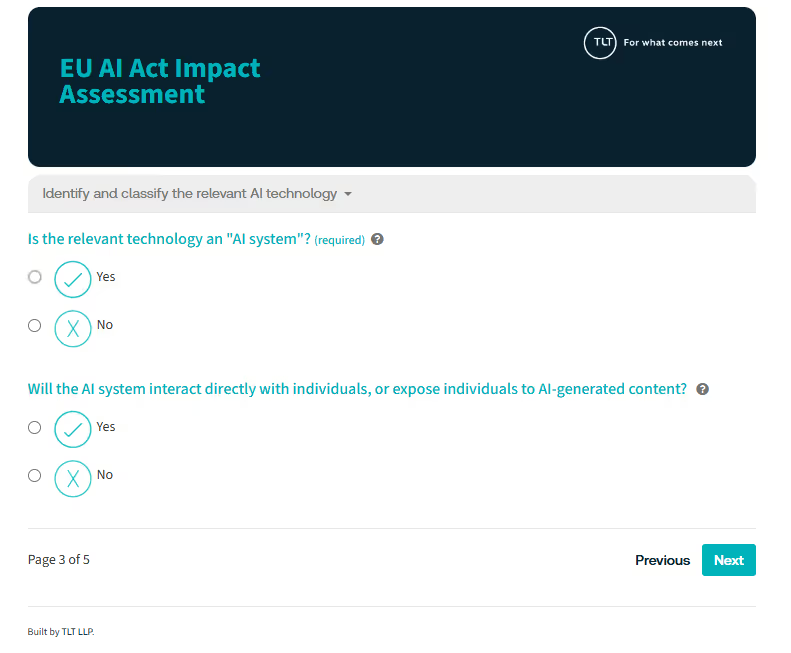
Our EU AI Act Impact Assessment Tool provides you with a preliminary assessment of whether a specific AI tool or use case falls within the scope of the EU AI Act - and, if so, how it is likely to be classified.
How it works
By answering a short series of questions, you’ll receive a clear, concise summary of your potential obligations - an essential first step in building a safe, responsible and legally compliant AI strategy.
What happens next?
After taking the assessment, our AI specialists will study the outcome of your assessment and offer a free consultation. During this, we’ll help you understand your results, identify the compliance risks to focus on, and discuss how we can help implement your compliance solutions.
Learn more about our EU AI Act tool
Partner Tom Sharpe shares his insights into the EU AI Act, and how our assessment can help you on your compliance journey.
After completing the assessment:
Next steps
Client stories


Related insights & events

ICO secures data protection improvements from leading AI developers: What this means

The ICO's agentic AI call for evidence: What you need to know



AI in Motion: Balanced algorithms - addressing bias in AI


AI chatbots and competition law: A look into the Meta WhatsApp antitrust investigations

AI in Motion - How to make sustainable AI a reality

Agentic commerce - The next legal frontier in AI-powered shopping

AI sovereignty and the Intel precedent - How governments are redefining technology control

Making digital regulation work - a framework for digital regulation compliance


Getty Images v Stability AI: Retail Sector Impact | TLT

The fast and the curious: Empowering in-house lawyers to create business value

Energise2030: Data Centres, grid reform and the race for power

ESG in Action: Nature recovery in action: What Belmont Estate can teach business

ESG in Action: Where capital meets conservation with Rebalance Earth

ESG in Action: How to work well in high-pressure environments with the Mindful Business Charter

ESG in Action: Turning clauses into climate action with The Chancery Lane Project

ESG in Action: From nice to necessary: The business case for wellbeing

ESG in Action: Financing change and changing finance with Triodos Bank

The Balancing Act: Unblocking regeneration - public land, risk and delivery

ESG in Action: Working better with Working Families: Flexibility in the workplace

The Balancing Act: Regeneration by the community, for the community

ESG in Action: The future starts at school: Embedding sustainability early with The Green Britain Foundation


The Balancing Act: Regeneration beyond the contract

Energise2030: Developing energy projects for the long-term

The Balancing Act: Partnerships, trust and patient capital

ESG in Action: Inside the Government Legal Department’s social mobility agenda

DMCC Act subscription contract rules: Everything you need to know



SMConnect Webinars: Practical Insight for leaders in SMCR roles


International Fintech Case Study: Brexit Contract Migration | TLT

UK Utilities Case Study: Employment Law and Brexit Planning | TLT

TLT oversees an international acquisition of a specialised South West business

TLT advises on the £90m sale of long-standing client's business



Advising a fast-growth eCommerce consultancy on a share capital sale and reinvestment

