
Podcast
The Balancing Act: Regeneration beyond the contract
If contracts can’t anticipate every risk, what actually holds regeneration partnerships together when things don’t go to plan?
In this episode of The Balancing Act, we're joined by Paul Clark, co‑founder of Stories, to explore the role trust, leadership and intent play in delivering complex regeneration over the long term.
Drawing on Paul’s experience working across public and private sector models, the conversation looks beyond contractual structures to examine how decisions are really made when information is incomplete, conditions shift and projects stretch over decades.
The episode explores some of the sector’s most pressing questions:
- Why trust matters as much as – and sometimes more than – contract in regeneration delivery
- What leadership looks like when decisions must be made without all the information
- How perceived risk is often transferred rather than shared in so‑called “partnerships”
- Whether relational contracting offers a more resilient model for long‑term collaboration
- Why curiosity, not certainty, may be the mindset the sector most needs right now
Listen to the episode below, or subscribe on your usual podcast platform — including Spotify and Apple Podcasts — to make sure you don’t miss an episode.
This episode was recorded with participants in their roles at the time. Roles and affiliations may have since changed.
David Meecham: Welcome to The Balancing Act, the podcast focused on the realities of delivering regeneration in the real world, where ambition, complexity and long-term partnerships collide. In recent episodes, we've been exploring how regeneration actually works in practice, not the theory, but the reality. In our last conversation, Sophie White highlighted something important. When market conditions tighten, regeneration schemes often feel the pressure first and contracts alone aren't enough to carry projects through difficult moments. What really matters is patient capital, early engagement, and above all, trust between the partners.
Today's episode builds on that thinking, but we're shifting the focus to leadership, how it shapes trust, how it influences behaviour, and how it sets the tone for collaboration across complex multi-year regeneration projects.
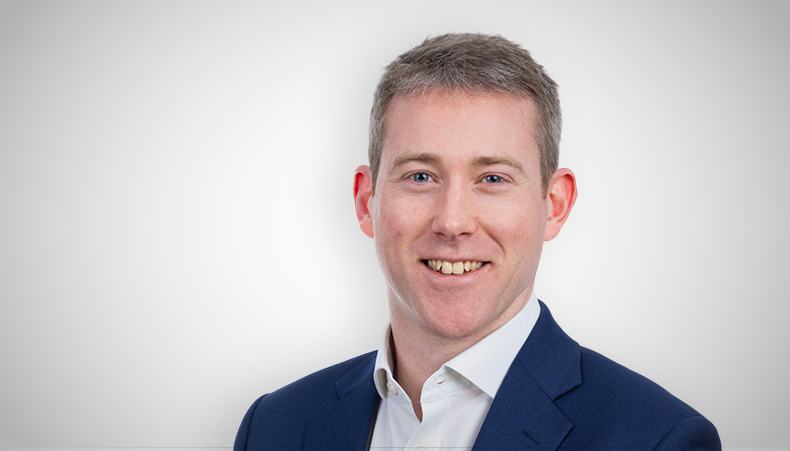
I'm delighted to be joined by Paul Clark, co-founder of Stories, a purpose-led development company with deep experience delivering complex urban regeneration. Paul works across partnership models, land, procurement and development, balancing commercial, social and economic outcomes. He's also a visiting lecturer on the MSc Urban Regeneration course at UCL, which I did not know. Welcome Paul.
Paul Clark: Thank you very much for having me. It's a pleasure.
David: Thanks for joining us. So as I've mentioned, our last conversation was with Sophie White from Aviva Capital Partners. Aviva and Stories are obviously in a joint venture together. We are. Sophie gave us her take on the ACP side of the venture and the relationship, and I wonder whether you could kick start us off today with just talking about your view on your side.
Paul: Yes, happy to, happy to. Our relationship with Aviva goes back a few years now and it's been a very happy one, I would say. I think it's been a really interesting process for us. Whilst we call it a joint venture, whilst it technically is a partnership, it's actually partnership with a small P in that we don't run it through a joint venture as such. There is no jointly owned company that sits above our projects. Each of our projects is delivered individually through a bespoke SPV. And actually, we just basically work through a framework agreement at the top level, which kind of speaks to this point about trust. We are not contractually bound to each other and there is actually no longer any exclusivity. we now work together because we choose to and that's obviously something at the heart of the way in which you and Stories want to go about carrying out business. We very much go looking for the leaders and it's actually funny because when I first started Stories, I asked Chris Brown from Igloo out for a coffee. And I said, come on, Chris, what advice have you got for us? Starting this company and these are our intentions and you're one of the few people out there that's sort of done this sort of thing. And he said, you've got to look for the leaders. And as life's gone on and Stories is now in its eighth year. I think about that a lot. He was absolutely right. You got to go looking for the leaders and it is something that I'm really grateful now and it's something that I carry with me all the time.
David: And trying to put it into practice no doubt.
Paul: Absolutely. Absolutely. And it's interesting as time's gone on I've got a much better sense of what that means and what, what do you, what does one mean when you look for the leaders? It sounds kind of trite and obvious…
David: So just picking up on that point, why do you think leadership is the critical factor in long-term success of regen schemes?
Paul: I think when you talk about leadership in the context of these projects, what you're actually looking for are people who are able to make or bring their institutions along to make a decision in the absence of perfect information. And for me, that is the definition of leadership, making a decision without knowing everything at that moment. Leadership is not sending loads and loads of people off to find out all the facts. Someone's all the facts in front of you making the informed balance decision. That's a decision, but it's not leadership. And so I think you are looking for people who are able to understand that in the context of what we do and are able to carry their institutions, which I think is a very particular aspect and I think that's what Chris was getting at over coffee all those years ago. And that is what we go looking for, are people that understand the complexities and seem to or look like they are able to bring their institutions along.
David: And I suppose having confidence in their convictions about making a particular decision and feeling that it is the right thing for that particular moment.
Paul: I think that is what you're talking about. But I think there's also a sense that in doing what we do, over the length of time that we do it, we operate in uncertain times over an extended period of time. And so you've also got to be a little bit comfortable with uncertainty. It's the right decision in that moment, but you need to know that you're going to be focused and attentive over an extended period of time and you will respond accordingly. That's what trust means, I think as well, in that you're working together for a shared goal and you believe each of you understands and has each of your best in your outcomes, your intended outcomes, at least not too hard. But at least you've got a sense of shared purpose and empathy for the other person's situation.
David: And so presumably that's what you and Sophie bring to the, let's call it arrangement that ACP and Stories currently have in that you are both bringing your organisations to that relationship to achieve intended outcomes that you both want to achieve.
Paul: I think so. I would say, Sophie's amazing - Sophie also has amazing colleagues as well. Who's looking at you, Philippa, Mark, Hugo and Dorothy. But I think brings us into trust because you build trust over time and you show each other that you are listening and that you care about each other's such that you will bring those concerns to the but a lot of the teams that we now choose to work with, there is that real sense of when you coalesce around a purpose, you create the conditions for building trust more quickly than you do if you are, you're just coming together with your own very isolated desires and targets and objectives and just you happen to be working together in your own interests. It's very different when you coalesce around purpose and that's kind of what we're trying to achieve with Stories.
David: Both sides are never going to have the same objectives and drivers, are they?
Paul: I think that's where a lot of partnerships probably fall over when you've got two parties that are pretending that they have shared interests when fundamentally, especially regeneration property partnerships, they're coming at it with very different outcome requirements. Either there's social and economic outcomes that are kind of the preserve of the public sector, know, the private sector has no dog in that fight commercially. Often the private sector is coming at it with a profit motive square, front and centre shareholders, targets, return requirements and the best partnerships are where those objectives are very clearly and maturely described and documented. But I think it's best when you do have a sense of shared purpose. I think Stories early on we committed to becoming a B Corp. We hold ourselves to a high bar and we came together to build our business because we could see that you can do great things through property development, all individually motivated to do more than just make money. I think understanding people's motivations for doing what we do, I think is really important because you could come from so many angles. You could come from a finance angle, private equity angle, debt angles. I don't actually think we talk enough about the individual motivations behind people sat around a table. And I've seen in the past where you might have someone that is expressly there in a business development capacity whose job is to win that gig, but they will immediately move on. So I think motivation behind people and how you're rewarded and remunerated and why you get out of bed takes time.
David: It's a really interesting point, isn't it? To remember that we're just individuals trying to do the best that we can in order to achieve an overall objective. just sort of picking up on that the idea of the relational agreement. Because that is all around the relationships between the individuals who sit within these organisations in order to be able to come to achieve greatness. And you've obviously said in the market about what Stories are doing around relational agreements and it would be interesting to hear a bit more about.
Paul: So with Aviva we've exchanged what we think is certainly the UK's if not the world, the first relational property development agreement where we've taken the principles of a relational contract which is quite new as recognised in English law it came up during the post office case. But the point of relational contract is that we wanted to prioritise the intention of the partnership and we wanted to give the intention and the motivation some weight in the way that we enter into and manage our relationships with our counterparties. And so very often what happens though is everyone sets off with these objectives and these outcomes in mind and yet we end up working to a very contractual framework, which doesn't leave much room for relationships. And there's some more context, there's some amazing research done by Dutch academics, where they did some work where they took a load of Dutch property, public-private partnerships, interviewed all the stakeholders that had been involved and tried to understand if It was the perception of that project good with the outcomes achieved and how did everyone feel about that and then they evaluated all the contracts that sat underneath the partnerships and they tried to work out where there was anything particularly written in agreements that had a bearing on whether a project would have a good or a bad outcome. All right, okay. It does what it is What is written does what is written matter? And the answer was broadly no. the ones that were most successful is when the people felt empowered to solve problems at their level without necessarily having to escalate things and all hiding behind process or contracts. And so that concept of actually building trust, working together to solve problems, it was bearing, it was on my mind. And the relational contract structures enabled us to go and try that.
And I can't talk about who the counterparty is yet, that will be announced soon, but huge credit to Aviva for coming along on that learning journey with us and basically taking the chance on it. And the counterparty that we're dealing with, they've told us that they spent 10 years looking for a partner that they felt would have their interests at heart and were the first and only people that they've ever met that they thought would actually follow through if something unexpected happens, the agreement is we will sit down and we will reevaluate the situation and we won't hide behind the drafting that says, well, the drafting says this, I win, you lose, sorry. That's the way the contract works.
David: And being a lawyer in the day job, is my role, of course, the approach of a lawyer is very much to be looking at risks and doomsday scenarios and what happens when it all goes wrong. So I suppose what happens if it all goes wrong?
Paul: We sit down and we look at how it's gone wrong and we try and work out how we're to resolve that and Work together in the spirit of the contract to try and resolve it if it's something unforeseen that's not already documented for which is kind of where most contracts fail, isn't it? But if something unforeseen happens, we are committed to go away and look at that. And I know all the lawyers that are listening to this are going to cringe when I say it's an agreement to agree. It's not an agreement to agree, it's an agreement to unpack it in the spirit of the original agreement. And it's not us being altruistic or charitable in the market. It's actually, we're also looking after our own interests because we've been on the receiving end of some drafting that was, it was all jolly hockey sticks when we entered into the partnership and the people were all very supportive and motivated. People on their end changed two or three times and suddenly we had the contract held back up at us, post COVID, post all the stuff that happened, post Truss, and the context for everything had completely changed. And yet they still felt bold enough to hold the contract up. Saying “well, we wrote this”. Well, that's not how we set off on this journey. We felt very, very, very hard done by having, we having us lent in through COVID, through all this stuff. And so we thought, no, let's give this a go, right? And it is new, it is innovative. And we've committed to working in public with it. We've committed to share our learning as we go, because we know that people will have these questions, but what's the counter argument to it? Just do what we've always done, same outcomes. There's loads of research, like 98% of people don't trust development companies. Why is that, right? So that's not for nothing.
There are behaviours out there and there are systems and learned behaviours that are conspiring to remove trust from the system. So we're just talking about leadership is about trust and it's about working in places, in communities over the long term through uncertain times. So we're really excited about it. We're really excited that Aviva have backed it as well. And we know that our counterparty is delighted we are professionals, they are lay, they do what they do, it's not property development. And in this system, in this approach, they have a sense that if they've missed something or if there's any information asymmetry, they've got a chance to put their hand up and say, hang on a minute.
David: It's a really interesting approach, it? Well, fascinating because they know that you've got their back in a funny kind of way. Because notwithstanding the fact that you spent time and money and effort in getting an agreement concluded that both sides are going to be working together in order to deliver what that agreement says. As a lawyer, we can spend ages drafting, and sometimes it's just for the sake of drafting. And the best solution, the best outcome for me personally, when people get into these types of relationships is that almost the agreement is put in a drawer and no one ever looks at it again because they just get on and deliver the project and 10 years later they dust it all off and realise that the whole thing's being delivered. That's my absolute aspiration.
Paul: I guess that's the point because that's what everyone wants and that's what people talk about, it? Hopefully it going in the drawer, we'll never look at it again. So what you're talking about is building trust and operating under the conditions of trust, but actually it's when things go wrong, right? It's when things go wrong that those documents come out and actually what we're saying is we're not going to hide behind the contract. We will bring the intentions front and centre. We will come and we will put your requirements on the table alongside our own and we're going to try and resolve this in the interest of the project and it goes out to third party review as well if they want. We're really, like I said, we're just willing to give it a go.
David: And is this the future for Stories? Is this going to be rolled out again?
Paul: Definitely. I actually think it should be. We should all be looking at this and that's why we've committed to try and do it in public and I'll be putting a little bit more about what it means in practice in the contracts. Absolutely, I mean, we've been talking about it a lot. There's a lot of think in part because of the learned behaviours that there's value in the contracts.
David: But that's about trying to overcome cynicism, isn't it? That's a fear of people just retreating to their usual behaviour.
Paul: But I think what would be really interesting is for landowners to say to incoming partners “what’s the prospect of making this relational, this contract?”. It's not a huge amount more effort to do that. But I think it would really reveal people for their intentions and their motivations and their real willingness to engage in a proper partnership because the other thing to bear in mind is a lot of things we call partnerships are not partnerships. They are the transfer of risk under a contract. And under those conditions, this probably doesn't fly, but you know that I've written before about people declare a partnership, but it's an all risks construction and transfer and planning risk or whatever else risks. So that's probably it.
David: With fixed land value, fixed outcomes.
Paul: Absolutely. And approvals and deadlines and lots and lots of sticks to beat people up with. it won't be suitable for everyone. And let's, if it's not a partnership, let's not call it a partnership. Let's call it what it is, right? An all-risks contract. So hopefully we can see a bit of a way to get better at. And I think your previous guests and the importance of partnerships moving forward in these uncertain times are going to be more and more important. I think I've said to I've said before, I've said on our blog, I think actually we're potentially walking into a golden age of partnerships under the local authorities have got since like 2011, they've got a lot of power than they had before. But actually in a rising market, they went off and did lots of their own things and they were doing an internal delivery, but you've had lots of fingers burnt doing on delivery. And we're now in a time where money's not cheap and there's loads and loads of risks. So actually you've got a public sector with more power than it had before 2011. The first time we've had a down market probably really in that first time since - last couple of years – we had 10 years, you had 10 good years. I think we're now in a place where the old ways of doing things are not going to fly. if an agent puts a site on the market for sale, they're going to get like 100 inquiries, they might get 20 or 30 bids in a normal functioning market. If you did a procurement, sometimes you might be lucky to get three. And so there's a disconnect between what's happening and how we think and prepare and set out on that journey of delivering change.
David: I think my fear about it at the moment is that people are latching onto the word, partnership, applying it to the structure of the transaction that they want, which is fixed land value, fixed returns, transfer of planning, development, sales risk. But they slap it with a partnership on the front of it because they think that's going to work because of that point that you were just making around people have had their fingers burned. And so therefore they're really wary about actually truly getting into a partnership or a collaboration or a relational agreement, whatever we want to call it, because of the fear that previous behaviours will be.
Paul: Yeah, and I have sympathy - and a lot of these procuring authorities, if we're going into that direction, they've also got very limited budgets. They've probably put some kind of land value in the forward plan to plug a gap in future and I have a lot of sympathy for that. What I would say is when we've looked at the market, I think you see a lot more failure from having too much rigidity in a given partnership, a big or small P. The fixes conspire against delivery. I think more often than not they fall down because people have got too concerned about tying everything up too soon and not being able to respond and then having to worry about recrafting or redrafting or flexing a fixed land value and having procurement looming over them.
David: And therefore almost not having a shared purpose from the outset, going back to your point right at the very start, because they've tried to be too rigid, they haven't catered for any flexibility in the way in which the scheme will be delivered, and hopefully your relational agreement might actually do something.
Paul: And I think that we've got we've got to try and think about how do we solve these massive problems we have: we're not delivering any homes right now. Lots of infrastructure and lots of our community assets. A lot of what we funny a lot of what we see was built kind of 50 or 60 years ago. And is you've got community assets, you've got social infrastructure which has lacked long-term maintenance, which is different feature of life. We talk a lot about development, but actually a lot of this is won and lost in management. And there's a whole generation of assets that really need refreshing or relooking or replacing that development has an amazing opportunity to support. And yet, I don't see enough innovation in our space. We've decided to have a go.
David: What I’m really intrigued by is how the idea of the relational agreement can translate into a formal procurement process. An aspiration of mine would be to be talking to London boroughs, to be talking to government about how that could be incorporated, adapted into a procurement process in a way that the public sector know that, and the private sector both know that they are going to achieve their intended outcomes in a way that is not going to pose a risk. And I feel like it is an ideal aspiration more than necessarily an achievable one?
Paul: I think it's really hard if the procuring authority has fixed a land value. So, and I'm pretty against a fixed land value, I think if the development partner has got their margins fixed and you're in a true partnership, you should be able to manage that process to deliver an optimal outcome for the landowner in the forms of time. And the absence of the land value should enable, I think, should enable you to introduce the concept of relational contract in and alongside a fixed margin. By telling the market you're going to fix your margin, we're going to work on this together but if there are problems in the future, we will unpack it together. But you're probably we're probably not going to touch your margin. But we will unpack this in terms of the outcomes that we're all looking for. And I think that's where it gets really tricky for procuring authorities, because they have to stick to what they go looking for. And I've said before, and you've just mentioned it, I’m going to fix land values. I want a minimum affordable housing. If it's a true partnership, you shouldn't have to pin those things down. They should be the product of an effective working relationship. And I look back at what was achieved with Brent Cross and the way Barnett went and procured their partner. That was leadership. That was brave. This is exactly what they said: we will work together. You're going to fix your land values and we'll work together. And when you look at housing delivery in London at the moment, Barnet sings out, it's right up there, they're still motoring, they've navigated all of this change since, what was it, 2011. Amazing. Credit to the teams that are still going with that. So I think it can be done. You do need to be approaching it like a partnership and not risk transfer. So it's a long way around of saying if you approach it correctly, the contract should be able to go in the draw.
I think it's a conversation we can keep having. Our first counterparty is a charity, so we didn't have to quite go through with that. So I think, I'll be delighted if there's a local authority who says, you know what, I really like the sound of that, and can we try and have a look at what that looks like? We'd be delighted.
David: That would be such an achievement, I think, for the local authority, actually. But we're not going to solve local government right here, right now, because a lot of it goes back to constitution of the local authority and what they will have got approval to and and and. I think probably before we wrap up, and this is going to sound like a bit of a gear change. So behind every approach to Regen, there's always a personal story. What led you into working in regeneration and in this sector and what's shaped your journey?
Paul: So I started out life as a town planner. I saw a poster at poster says, “have you ever considered a career in town planning?” and I looked at it, I was like, well, no, I haven't. And I thought, know what, that looks really interesting. I didn't have a plan for it. just, ironically, I didn't have a plan, but I followed my interest. I just did really enjoy it. Started working as a planning, in town planning, and then met developers through there. Didn't know any before. And I was like, actually, that's what they're doing is really interesting. So having done a couple of years in planning, moved into surveying, retrained, went back to university for a year, retrained. Ended up moving into development proper. And actually my journey to regeneration started in the recession, the great financial crash, 08-09. And the first thing that happened to me, I got seconded from, was working at CBR at the time, got seconded onto Olympics to review the legacy strategy for 2012. So in 2009, all the assumptions for 2012 went out the window. So went in there and that was fascinating. Really, really interesting.
And I actually got a tap on the shoulder from Mel Barrett, who was at the time head of planning and regeneration and whatever, Oxford City Council. And he said, look, I've got an opportunity here to run an urban regeneration project. I can guarantee you two years’ work on a Barton Urban Extension. And in 2009, anyone saying I can guarantee you two years’ work, it was too good to miss. I was Oxford City Council's major development projects manager, and that's what got me into regeneration proper. So working on that side and really trying to bring a meaningful project and meaningful urban extension forward in a really interesting place. I've navigated that kind of the line between public, private, third sector, principal developer, consultant ever since. Everything I've done has been dipping in and out. I’ve since done consulting, then spent nine months seconded into central government off the back of the Brent Cross deal that we did up in Barnet. I feel like I've got a strong sense of empathy for the pressures that people are feeling in any given scenario or place.
David: And you can see from that, from your professional history, why it is that you are so involved in and so enthusiastic about ensuring that people are coming together in order to achieve their outcomes, because you've seen it from so many different stakeholders having been in those stakeholders yourself.
Paul: Yeah, absolutely.
David: If there's one mindset shift that the sector needs to make to deliver better places, what would it be?
Paul: It's something we still think about a lot at Stories and we were talking before about Stories recent growth and ongoing growth and what we look for in people actually. We've settled on curiosity. Challenging the status quo. Why are things done the way they are? Not accepting anything for that's the way it's always been done. And asking why a lot. We really go looking for people that are curious and are questioning of everything.
David: I'm going to ask this question because I've asked everybody, each guest, this question so far. Who inspires you most in this space or who would you describe as your champion for better regeneration?
Paul: That's a really hard one, especially because I know that Sophie went and nabbed Karen Mercer and Cath Shaw, who would have been my absolute go-to. I still speak to and have a lot of time for Stephen McDonald, who has retired. His last job was at Barnet with Cath and Karen. And I think there's a point in someone's career when, you've got to a place where you're not entirely sure that you know anything anymore. And you have that sense of you can ask really silly questions because it's you're not worried about your ego or your career prospects. I think there's a series of people out there that are in those moments of their careers. And Stephen was there for me at one time where, and he once said to me, “I'm not entirely sure what my job is anymore”. He was Head of Regeneration. And actually we talked about it. I was like, you're the glue that binds. You're the person through which people channel their trust because everyone knows they can pick up the phone to you and you will listen and you will take that away and give it a genuine airing and also that you're going to carry your institution. So I think those people that are the leaders. And I don't really want to embarrass too many of the other live leaders out there. But I think it's one of those points where when you stop asking what kind of idiot did that and you start asking what conditions were they working under that that was considered an acceptable outcome. It's those people that really inspire me.
David: Love it. Yeah. There are no silly questions. I say that a lot. And now I'm going to take that as I can ask that. I can ask that all the time now. Thank you so much for coming along, Paul. Great chat today. Brilliant. Thanks for listening to The Balancing Act. If you enjoyed this episode, please subscribe on your usual podcast platform.
To hear more conversations about shaping next gen cities, visit tlt.com or follow us on LinkedIn.
Related services

Get in touch
%20%C3%94%C3%87%C3%B4%20790px%20X%20451px%2072ppi%20copy12.jpg)
%20%C3%94%C3%87%C3%B4%20790px%20X%20451px%2072ppi2.jpg)



%20%C3%94%C3%87%C3%B4%20790px%20X%20451px%2072ppi%20MANCHESTER5.jpg)




Get in touch

Related insights

The Electronic Communications Code: Building a resilient telecoms portfolio

The PRS Database Regulations: what lenders, receivers and insolvency practitioners need to know before taking control of a tenanted property

The Electronic Communications Code: Key considerations for public bodies
Developing land with telecoms apparatus: How the Electronic Communications Code can impact project delivery
The Electronic Communications Code: Key landowner rights and operator risks
The Electronic Communications Code: What you need to know

Is your organisation's land portfolio ready for the new contractual controls register?

Martyn's Law notification guidance: the practical points to know and prepare for now


Government announces once-in-a-generation overhaul of the home buying and selling system

The EPC rollback: relief or risk for commercial landlords?

The Balancing Act: Three takeaways on regeneration beyond the contract


No more one-way rents: the upwards-only rent review ban is now on the statute book

The Balancing Act: Three takeaways on partnerships, capital and trust

Renting across jurisdictions? Make sure you understand the differences

The land use challenge: creating a system to deliver net zero

EV Charging Infrastructure in Northern Ireland: Outlook | TLT

Driving Demand: EVCI Funding and Development Opportunities | TLT


Evolving Cities: How are social values influencing our workplaces?



Rebalancing act: the impact of retail transformation on people and stores


Plugging into electric vehicle opportunities | Whitepaper



TLT grows real estate offering with appointment of commercial expert

TLT adds 29 lawyers creating one of the largest practices of its kind in the UK

TLT supports on sale of Belfast City Centre ETAP Hotel

TLT grows housing and regeneration team with appointment of legal director

TLT advises The Guinness Partnership on £400 million real estate joint venture

TLT and TCLP launch contract tool to combat climate change in the built environment

TLT Expands National Real Estate Practice | TLT

TLT Expands Real Estate Offering with Public Sector Expert | TLT
Charting a sustainable course for the property market
TLT appointed to Network Homes legal services framework

TLT Partner Appointed Chair of North West Fraud Forum | TLT

TLT Advises on Bristol Waste Management Acquisition | TLT

TLT Shortlisted for Firm of the Year at Scottish Legal Awards | TLT

TLT Wins Law Firm of the Year at Manchester Legal Awards | TLT

Energise2030: Data Centres, grid reform and the race for power

The Balancing Act: Unblocking regeneration - public land, risk and delivery

The Balancing Act: Regeneration by the community, for the community


The Balancing Act: Regeneration beyond the contract

The Balancing Act: Partnerships, trust and patient capital


The Balancing Act: Setting the scene for regeneration



BNG - TLT and Belmont Estate talk nature positivity
What does the next generation of our cities look like?
Issues and trends driving the shape of our cities: expert view from Savills & TLT

Office, Retail, and City Centres - What does the future hold?

Aldersgate interview with TLT: clean energy generation

The social housing whitepaper - what changes are on the horizon?
Break notices: ensuring that the break is validly exercised


