
Podcast
The Balancing Act: From ambition to delivery
How do you keep regeneration moving when viability is tight, expectations are rising and risk aversion dominates decision making?
In Episode 2 of The Balancing Act, we're joined by Caroline Harper, Managing Director at Be First – Barking and Dagenham Council’s regeneration arm – and Chair of Future of London, for a discussion about what it really takes to deliver regeneration at scale.
With thousands of homes planned on council owned land, the episode offers an insight into how public sector regeneration vehicles are adapting to a far tougher economic climate.
The conversation explores some of the sector’s most pressing challenges:
- How risk is perceived, shared and sometimes avoided in regeneration partnerships
- Whether current viability tests and Section 123 best consideration reflect long term placebased value term place based value
- The growing complexity of delivering regeneration that meets economic, social and community expectations
- Why scale matters – and how clear pipelines can unlock private sector confidence
Listen to the episode below, or subscribe on your chosen podcast platform, including Spotify and Apple Podcasts, to make sure you don’t miss an episode.
This episode was recorded with participants in their roles at the time. Roles and affiliations may have since changed.
David Meecham: Hello and welcome to The Balancing Act, the podcast from TLT that helps you navigate the realities of large-scale regeneration. Whether you're from the public or the private sectors, each episode gives you practical insights and fresh perspectives from people who are driving change so you can learn what works, what doesn't, and what's next. I'm David Meecham, a partner at TLT specialising in real estate. Across this series, we'll share practical insights and fresh thinking for public sector leaders, developers, funders, and advisors navigating complex regeneration projects.
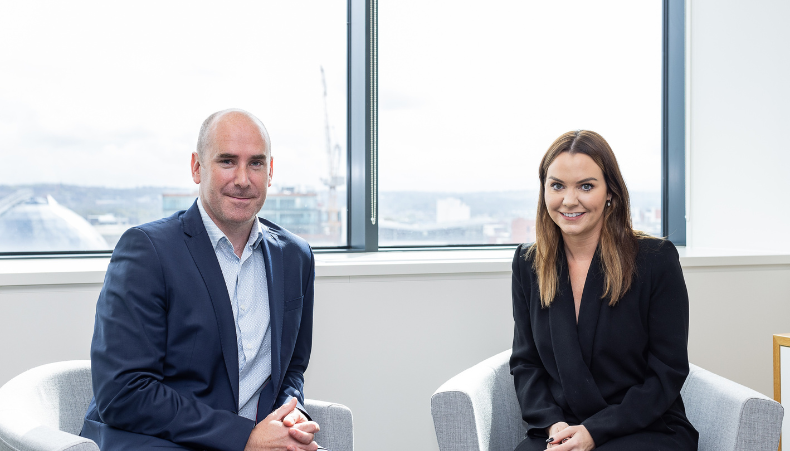
In this episode of the Balancing Act, I'm delighted to be joined by Caroline Harper, currently interim managing director at Be First, Barking and Dagenham Council's regeneration arm, as well as being chair of Future of London. Caroline is an award-winning leader with deep expertise in planning and urban development and is responsible for leading BeFirst through a pivotal phase focused on partnerships and sustaining regeneration momentum in the borough. Caroline, welcome to the Balancing Act.
Caroline Harper: Thanks very much for having me.
David: So for the benefit of those listening to this podcast, tell us a little bit about yourself.
Caroline: Sure. So, I mean, you've given me a really nice intro there. So I'm interim MD for Be First and I've been in this role since February. And like you say, I was put in this role with a remit, very specific remit, but to shift the business model for Be First. So we've enjoyed a very successful phase one based on direct delivery. And now we are all about bringing in inward investment and partnerships. And Be First wears a lot of hats. - so we are developer, we're a consultancy, and we also do statutory services for the council. So primarily planning, but also building control, land charges, street naming and numbering. So we have a big remit and we have big ambitions. And my job is to make sure that we deliver on those.
David: Wow. That's quite a, that's quite a roll. That's quite a large, large spread. So before this episode, I explained to you that the podcast started its life as a conversation with a colleague of yours at Future of London, Nicola Mathers, CEO, where we were talking through the high level issues around the delivery or rather the successful delivery of regeneration by the public private sectors seems to be a topic on a lot of people's lips at the moment. We wanted to dive into some of the topics that we touched on in a bit more detail. Anything that's particularly on your radar, Caroline?
Caroline: Yeah, I mean, that's a big, it's a big question. I think for me, the things that I think are the priority at the moment, I think it is ways of working. But with that is the approach to it and the leadership within it. And I think as a sector at the moment, there's an awful lot going on. There's an awful lot of conversation. I think we need to move beyond the conversation a bit more at scale the actual delivery. And that requires perhaps a bit more on the doing things differently, trying out things differently and taking a risk. we're working at the moment in a world that is hugely risk adverse. And there's all sorts of sound reasons for that, but we won't deliver anything if we don't take risks and don't push at doing things slightly differently, given where we are in terms of the economic climate and things like that.
David: Yeah. I mean, just picking up on what you've just said, one of the things that strikes me is that the journey through regeneration has shifted pretty drastically over the course of the last few decades. And one of the things that strikes me is that you mentioned that point around risk, is there needs to be an acknowledgement of both parties coming to the table, whether that be public sector or private sector, and accepting some element of risk. And I appreciate that that's probably a difficult thing for some people to do. I don't know whether based on Barking and Dagenham, appreciating that you're MD of B first, whether there are discussions within the council about acknowledgement of risk.
Caroline: Yeah, I think I'm fortunate in some ways in terms of where I work because I'd say Barking and Dagenham Council through various iterations has been pretty bold and ambitious in what it wants to achieve. So, you when I first joined me first, which was as chief planning director, it was very much we wanted to live 50,000 homes, we want 20,000 jobs, go, go, go, we will fund that through access to cheap debt effectively. Pro-growth and ambition hasn't gone away. If anything, it's become more ambitious, but we're in a much tighter economy I guess to work in and the expectations going back to your point about how regenerations change the expectations of what regeneration delivers I think has got much much bigger so you have to tick more and more boxes and deliver more and more now there's questions about how reasonable that is but it does mean that to get something over the line is increasingly complicated.
David: So does that mean that you're talking or thinking about regeneration, I know you've said bigger scale, but actually does that mean regenerate smaller scale because it might be easier to get the smaller scale region projects over the line?
Caroline: I don't know. I don't know if that's enough. Because I I think if you're a senior person, actually you've got responsibility to look at all scales. So how does the small fit into that bigger picture? And I think we like to put things in easy to understand buckets and that doesn't necessarily translate into the right outcomes. Picking up on some of the points that you've said already, if we look at risk, for example, I think at the moment there is an obsession with, it's not just town planning, but planning everything to the nth degree. And that creates busyness, it creates some sort of momentum, it creates kind of, right, we've got a plan, we're going to work to this. But actually what we need to do is kind of do that alongside some, and quicker wins is the wrong term, but actually we can't just shift everything into the medium and the long term as important as that is. We've got to do stuff in the short term too. And I guess my concern is if we just focus on the smaller scale, we are not really tackling really big issues like housing affordability, housing supply, et cetera, et cetera. So I don't think we can afford just to focus on one thing. We kind of need it all. And then we need to work together on that and take risks with it. And there's one thing actually I just wanted to pick up on that risk thing, because going back to my point about how we like buckets of understanding, and also I guess kind of buckets of understanding of what individual stakeholders or actors, their role in it is - that's changing and has changed in my view. You always get, the public sector, if you go down a traditional route, they act for communities they've got more of a heart perhaps than the private sector. I think that's nonsense because particularly where councils are in this current climate, they've got to have a commercial head on their shoulders. They've got to make their money work so we need to get out of this “public is this, public private is that” actually – it might have different drivers because you're answering to slightly different bosses effectively but actually you've still got to be commercial you've still got to do more in terms of having a heart and having a legacy and so on so we've got to kind of move away in this kind of ways of working from neat boxes because regeneration isn't neat. I'd question whether it's ever been neat, but it's complicated so let's embrace that and carve a way through it.
David: So appreciating that this is probably going to sound a little like a gear change Caroline, but one of the things that clearly is the big elephant in the room is the point around funding and viability. And we rely on those people around the table to work through viability in particular in order to secure funding. One of the conversations that I've been having recently is the use of section 123 or rather the analysis of it for the purposes of determining whether a public sector landowner is achieving best consideration because that sometimes can get in the way of schemes and is there a role for the local authority to take a wider interpretation of Section 123 or indeed for central government to change the legislation so that they don't have to take the highest number that's on the table? They can look at longer term economic benefits for the delivery of the scheme.
Nicola: Yeah, I think there's a few things. So if I think about Barking and Dagenham, the growth potential of the borough is a matter of record. So we look at the GLA's growth plan, for example, it is identified as one of the growth areas for the next decade for London because of the amount of land that is available. That is a no brainer. We've got four of the 15 industrial sites that are identified in that plan are in the borough. The largest strategic housing area is in the borough. So that's a matter of record. But at the same time, viability in the borough is thin. It's the most affordable borough that is typically and weirdly presented as a negative when actually that is particularly in the current climate a huge positive for all sorts of reasons. The forecasts for investment are outstripped in London, et cetera. So that's obviously very attractive to potential partners. It is attracted to first time buyers, developers that are in the borough already, they're saying, we're still selling places. It's slower than we would like and historically, but compared to other places, it's still happening. But that viability is really thin. And we see that come through in things like our SIL charging rates I would love to change them. Can't really do that because it has to go through examination and we can't really increase it. And yet we are a growth area and we need to provide the infrastructure that goes with that. So how do we do that with the volume of housing but also commercial economic activity that will come alongside it just because we've got so much land? And I think that needs to be thought about differently. So your point about looking, I guess it's more holistically and across time periods rather than the immediate as to what, let's take housing, what does housing give? I think that's very sensible. To get that to land, it's got to be driven really high up, hasn't it? Because it's got to be a universal thing. And we know bits of it. If I think about things like TA, so we've all seen the numbers, horrific in terms of what London councils are spending on TA. Barking and Dagenham, their TA has gone down 45 % over the last seven years. And that is at a time when the number of households at risk of homelessness has doubled. Really super impressive. Be First has played a role in that because we've delivered homes on council land, using council borrowed debt. And by the end of next year, we'll have delivered around 3,600 homes. But it's not just that. So I find it for things like TA, it's like, let's put money into it. Let's put money in it, which isn't happening.
Anyway, but even if it is that's not enough because there's more than that because there's something about how barking and Dagenham and says the council is not Be First has dealt with that as a service. They've recently got - I think they're one of three Councils nationally who's got outstanding for their social care that kind of thing has got to factor into it so there's something more than just Money and viability. There's something about approach which I think that longer term side of things actually speaks to and we've got real concrete examples of where that happens but the NHS has published stuff on you give people homes the impacts on their health outcomes, TA just mentioned so we've got bits and pieces of it but unless that's coordinated and it's got to be sort of I think top down to get that to land I don't see how that really gets enough momentum what's quite difficult if you're at a different scale to get that to happen.
David: Yeah, of course that goes into one of the other challenges around delivery of regeneration schemes, which is political cycles. Because of course, if you're saying it needs to come from the top down, you need to know that whatever it is that you're going to be doing or whatever it is that is going to be coming down from the top is actually going to be robust enough in order to be able to survive a political cycle. I think that is a difficult thing, particularly if you look back over the history of regen and the way in which politics has moved through all of that. Just latching onto something else that you said about the affordability of Barking and Dagenham being the best, one of the best. Another topic of conversation that I've been having is, is there a place for targeted financial products to support either first time buyers or key workers or individuals acquiring, let's say, a flat in a flat in scheme as opposed to it being a house? You know, is there scope for somebody to be doing something else to help people at the bottom of the chain to get on the ladder which may well then improve viability which therefore feeds into the point around funding which therefore feeds into the point around being actually able to deliver these schemes get loads of people in create jobs introduce infrastructure and...
Caroline: I mean yes I think the short answer there is a place for that I think there's I think there's lots of solutions out there. It's the getting to the delivery point that I, you know, we both go to panels and round tables and you've got good people around the room and you have the same conversation over again. And I'm just like, come on, let's get on with this. Let's pick something. Let's go with that. Let's match it up with the circumstances of a particular place and let's go with it. Let's stop planning to the nth degree. Cause that makes people feel more comfortable. Go for it is kind of where I'm coming from.
David: Sounds great, sounds absolutely great as an aspiration. So following on from that discussion, Caroline, talking about viability and funding, you mentioned as part of your role as interim MD of Be First that you are looking at securing inward investment into the borough. And it'd be really interesting to hear a bit more about that and how that looks, what it looks like and who are the players actually who are coming into the borough?
Caroline: Yeah, so at the moment we are looking to get our barking investment partnership over the line. This is live in that we had our expressions of interest close last Friday and Andrew, our development director and I, we're working with colleagues as our property advisors. We are reviewing at pace because we want to notify the shortlisted potential partners this coming Friday.
David: Wow. Exclusive. Thank you Caroline.
Caroline: You're welcome. Because we've got a hard stop, so we need to take our recommended partner to Cabinet in March. Because, you know, I talk a good game about delivery and we've got a good track record, but obviously you're only measured on your current success. And it's just imperative for us for all sorts of reasons that we show our pivoting over the last, well, since February. Two partnerships is doable and we are getting on with it. So The Barking Investment Partnership is, so we've specifically gone for an investment partnership because it means we can go under the Localism Act as opposed to the Procurement Act. So that allows us to move at pace. And we've got three potential sites within that all in Barking Town Centre, which I think you'd expect because of the connectivity. And there's lots that's happened in Barking Town Centre as well. So it makes sense. About 1500 homes, two of those sites have got planning permission, et cetera. So really exciting. And we've done a lot of soft market testing, as you would expect in the run up with different types of potential partners. So you've got the developer contractors, you've got the institutional finance, you've got the fund managers in between who kind of manage that. And we've got a plethora of, have really good response, which is fantastic. And we'll see, you know, what comes out of that in terms of a partner. But behind that, we've been doing a lot of work on what is our target pipeline. Because one of our, mean, in some respects, it's quite a nice issue to have, but there is so much potential. And, I talk about, oh, that's Castle Green, and then there's Dagenham Dock, and then there's Barking Riverside, and da-da-da-da-da-da-da. But I'm in it. And how we communicate that more broadly as a kind of cohesive place is something that we're working on. So at the sort of smaller scale, it's what exactly is our pipeline that we feed through from that. And we've got a target pipeline for the next five years of around 4,000 homes. We've got a longer list that we're still assessing behind that, which is another kind of circa 4 000 homes and this is on council-owned land alone so significant and you know we've done a lot of work around the substance behind it because I’m going back to the conversation at the start when you get your kind of partners around a table you need to have that substance it's not enough to be like this is what we need or this is what we want you've got to be like and this is what we offer and are asking you in return so there's all that that's going on and you know 2026 is going to be an exciting time because we'll be feeding those sites through behind these three as to what else can we deliver on that. sounds incredible.
David: Yeah. Sounds like a very exciting time. Definitely. For Be First and for Barking and Dagenham. In terms of the pipeline, you talk about the 4,000 and then circa another 4,000. Do you think, I'd be interested to get your take on whether you think that's an integral part of the reason why you've got some strong bidders in the room and hopefully partners, it goes to that point around scale, doesn't it? And economies of scale and that kind of...
Caroline: Yeah, I think so. I mean, I think, you know, we've touched on the scale of opportunity that's in the borough and us kind of working through what does that pipeline actually look like, I think kind of is that next level of detail behind it. So it's not just, yeah, there's loads of opportunity. It means that we've got something that we can say that there is loads of opportunity, but we think these are the next prime sites to come forward and this is what we've done on those sites, et cetera. So it just moves things along and means that we're an active player as opposed to passively waiting or even really passively targeting. It's like, no, this is what we bring to the table. You bring your bits.
David: Yeah. I mean, that bit is just so key, isn't it? To give the market absolute clarity on what it is that you are wanting and what it is that you bring and how you can both work together in order to be able to deliver what you're hoping to achieve, which really does go back quite nicely to the start of the conversation where we were talking about ways of working and people coming round the table and, you know, having similar objectives, but maybe not the same objectives, but ultimately the outcome is what you're what you're trying to achieve. in terms of next steps. I'm really interested to follow up Nicola's call to action, if you like, to understand the champions of regeneration. That's how she phrased it to me. She said, “David, you should be trying to find the champions of regeneration” and hence asking you to join us today. Do you have any ideas as to who the champions of regeneration might be and who we should talk to, to take part in this conversation?
Caroline: Yes. I'm giving this some thought and I haven't got specific names here, but I do think this is one of the sort of challenges, I guess, for people in senior roles at the moment is if you look at policy, if we talk about, let's talk about homes, it's all about numbers. And yes, you might have to do high quality, whatever that means, climate, all the rest of it that comes with it. But it's, it's essentially a numbers game, which I think has lost some of the impact and I think perhaps is possibly why we all talk about housing crisis but it's not really a crisis because we've become desensitized what that means and so I think there is something about you know we all talk about consultation but consultation tends to be about the immediate local community and yet we're in London and I think there should be something about who is going into particularly in growth areas it's not just the existing population but it's people who can't, who London needs and are integral to its function, but can't afford to live in parts of other parts of London. So they move in and we need to do something about ⁓ bringing those people into the conversation. So we're looking at what kind of legacy are we creating through homes for now and in the future. And it's difficult to involve truly young people in terms of I'm thinking, you know, primary school age, that's quite difficult to involve in a meaningful way. But there is something I think about intergenerational involvement, which gets lost. So I completely agree with Nicola on the champions of regeneration. I think within the sector, we can probably all between us name 10 people quite easily. I think in terms of how do we add value to what we do. I think there is something about intergenerational scale of consultation and looking at London strategically and that will perhaps help sensitise us again to what a home actually means for the people living there.
David: Thank you very much Caroline and thank you for your time today and taking part in this podcast. Really appreciate it. It's great to get your views. Thanks for listening to The Balancing Act. If you enjoyed this episode, please subscribe on your usual podcast platform. To hear more conversations about shaping next gen cities, visit tlt.com or follow us on LinkedIn.
Related services

Get in touch
%20%C3%94%C3%87%C3%B4%20790px%20X%20451px%2072ppi%20copy12.jpg)
%20%C3%94%C3%87%C3%B4%20790px%20X%20451px%2072ppi2.jpg)





%20%C3%94%C3%87%C3%B4%20790px%20X%20451px%2072ppi%20MANCHESTER5.jpg)




Get in touch

Related insights

The Electronic Communications Code in court: Five lessons operators should be acting on now

The Electronic Communications Code: Building a resilient telecoms portfolio

The PRS Database Regulations: what lenders, receivers and insolvency practitioners need to know before taking control of a tenanted property

The Electronic Communications Code: Key considerations for public bodies

Developing land with telecoms apparatus: How the Electronic Communications Code can impact project delivery
The Electronic Communications Code: Key landowner rights and operator risks
The Electronic Communications Code: What you need to know

Is your organisation's land portfolio ready for the new contractual controls register?

Martyn's Law notification guidance: the practical points to know and prepare for now


Government announces once-in-a-generation overhaul of the home buying and selling system

The EPC rollback: relief or risk for commercial landlords?

The Balancing Act: Three takeaways on regeneration beyond the contract


No more one-way rents: the upwards-only rent review ban is now on the statute book

The Balancing Act: Three takeaways on partnerships, capital and trust

The land use challenge: creating a system to deliver net zero

EV Charging Infrastructure in Northern Ireland: Outlook | TLT

Driving Demand: EVCI Funding and Development Opportunities | TLT


Evolving Cities: How are social values influencing our workplaces?



Rebalancing act: the impact of retail transformation on people and stores


Plugging into electric vehicle opportunities | Whitepaper



TLT grows real estate offering with appointment of commercial expert

TLT adds 29 lawyers creating one of the largest practices of its kind in the UK

TLT supports on sale of Belfast City Centre ETAP Hotel

TLT grows housing and regeneration team with appointment of legal director

TLT advises The Guinness Partnership on £400 million real estate joint venture

TLT and TCLP launch contract tool to combat climate change in the built environment

TLT Expands National Real Estate Practice | TLT

TLT Expands Real Estate Offering with Public Sector Expert | TLT
Charting a sustainable course for the property market
TLT appointed to Network Homes legal services framework

TLT Partner Appointed Chair of North West Fraud Forum | TLT

TLT Advises on Bristol Waste Management Acquisition | TLT

TLT Shortlisted for Firm of the Year at Scottish Legal Awards | TLT

TLT Wins Law Firm of the Year at Manchester Legal Awards | TLT

Energise2030: Data Centres, grid reform and the race for power

The Balancing Act: Unblocking regeneration - public land, risk and delivery

The Balancing Act: Regeneration by the community, for the community


The Balancing Act: Regeneration beyond the contract

The Balancing Act: Partnerships, trust and patient capital


The Balancing Act: Setting the scene for regeneration



BNG - TLT and Belmont Estate talk nature positivity
What does the next generation of our cities look like?
Issues and trends driving the shape of our cities: expert view from Savills & TLT

Office, Retail, and City Centres - What does the future hold?

Aldersgate interview with TLT: clean energy generation

The social housing whitepaper - what changes are on the horizon?
Break notices: ensuring that the break is validly exercised


