
ESG in Action: The future starts at school: Embedding sustainability early with The Green Britain Foundation
In this episode of ESG in Action, Alex Holsgrove Jones is joined by Helen Taylor, Trustee of the Green Britain Foundation, to explore how nature‑led solutions, education and youth empowerment are helping to drive meaningful environmental and social change across the UK.
The Green Britain Foundation supports a range of initiatives, from sustainable education and sport to land and marine conversation and animal protection. At TLT, we’ve worked with the Green Britain Foundation for several years, including supporting with their primary school education programme, the Ministry of Eco Education.
From reintroducing beavers to restore landscapes and reduce flood risk, to embedding sustainability into everyday learning and giving young people the confidence and skills to create change in their communities, Helen shares tangible examples of ESG moving from strategy into action.
Listen to their episode on Spotify or Apple Podcasts, and catch up with the rest of the series.
Alex Holsgrove Jones (00:00)
I mean, the beavers are you know, essentially they're staff.
Helen Taylor (00:05)
Yeah, they are, they're part of our team. We actually have the most incredible wood expert, if you like, and he's in there, coppicing - he knows so much about woodlands, and he was joking the other day that you would be out of a job. We were talking to Chris Packham about it. They both felt like they might be out of a job because actually the beavers are starting to do the work of humans.
Alex Holsgrove Jones (00:27)
Welcome to ESG in Action. I'm Alex Holsgrove Jones, Knowledge Partner and ESG Lead at TLT, and today I'm joined by Helen Taylor, Trustee of the Green Britain Foundation. They support a range of initiatives from sustainable education and sport to land and marine conservation and animal protection. And we've just been hearing about some beavers that have been released, so that's very exciting. At TLT we've worked with the Green Britain Foundation for several years including supporting with their education program, the Ministry of Eco-education, helping to put sustainability at the heart of education. It's so great to have you on the show Helen, I'm really looking forward to our conversation.
Helen Taylor (01:06)
Thank you, Alex. It's lovely to be here. Really fun to be able to have this conversation, so looking forward to it.
Alex Holsgrove Jones (01:12)
Great. So, to begin with, we always like to ask our guests a little bit at how they got into their roles. So, can you tell us a little bit about your background? Why is it you do what you do?
Helen Taylor (01:23)
I'm very driven by making a difference. I started in the food industry when I left school actually, so I learned about the way food was produced, perhaps not in the way I'd really like it to be. And that transitioned me eventually into working in Bristol, here actually, at the Soil Association. So, I had the privilege of overseeing the certification of organic food, beauty, textiles. And then I learned I had other skills, like I do talks, I run events, I was project managing and fundraising. Once I'd done that for about 11 years, working with Patrick Holden who was leading the charity at the time, I moved over to work with Dale Vince. And Dale is the founder, as you know, of Ecotricity and a number of different entities, one being the Green Britain Foundation that I now lead.
Alex Holsgrove Jones (02:11)
Great, so you've got a huge wealth of experience in all kinds of things. So, the Green Britain Foundation runs a huge range of programmes. Can you tell us a little bit more about these and do you have a favourite?
Helen Taylor (02:26)
I don't know if I do have a favourite actually. I love everything we do, I'm very proud of it. I mean, what we're doing at the moment, and we have been doing for about four or five years is running our education programme, which I'd love to share more about. That's called the Ministry of Eco-education, and I'll talk about that more, but that is giving the opportunity for teachers to be able to learn more about sustainability and embed that into their curriculum. Also support the Young Green Briton Challenge, which is secondary schools, in particular looking at projects where we work with them for the whole year, the school, take a year group and we encourage them to come up with ideas for how they can mitigate climate change and have an impact within their community, their school, and their day-to-day lives. And we reward them for that through an event, regional events, and a main event in London that celebrates all they're doing. So that's a very big part of our work. I'd love to talk more about that. I guess that could be my favourite. But I am very, very wedded to our rewilding work, so Green Britain Foundation is all about helping people change the way they live, and that's about looking at transport. That's looking at energy, food, and making space for nature. And our making space for nature element to this is what we would call our nature restoration rewilding projects. We own land across the UK, in particular in Sussex, in Devon, some in Gloucestershire. And what we're doing is really looking to kind of change the way that land is managed. So it's brought back to nature, it's buzzing with wildlife, it's a haven of biodiversity.
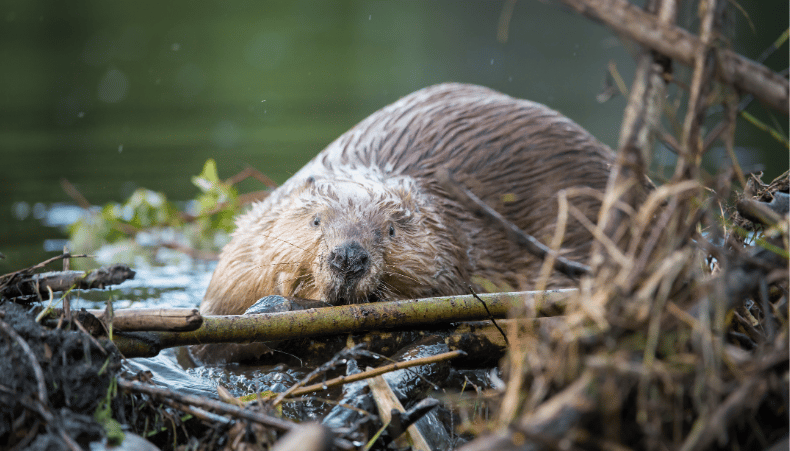
And one of the most exciting projects for us is we've literally in the last couple of weeks been able to introduce beavers back into East Sussex, which is incredible. So we have a family of beavers that are just getting themselves settled into our area in Sussex that is now enabling them to start to do the work that we would do ourselves. So the coppicing of trees, the damming of the streams and the rivers, helping mitigate flooding further downstream, and increasing biodiversity because when they actually start to take the trees down, which they're starting to do already after two weeks, that's giving more light into the woodland and that's encouraging more fauna and flora to grow. So, we're very, very excited about that. But we've also introduced what we call scrapes, big ponds into our land in Devon. So, we've got more wading birds and that was a field that was really quite a boring field really. But we're looking at how to enhance biodiversity. And in many cases, then, we communicate that. And we do that through our EcoTalk sim service that we have, which is another entity that Dale has founded. And that's where you can get your mobile sim service. And all the profit goes back into enhancing nature, which helps pay our work in this area.
Alex Holsgrove Jones (05:23)
Wow. Very exciting. So, there's so much going on. And you are using nature to help nature, aren't you? I mean, the beavers are you know, essentially, they're staff.
Helen Taylor (05:33)
Yeah, they are, they're part of our team. We actually have the most incredible wood expert, if you like, and he's in there, coppicing, he knows so much about woodlands. And he was joking the other day that you would be out of a job. We were talking to Chris Packham about it. They both felt like they might be out of a job because actually the beavers are starting to do the work of humans. And we can see that nationwide and the more that we can build the sort of catchment areas and the connections, we're not far from Knepp, we're not far from other projects that are going to happen in Sussex. There's a huge number of beavers already in the Kent area. So, we're part of the mosaic of more beaver activity that's going to be happening. So that's very exciting.
Alex Holsgrove Jones (06:16)
Yeah, absolutely. So, if we can just loop back to what might be your favourite project, although there are so many and they're all so varied and they are also connected, and talk a little bit about empowering young people and how central that is really to the Ministry of Eco-Education, also the Young Green Briton Challenge, because schools have so many pressures on their time, don't they? And staff have such a curriculum to already teach. Why is it important, do you think, that sustainability is taught in schools? And what are you hoping to achieve by putting sustainability in nature and biodiversity on the curriculum?
Helen Taylor (06:58)
What we're trying to do, and we've been doing this for a few years now, is we know there's a mass audience of people who are teachers, teachers who haven't really had the opportunity to be able to think about sustainability, climate, nature. It's not something they were given as part of their education when they were learning to be teachers, you know, their teacher training. And it's still not significant on the curriculum. Yet, if it can be woven into every subject in some shape or form, then it means that it's a very natural way to really influence a huge hundreds of thousands of pupils. If you embed that, you know, throughout the week, that's every day they're learning something about sustainability. For us, it's about enabling the teachers to feel more confident about how to communicate that. So, it's a big network, we work with all schools in the UK. And they register on the platform that we have, which is the Ministry of Eco-education. They can select the resources they want to use that we've collated from over 200 different organisations. And they can weave into their teaching every day. So, it's important for us because we know they're the next generation. So, if we can get this right, those students will hold the key, if you like, to really enabling us to think about how to protect the planet going forward.
Alex Holsgrove Jones (08:22)
Yeah, and I think the point you make about embedding it is so critical. It's not a special subject. It's not, you know, today we're going to learn, we're going to have a sustainability lesson. It is embedded in everything we do and it's how we should view everything we do. And I think, you know, just giving teachers that lens to look through and those resources to pepper it into their everyday is where it will have most impact. Yes.
Helen Taylor (08:51)
Yeah. I mean, there's, if you think about it, there's over a quarter million teachers who are teaching in primary schools. And there's a further 200,000 or so secondary school teachers and they're also day-to-day living their lives, having an influence, and pupils really look up to them. So, I think it is really important not to make it a specific subject because it's really exciting if you bring it into normal day-to-day learning, and you can make it very, very relatable as well. So, one of the things that we do is we have documents, if you like, that the teachers can access, and they're about their region. So within that, that means that teachers can point to things that are happening within their location that their pupils will hopefully recognise. And that might be an organisation that's doing amazing work or it might be something that's happening literally down the road. It could be there’s flooding happening, there could be a lovely nature park somewhere that the pupils could be visiting in their own time. And it's more highlighting all the incredible things that can be done and things that we need to do to try and enable us to kind of move forward and make sure that generation feels really confident and happy in being able to help support the planet. I think nature walks are not so common now, so there's a lot of in-school learning, so we have to try and encourage young people to think it's great to be outdoors, it's really good for them, and it might influence their parents as well, which will be extra special.
Alex Holsgrove Jones (10:22)
Absolutely, and there is that link, as you've just highlighted, to wellbeing, isn't there? Yeah, there being outside is... and with children's mental in such a critical state, I think that's another thing that is definitely worth highlighting.
Helen Taylor (10:35)
Yeah, definitely.
Alex Holsgrove Jones (10:37)
You mentioned the Young Green Briton Challenge, which sounds very exciting. Can you just tell us a little bit more about that in case our listeners aren't aware?
Helen Taylor (10:45)
Yeah, and it would be great for everyone to hear about this. This is a secondary school programme specific to that. And we're working with about 85 schools at the moment across the UK. And what we've done is we've spent the first part of this academic year going into these schools and running design sprints. We call them design sprints, we work with a whole year group, and that can vary depending on the year group that they select. But obviously with Ofsted and all the other demands, it tends to be the younger age groups. And the teachers themselves assemble the pupils into groups that will work well together. Sometimes not, but it’s supposed to be. And the idea is that we present to them for the day that they can be the eco-entrepreneurs, if you like. They get to hear a little bit from Dale about all the incredible things that Ecotricity is doing, the way that he's approached his business and how he does things, which is so purpose-led. And he's also talked a lot about making sure that you kind of pick things that you're passionate about. So that's really important.
And the idea is that they not only start to think about, they're able to be inquisitive about what's happening within the climate. We do a little quiz at the start., sometimes they're really nervous and they keep their heads down because they don't want to speak to anyone. But largely we kind of assess how much they know. And they do know a lot actually about the environment and the climate. And then we start to talk about teamwork and how you can work effectively together, you know, what makes a great team, how you listen to each other, how you can kind of delegate different roles within your team, because you're then going to be starting to think, you know, what within the environment do you care about and what would you like to do to try and solve some of the problems? So we do problem solving with them and they come up with a kind of list between each group of what they'd like to solve. And then we start to talk to them about how they can map that into a great idea, a project, and they work together, usually quite effectively, and come up with different projects that they think might be amazing to kind of bring to life. And we told them that they need to be, like, relatable, actually has to be able to be possible to do. Some do go a little bit far-fetched, but I think they're going to set up factories to make new sustainable clothing and that kind of thing. But in the main, they're coming up with ideas that they can actually implement and also have an influence in their school, within their community, within their homes. And then they're invited to then present those back as prototypes. So, two or three will come up from their group and they will present and explain what they're doing.
Once they've done that, we bring in company representatives, because we think it's really nice for the schools to be able to invite in people who have an interest in the sustainability, who might be local to a particular school. And they then hand hold those groups as much as they can to help them sort of transition their project into something that's real. So they go through that process with them, really help them think about all the different ways they can make that project successful. And then we get to a point where there's probably then about four or five projects that are then ready to be presented to what we call an Eco-Dragon's Den. We haven't got Deborah Meaden on yet, but we will one day, I'm sure.
But we invite those people back who are those local businesses. We bring ourselves into that, of course, and we let the groups present all the ideas that they've got, which is fantastic for them because they're not only working as a team, they're then really learning how to communicate, how to bond together, how to actually make something from start to finish, which is incredible. And then from there, each school will nominate the project that seems not necessarily the best, but the one that's most advanced, and they're put forward to an award ceremony. And we hold that either in the London area, as we will be doing this July, for the South.
We've got regional events in the Northeast and Northwest. Incredibly, we have a real big index of Northeast and Northwest schools. We're largely seeing schools that have sort of higher levels of deprivation, free school meals, that kind of thing, and it's really making a very, very big difference to some of those pupils. So we're hearing a lot from teachers that this is a really profound way to engage students that might otherwise be quite remote from the rest of their class or not necessarily really inspired or passionate about anything.
Alex Holsgrove Jones (15:15)
That's really such a good segue, Helen, into what I was going to ask you about next, it's almost like you read my mind. Because I'm interested both in what educators, so what the teachers are giving you as feedback, but also measurement. So that's something that comes up on the podcast and the difficulty of measuring ESG in its many forms and its impact. So, how are you measuring the impact of your programmes?
Helen Taylor (15:47)
It's quite tricky, I mean, from the Ministry of Eco-education, we always kind of will measure and assess how many teachers will come onto the platform. But as you might imagine, teachers are incredibly busy. So once they've got their resources, they may not come back on for a while. So we also run CPD programs, so we'll see teachers regularly online and we can assess how things are going from their feedback. So, they will report back in terms of their level of confidence, they will report back on the level of engagement that they're getting from students, on resources, how they might think might want things to be different or how they can then report through.
So, we're having to take that quite carefully, but we're working on an accreditation program with the Ministry of Eco-education. And that will be a more succinct way of being able to measure success. So, the number of engagements that we're getting through teachers, through to pupils, the level of embedding the program into the school, there are different models that we're looking at.
We've got coordinators that are, again, around the country working with each school on the accreditation, and they hand hold the schools to kind of enable that to happen. But there are a lot of social impacts that we know that, you know, the attainment is increasing, but largely for us it's the teachers and their confidence that makes a big difference for the Ministry of Eco-Education. And then when we get to Young Green Briton Challenge, we're seeing a lot more student evaluation if you like, because we're seeing, I think the most impactful thing is the feedback from teachers, particularly on students that may or may not have necessarily engaged. And that is where we're getting those one-off moments as well as the kind of, again, confidence in teachers and the school really wanting to get involved in what we're doing. But there are some pupils that have really stood out.
I know there are schools that we've worked with where the teachers have come back to us and said, prior to you coming in, we've had very little engagement, particularly with maybe boys, they're not necessarily so interested in sustainability, but not entirely. But really where some schools, they are in very, very deprived areas and they've not felt valued and they're seeing that value. Now, that's difficult to measure sometimes, but we are definitely seeing it. And we had one company, who very kindly went to a school in the Northwest recently and was there for the Eco-Dragon's Den and then actually decided they wanted to invest in a project that they heard and we've had a couple of those.
Alex Holsgrove Jones (18:26)
So it's real Dragon's Den, isn't it.
Helen Taylor (18:27)
Yeah, it's real Dragon's Den. And literally they rang up afterwards and said, you know, that was such an amazing presentation, and we could see how much it was really affecting in a positive way that the students that were involved, they've said they'll invest.
Alex Holsgrove Jones (18:44)
What a massive confidence boost for those students.
Helen Taylor (18:47)
It's so much about confidence and I think it's about value to them. Yeah. Because if you feel valued, you we all know when we went to school, if somebody took some notice of us, we perform better. And that's really what it's about. It's about, you know, students learning how they can communicate and be part of something and then them feeling ultimately very valued. We've had some huge benefits. So sometimes it's difficult. We're really looking at our measurements at the moment, my impact across all of the Green Britain Foundation. We're kind of turning that a little bit to see how do we translate that into proper ESG as well as us kind of knowing those kind of nuggets that are coming through.
Alex Holsgrove Jones (19:27)
Great. No, that sounds amazing. So can we move on quickly to your new Green Britain Academy, which is targeted at a different demographic, young adults who have left school and may now be in work. Why are you targeting that group of people specifically?
Helen Taylor (19:45)
Yeah, I mean, it's very important because, I mean, there's probably a little bit of a lost generation in the middle there that hasn't necessarily had so much of a communication around sustainability and perhaps doesn't feel that confident about it. Often there's many people who want to have an influence within their business, but don't quite know how. And it's again, it's about confidence building. So it's a fairly elementary course, the first one, the Green Britain Academy, but it's about enabling you if you're a plumber, electrician, you're working, you again, you might be in a school, you might be in a factory, you might be in a business, you might be in a solicitor. But you just want to learn that bit more about sustainability. So you have that sort of tool to be able to have some influence over what you do. So, the course is a self-managed course, it's a set of modules. It talks through all the things that you might consider, again, around energy, transport, food, and nature, water management, waste, and that social impact as well. And it's brought together so you can go online and learn as you wish at your pace. But again, it sort of gives you that kind of confidence and you might be involved with running an ESG program within your business or you might simply be somebody who knows they would like to understand more about what to do or it might really influence what you do next in your career. Or if you're a plumber or electrician, an electrician particularly, you might be a solar panel installer, and you just need to understand a bit more about what you're doing and how that's really going to have a positive impact.
Alex Holsgrove Jones (21:18)
And is that freely accessible Helen?
Helen Taylor (21:21)
There will be a cost. It's still not quite up and running, it's nearly there, but it will be very, very minimal because we actually have something called Green Code, which TLT is involved with, as we know, and that's an accreditation program that takes businesses through how to demonstrate their sustainability. And we're going to kind of link the two because if you are responsible for meeting your Green Code accreditation, you can also go on this course and be, you know, feel a bit more confident about how you're learning from that.
Alex Holsgrove Jones (21:54)
Great. So it's clear from our discussion that young people are very much the future and have so much potential to drive real sustainable change. How do you think businesses can support their younger generations to become more influential and share their voice?
Helen Taylor (22:12)
I think that's really important. It's something that we're exploring a lot at the moment, but I think that the key thing for a business is to, and we all know we are going to employ more people and more young people in the future. So, I think we need to set time aside to appreciate how young people can make a real difference. And I think if there is a way, of a business wanting to showcase their interest and support, they could become part of a mentor program within the Young Green Briton Challenge, or they could be signposting their local school to the Ministry of Eco-education Resources. They could maybe be supplying resources if they're doing great work in sustainability, why not get in touch? And we can make sure that their work is then showcased as a great case study that could then be communicated to a local school or much wider. If you're a national company, what you're doing matters because it's demonstrating your real commitment to sustainability. And I think most importantly is for every business to realize that young people have a huge part to play, and if you have work placements, internships, and you can make them have some kind of, or enable them to have something that has a sustainability aspect to it, to give them confidence for the future, that's really, really important. I'm a huge advocate for us to make sure that we look after young people and give them a chance.
Alex Holsgrove Jones (23:29)
Great, Helen. It's been a really interesting conversation. We've covered so much and I'm sure we could sit here and chat for the rest of the day about the many, many things the Green Britain Foundation is doing. But to finish, we always like to leave our listeners with a practical action they could all take to drive positive change. So you've got so much to say. Could you just distil it into one quick tip that everyone could do in the next couple of weeks to drive positive change?
Helen Taylor (24:06)
I think for anyone listening, if they could just start to follow the social media channels that are really making a difference in this world. So for us, that would be the Ministry of Eco-education or Young Green Briton Challenge. The Green Britain Foundation would be amazing because I think if businesses and listeners are thinking, this is something I'm really interested in, if they're watching and listening and following, hopefully that larger audience that they're influencing can start to think about the same.
Alex Holsgrove Jones (24:38)
Great. Helen, thanks so much for joining us for this episode. It's been so fascinating to take a really brief look into the wonderful myriad of things that the Green Britain Foundation is doing to secure that sustainable future for the planet and also for next generation. So thank you so much.
Helen Taylor (24:55)
Thank you, Alex. Thank you so much.
Alex Holsgrove Jones (24:58)
And thank you to our listeners for tuning in. If you enjoyed this episode, don't forget to subscribe and share. And until next time, keep driving positive change and putting ESG into action.
Related services

Get in touch






%20%C3%94%C3%87%C3%B4%20790px%20X%20451px%2072ppi21.jpg)
%20%C3%94%C3%87%C3%B4%20790px%20X%20451px%2072ppi%20London.avif)


%20%E2%80%93%20790px%20X%20451px%2072ppi%20LONDON9.jpg)
Related insights

AI in Motion: Balanced algorithms - addressing bias in AI

Why work-related stress is a health and safety issue

From intention to action: ESG tips you can use from our podcast guests
Climate risks and stranded assets: Protecting your property portfolio
Aligning sustainability with opportunity: The business case for biodiversity net gain
How can carbon credits and insetting help you achieve your net-zero targets?

AI in Motion - How to make sustainable AI a reality

ESG as part of investment strategies - What pension trustees need to know

Preparing for change: turning the Employment Rights Bill into social ESG advantage

Employee Ownership - How an EOT can support your ESG agenda

Pub and bar: The growing importance of knowing your supply chain

Climate change risk - Five steps to assess climate risk across your real estate portfolio

Why nature-related risk is the next strategic priority for pension schemes

Climate transition plans - legal opinion on disclosure liabilities for directors and companies
Extended Producer Responsibility - hospitality sector in focus

Limiting construction's environmental footprint using climate conscious drafting



Retail Agility: Navigating the AI frontier in retail




Rethinking Hospitality: Embracing Challenges, Unlocking Growth




TLT advises Eolas Architects on transition to employee ownership

TLT advises The Guinness Partnership on £400 million real estate joint venture

ESG in Action: Nature recovery in action: What Belmont Estate can teach business
ESG in Action: Where capital meets conservation with Rebalance Earth

ESG in Action: How to work well in high-pressure environments with the Mindful Business Charter

ESG in Action: Turning clauses into climate action with The Chancery Lane Project

ESG in Action: From nice to necessary: The business case for wellbeing

ESG in Action: Financing change and changing finance with Triodos Bank

ESG in Action: Working better with Working Families: Flexibility in the workplace

ESG in Action: The future starts at school: Embedding sustainability early with The Green Britain Foundation

ESG in Action: Inside the Government Legal Department’s social mobility agenda
ESG in Action: Climate resilience in real terms: Breaking sustainability silos with Santander

ESG in Action: Hospitality and sustainability working together for future successes

ESG in Action: Beyond returns: Inside the world of responsible investment

ESG in Action: Trailblazing with Ablaze: Helping young people succeed
ESG in Action: Power from the panels: Profit with purpose with Eden Sustainable

ESG in Action: Top-down and bottom-up momentum: The next chapter of social mobility with SMBP

ESG in Action: Balancing the basket with the British Retail Consortium



Community, connection and collaboration - TLT and Forest Green Rovers FC
Placing sustainability at the heart of learning - TLT and the Ministry of Eco Education


A partnership for sustainable action: TLT and Belmont Estate
BNG - TLT and Belmont Estate talk nature positivity

What does the next generation of our cities look like?

