
ESG in Action: Where capital meets conservation with Rebalance Earth
In this episode of ESG in Action, Alex Holsgrove Jones is joined by Kirsty Wilman, Chief Operating Officer at Rebalance Earth. They discuss why nature should be viewed as critical infrastructure, and how investing in it can strengthen business resilience, risk management and create long-term value.
Rebalance Earth is a natural capital fund manager working on projects that restore ecosystems while generating financial, environmental and social returns, including native oyster reef restoration off Norfolk, landscape restoration in the Yorkshire Dales, and river and catchment restoration in the Cotswolds.
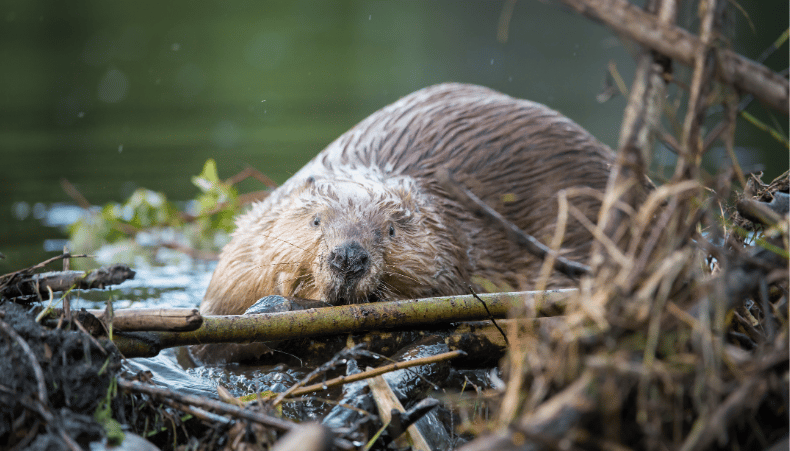
Alex and Kirsty explore how natural capital investment can help organisations move beyond seeing nature as a ‘nice to have’ and recognise it as a practical solution to risks they already face. Kirsty explains how oyster reefs can clean water, support marine ecosystems and reduce coastal erosion, and how beavers can re-engineer landscapes to help manage flood risk while supporting biodiversity and communities.
They also discuss how investors can approach nature as an emerging asset class, what nature restoration can learn from real estate and infrastructure, and the importance of understanding nature-related risks across portfolios, physical assets and supply chains.
Listen below, on Spotify, or on Apple Podcasts, to learn more about:
- Why nature is critical infrastructure for businesses and investors
- How natural capital projects can deliver financial, natural, social and inspirational returns
- The parallels between nature restoration and traditional asset classes
- How businesses can reassess risk, resilience and supply chains through a climate and nature lens
- Practical steps individuals can take align pensions and investments with their values
Kirsty Wilman (00:04)
My return is still important to me because I want to retire one day. But actually, I want to retire into a world I want to live in. So how I invest my money along the way matters.
Alex Holsgrove Jones (00:16)
Welcome to ESG in Action. I'm Alex Holsgrove Jones, Knowledge Partner and ESG Lead at TLT, and today I'm joined by Kirsty Wilman, Chief Operating Officer at Rebalance Earth. Rebalance Earth is a natural capital fund manager that understands nature as critical infrastructure, or as an asset class, and we'll get Kirsty to talk a bit more about exactly what that means later on.
Rebalance Earth has already delivered projects across the UK that restore natural processes and enhance ecosystems that generate long-term financial, environmental and social returns. Their recent projects include the restoration of native oyster reefs off the coast of North Norfolk, transforming 600 hectares of natural ecosystem in the Yorkshire Dales, and a large-scale river and landscape restoration in the Cotswolds.
It's all fascinating and I'm really looking forward to learning more Kirsty, so thank you so much for joining us. It's great to have you on the show.
Kirsty Wilman (01:13)
Thank you. I'm really excited to be here.
Alex Holsgrove Jones (01:16)
So Kirsty, to start with, can you tell us a little bit about you and your role at Rebalance Earth and how your background led you into this work?
Kirsty Wilman (01:26)
Yeah, of course. So, I'm an accountant, and was in practice for about eight years, and then moved into real estate investment management. I spent 14 years in a big investment management firm. And as part of my role, my role sort of changed over time. So, I started off with responsibility for the finance team and then sort of that responsibility spread and in private markets, as you know, it's quite hard to delineate.
You just do finance or you just do legal. There's complicated structures, there's complex transactions. And so I started looking after all of operations for the real estate division and for some of the private debt division and was involved at Federated Hermes (Limited) in setting up a Nature Based Solutions Fund. I also was responsible for the team that were setting the strategy and execution of the ESG aspects of the real estate that we owned. And I got really interested in ESG, I was lucky to work with someone who was fantastic in my team. And she really helped me to see that there's sort of the ESG where you tick the box, but then there's also when you start thinking about climate resilience and why it matters as a business that we're thinking about these things, not just why investors care or why we need to comply with certain laws or regulations, but why it really matters to us as a business.
And then I got introduced to the co-founders of Rebalance Earth and I just loved the way that they were framing nature as infrastructure. So it's not doing something for the sake of it, it's doing it because it is providing a service which is valuable and we've had for years, nature has provided a service that's valuable, but we haven't recognised that value, which is part of the reason that we've degraded nature so much. I have to admit, I think everyone in my team knows this, but I came to it very much from the idea of, I think it's an amazing financial proposition. I think it's a brilliant asset class. I think it will be huge. I think it can deliver really stable, solid returns for investors.
The more I've been involved in nature, the more I've got caught up in how amazing nature is. So, sort of my journey has come from finance to the nature side, rather than being from nature and then how do you fit it into finance? And I think one of the things that I hold as core to what we do is that there are already private market structures out there. We've been through the structuring process, the transactions, we know all of this.
So what can we lift from real estate or infrastructure or private debt and replicate in the nature space? So it's a different end product, but all of the structuring, all of the governance, all of the finance can look very familiar. And so it's sort of like trying to read across from that experience and just take it into a different asset class is really important to what we're doing.
Alex Holsgrove Jones (04:18)
Yeah, and it's really exciting. And you're so right that nature's not just an add-on, a tick box exercise that you kind of look at. It's actually fundamental to how we can continue to live and operate our businesses. But that perception isn't widespread necessarily yet, and I think it needs to change. What do you think the more traditional investors can learn about nature from how they think about real estate in a more traditional way?
Kirsty Wilman (04:47)
I think one of the issues with nature is it's a marketing issue. So it's always been a nice to have. It's always been something that's there and it's lovely, but you know, it's not really doing anything. I think when you look at an asset class like real estate, you've got an established market. So you say, “right, I'm going to buy a property or build a property”, and the first thing you'll look at is what's the demand in that area like? Can I sell it? Can I lease it? What's it going to be & where? And I think there's a real parallel. So you build a property which provides a service. So that service is space and people lease that space. And a company will come and they will pay for that space. They could buy their own building, but they don't want to or can't afford to, so they lease that space. And the service that they're provided with means that they can run their business.
In exactly the same way, what we're doing is creating a restoration, so effectively developing a restoration, building a restoration. However you want to say it's the same as building a building. And we are providing services that companies need. And so that service might be flood reduction, it might be BNG units, so there might be a compliance or regulatory element to it. Actually, it just might be a pure resilience play. Slightly sceptically, it might just be a reputational play, but that's okay. And as it's exactly the same, and I think when you start creating those parallels, investors start to understand it a bit better.
The one that I found really useful recently was - so we are all fascinated at Rebalance Earth by beavers and oysters - so we will all talk lots about beavers and oysters. And when you look at, so taking oysters, what oysters can do, they can clean the water. And a single adult oyster cleans 200 litres of water a day. They also create these environments where marine life can really flourish. And they are also great at wave attenuation, so they reduce coastal erosion. And the problem is when you say we're restoring an oyster reef, people sort of go “well, that's lovely, but it's just lovely”. When you then say “well, what's it doing?”, so it's cleaning water. So what's the equivalent that cleans water that we all know and understand? Well, it's a water treatment plant. So a water treatment plant costs billions to build, operate, it depreciates, it needs people on site. There is a long-term significant cost of building and running a water treatment plant. And if you look at an oyster reef, a not very big oyster reef can clean as much water as a water treatment plant. It appreciates over time as the oyster is reproducing, it gets better and better, you don't need someone on site to operate it. You do need sort of monitoring and maintenance, but that's nothing compared to a grey infrastructure. Yeah, and you get all of these co-benefits of improving marine life, of wave attenuation, and there's this amazing video: so the oyster reef that you referred to earlier, we funded the restoration and there's an amazing company, Oyster Heaven, who have done all the work, and they have these clay substrate bricks that they use to lay the oyster reef. And they have this amazing video that shows the oyster reef on day one, which is just bricks. And then after a year where there's much more life, and then after two years where it's unbelievable that it's the same place. There's loads of plant life, there's loads of different types of sea life. And all they have done is put the oysters there. That's it. And everything else comes. So you've got all these co-benefits. And I think when you can create the parallels with a grey infrastructure solution that we all accept, then people start to understand that we are overlooking nature in favour of building something because somehow that feels better to us. It feels more certain when actually it's not necessarily.
Alex Holsgrove Jones (08:49)
So it's a change in attitudes and an education piece, isn't it, around the benefits that these things can have. And actually, all those co-benefits, even if you disregard those, you've still got clean water from your oysters.
Now, talking about, obviously, you have to look at whether or not it's going to bring a return because it's an investment. And a few of our guests have already spoken in previous episodes about how challenging reporting can be. And you know, return on investment can be hard to calculate, particularly when you're looking at things like, you know, an impact on a community's wellbeing or, you know, how it's drawn them together. What's your approach to reporting on your projects and what do you find most difficult?
Kirsty Wilman (09:38)
So I think it's really difficult to measure the qualitative things. We so we have a four-returns framework, and we don't shy away from the fact that we are financial returns driven. In fact, I think that's really important to what we're doing, because without a solid financial return, you can't attract private capital, you can only attract philanthropic capital. And the philanthropic capital has done and will continue to do amazing things.
But there is always going to be a scale issue with philanthropic capital. There's only so much money that people are willing to give away or to give away at a low return. So we are completely focused on the financial return and protecting the downside risk. We then look at, so the four returns that we've got are financial, natural, social and inspirational. So the natural return is measured in different ways for different projects, but it can be measured. So we might be measuring water storage or water pH or I mean, it could be the number of oysters that survive beyond a certain date or there's lots of different ways we can measure it.
I have a wonderful colleague, Neil Entwistle, is a geography professor, you know, loves all of the measurement, the scientific side, and everything can be measured. The challenge actually is not measuring individual projects. It's how you measure as a whole, so when an investor says to you, what's my portfolio delivered? You can't say, well, it's delivered 4 million oysters and a pH level of whatever in this river. And so it's sort of collating that into something meaningful can be quite challenging.
Social is really challenging. I've always had a of a bugbear about social returns because I think there is a risk that you spend more time analysing and trying to quantify than actually doing something. And certainly, in my days in the real estate world, there was really complex ways of being able to say, this translates to X number of pounds. And actually you spend more time on these calculations than on anything else.
And inspirational returns is what we can do that will scale. So we have to start small. So what projects are we doing? How can we scale them and continue to scale over time?
I think social inspiration is really difficult to measure. We use case studies, we try to quantify where we can, but we try to resist the urge to spend so much time quantifying that actually we're spending less time doing.
Alex Holsgrove Jones (12:08)
Looking ahead, where do you think the investment in nature needs to be focused right now?
Kirsty Wilman (12:14)
So, I think there's two things that are the main focus. I think number one is people really, genuinely understanding their reliance and their risk that is nature related. I think it's really easy for people to say, that what you're doing is great. I'd love nature to be restored, but it's not my problem. Why should I pay for it? And it's really easy to say, I know I've got a risk, so if you take flood risk, like loads of companies have flood risks sitting on a risk register. With the mitigation being we've got insurance. And I want people to start thinking about the what can you do? What if you decided to do something about it? And I think it's important for two reasons, I think particularly companies that have got supply chains. We saw during COVID supply chains fell apart, you know, for obvious reasons, like everyone's trying to work through a pandemic. But we've also seen globally, and in the UK, significant climate related events that are becoming more extreme. And again, you end up seeing supply chains like they're just not robust, or people don't understand that they're not robust or people don't understand where the glue comes from that sticks a container together, which means that actually you can do everything but you still can't sell your product.
And so I think really dissecting and understanding the geographical reliance you've got, the nature reliance that you've got, and then saying “okay, what do I do about it?”. Not “how do I avoid it, but what do I do to help solve that problem?”, and I think what do I do to avoid it has no longer, it's no longer an issue, like it's no longer an option because you can't avoid climate change altogether. Like we're running out of places that there isn't going to be an issue. So I think that's the first thing that I think is really important.
I think the second thing is, and I think it's really important within the nature world, we need to try things. A lot of what we're doing, it's not necessarily new, but it's a new approach to what we're doing. So, all of the nature restoration work that we're doing, there's been loads of projects that have been smaller scale, that have been philanthropic, but they've been hugely successful. So I think having people who are willing to be the first, be an early adopter, be the person who can say, we were involved in this amazing project that's delivered amazing things. I think that's really important as well. I think there's such an exciting, it's an exciting investment opportunity, but it's so exciting to think that we could like physically change the future. We're at such an inflection point and we could physically all be involved in changing that future. And I think that's really exciting. I think sometimes we spend so much time thinking about the downside, we miss that there's an upside in resilience, in opportunity, but also just in genuinely changing the future and making it a much more positive future.
Alex Holsgrove Jones (15:20)
Yeah. And I had to mention, Kirsty, when you talked about floods and not just relying on insurance. Can you tell us about the beavers?
Kirsty Wilman (15:32)
I can, and this is amazing. And again, there is a real parallel with grey infrastructure. So, there is an amazing project which is in Ealing, which is called the Ealing Beaver Project. We went last night to see the beavers and they've got beaver kits, the babies, and it was brilliant.
But basically, there was a station that floods, the ticket hall floods, so the line isn't blocked, but you can't get in and out of the station. Every year for years it’s flooded. And there's a couple of guys from an organization called Citizen Zoo, and they identified that if you release beavers, they could re-engineer the landscape. And there was some land, derelict land behind sort of an out-of-town retail park. Land that wasn't looked after or cared for, was almost, it definitely wasn't an asset to the community, it was almost a problem to the community because of antisocial behaviours that you would end up with. And so they got five beavers, five, I mean, it literally could be more than an effect, five beavers that were causing problems to a farmer, I think in Scotland, so they were referred to as the Asbo beavers. So they were relocated to Ealing, and they set up in Ealing and essentially just let the beavers get on with it. And the beavers have re-engineered the landscape, know, they've gnawed away at trees, felled them. And now that piece of derelict land is actually like a little oasis in Ealing. So you feel like you're in the middle of the countryside. There's like the white noise of a city behind you, but what you hear more is the birds singing, I mean, was, yeah, it's great. But what the beavers have done by re-engineering landscape is that piece of land holds the water. So they were released and the first winter after they were released, the tube station didn't flood because they re-engineered the landscape. Now the grey equivalent would be build infrastructure, build a dam, you know, start to re-engineer with concrete, which obviously the downside of re-engineering with concrete is huge in terms of cost and time and planning permission, but also by re-engineering with concrete, by definition, you're releasing more carbon, you're making flood risk worse, all of those things. And so now it's almost like this little nature reserve with the beavers in Ealing - it's absolutely fantastic. The guys who've done it are brilliant.
How they came up with the idea and got through all the hurdles that they needed to get through, need licenses to release beavers and all these things. I believe they had good support from the council. But it's so good, and so we went to our beaver safari, they come out at dawn and dusk. So we were there actually last night. It was amazing, I really recommend going to see it. And even if you don't see the beavers, we saw them swimming past, but even if you don't see the beavers, you see the trees that they've eaten away at. And it's unbelievable that what they can do and how much they can change a landscape.
Alex Holsgrove Jones (18:42)
Yeah, and they provide a little green space, a little bit of, you know, for people's wellbeing, as well as the wellbeing of not being able to get on the tube because the ticket office is flooded.
Kirsty Wilman (18:54)
And actually, because of what they've done, there's real community pride in it as well. So, what was a piece of land that was problematic, is now it's looked after and cared for, and it's, when we were there last night, are cycling through and walking through. And actually what was really lovely was, I mean, we'd organized this and the guys who'd set it up were showing us around. What was really lovely was we bumped into a few people who were just there to look at beavers, and that's just, you know. They just wanted to go and see it and be part of it, and there's such a, like the benefit to the community of something like that is huge.
Alex Holsgrove Jones (19:29)
Absolutely. So if we've got investors listening who are curious about investing in nature but aren't really sure where to start, what advice would you give them?
Kirsty Wilman (19:40)
So I think, I would say first of all, think about what nature risk you already have in your portfolio. So it's not just an asset that gives you a return in its own right. It also gives you resilience on your other physical assets. So think about the nature risk that, or the risk that could be resolved by nature that you've already got your portfolio.
I think secondly, be really open-minded. So some of this doesn't look like a traditional asset class at first glance, but then when you start to look at the nature of the returns, and the way that we're approaching it, actually, there are so many parallels with other asset classes.
And I think thirdly, just start learning. So just, you know, open your mind to what you might be able to do, I think sort of traditional nature assets like forestry featuring a lot of portfolios. I think taking the leap away from something where there's a more sort of traditional nature asset into a more holistic approach can feel really big. But I think when you start looking at the actual risks and the profile of what you're investing into, it's not actually that different.
I think my final piece of advice, so to any investors who would like to start investing in nature, or who would like to know more about it, just get in touch with me and we're always happy to talk to people about why, why should you invest in nature? What does it mean? How does it sit within your broader portfolio? How you can look at it like, and how you can build a nature portfolio, of which the way that we invest in nature can be part of it. It doesn't have to be all of it, but you can build like a diversified nature portfolio in the same way that you would build a diversified real estate portfolio.
Alex Holsgrove Jones (21:34)
Great, thanks, Kirsty. And just before we let you go, we always like to leave listeners with something practical that they can do to drive positive change. So, what's one practical step that our listeners could take in the next month or so?
Kirsty Wilman (21:51)
So I think on a personal level, the amount of money that sits in DC (defined contribution) pensions and wealth is unbelievable in this country. And I think a practical step on a personal level is to look at where your money is. And I don't just mean your savings, I mean your pensions, I mean your investments. And ask yourself if that fits with your personal values. And I think investing in nature is very difficult in some parts of the market because it's new and illiquid and all of those things. But if you want to be investing in nature, if you care about climate change, if any of this resonates with you, then look at your portfolio and look what you can move and what you can redirect, so that it resonates with your own values. And if you can't, then write to your pension providers, speak to your, if you've got financial advisors, and start saying, this is what I want to do, but it's not available. And we need to really create the investor demand. So I think, yeah, I think that's become something that has been really important to me of like, I know what I care about, but how much am I, I suppose putting my money where my mouth is, and bearing in mind, of course, my return is still important to me because I want to retire one day. But actually, I want to retire into a world I want to live in. So how I invest my money along the way matters. So yeah, I think that's a practical thing that you can do.
I think just can I add another one as well? On a sort of more corporate level, I would really encourage people to look at risk registers, resilience plans, all of those things with a slightly different lens. And I think the lens being we, I think a lot of companies look at things through the lens of this is the sort of the average worst that could happen, but aren't thinking about the extreme events that we face. I think if you look at the extreme events and say “are we prepared for an extreme event?”. And you're not going to have 10 extreme events at the same time, probably. But the reality is there's more and more extreme events. So, can you cope with those extreme events?
I think we all got a massive shock with the M&S cyber issues that happened. And that felt like a really extreme event, “that's never going to happen. How could that happen?”, and I think we all got a bit of a wake-up call and revisited our cyber policies and everything else. And I would encourage that we do the same thing when we're thinking about our physical resilience, or the risks that sit in our supply chain and the, you know, where we've got property. I think we need to think about that in a slightly different framing. Because at the moment, I think we're probably being very optimistic about where we are in terms of climate change. And therefore, maybe minimizing some of the risks that we already face. So yeah, I'd encourage that as well.
That sounds really negative! So I do just want to say the really exciting thing, the really exciting thing, the thing that I love about working in nature is you can really make a difference. You can make a difference quite quickly. It's not that expensive. You can generate return. All of these positives are there. And it's a really exciting moment. So, you know, doing the negative exercise of what should I be looking at can be coupled with now I understand my situation properly, I've got something I can do about it.
Alex Holsgrove Jones (25:33)
Yes, yes, there is definitely positive change that we can make. Both personally through our own investments, but also through organisations, at an organisational level. Thank you so much for joining me, Kirsty. It's been so interesting and I'm sure we could have spoken about many, many more of Rebalance Earth's exciting projects. So, thank you so much.
Kirsty Wilman (25:54)
I really appreciate it. It's been really, really fun.
Alex Holsgrove Jones (25:58)
And thank you to our listeners for tuning in. If you enjoyed this episode, don't forget to subscribe and share. And until next time, keep driving positive change and putting ESG into action.
Related services

Get in touch





%20%C3%94%C3%87%C3%B4%20790px%20X%20451px%2072ppi21.jpg)
%20%C3%94%C3%87%C3%B4%20790px%20X%20451px%2072ppi%20London.avif)


%20%E2%80%93%20790px%20X%20451px%2072ppi%20LONDON9.jpg)
Related insights

AI in Motion: Balanced algorithms - addressing bias in AI

Why work-related stress is a health and safety issue

From intention to action: ESG tips you can use from our podcast guests
Climate risks and stranded assets: Protecting your property portfolio
Aligning sustainability with opportunity: The business case for biodiversity net gain
How can carbon credits and insetting help you achieve your net-zero targets?
AI in Motion - How to make sustainable AI a reality
ESG as part of investment strategies - What pension trustees need to know

Preparing for change: turning the Employment Rights Bill into social ESG advantage

Employee Ownership - How an EOT can support your ESG agenda

Pub and bar: The growing importance of knowing your supply chain

Climate change risk - Five steps to assess climate risk across your real estate portfolio

Why nature-related risk is the next strategic priority for pension schemes

Climate transition plans - legal opinion on disclosure liabilities for directors and companies
Extended Producer Responsibility - hospitality sector in focus
Limiting construction's environmental footprint using climate conscious drafting



Retail Agility: Navigating the AI frontier in retail



Rethinking Hospitality: Embracing Challenges, Unlocking Growth




TLT advises Eolas Architects on transition to employee ownership
TLT advises The Guinness Partnership on £400 million real estate joint venture
ESG in Action: Nature recovery in action: What Belmont Estate can teach business
ESG in Action: Where capital meets conservation with Rebalance Earth

ESG in Action: How to work well in high-pressure environments with the Mindful Business Charter

ESG in Action: Turning clauses into climate action with The Chancery Lane Project

ESG in Action: From nice to necessary: The business case for wellbeing
ESG in Action: Financing change and changing finance with Triodos Bank

ESG in Action: Working better with Working Families: Flexibility in the workplace

ESG in Action: The future starts at school: Embedding sustainability early with The Green Britain Foundation

ESG in Action: Inside the Government Legal Department’s social mobility agenda
ESG in Action: Climate resilience in real terms: Breaking sustainability silos with Santander

ESG in Action: Hospitality and sustainability working together for future successes

ESG in Action: Beyond returns: Inside the world of responsible investment

ESG in Action: Trailblazing with Ablaze: Helping young people succeed
ESG in Action: Power from the panels: Profit with purpose with Eden Sustainable

ESG in Action: Top-down and bottom-up momentum: The next chapter of social mobility with SMBP

ESG in Action: Balancing the basket with the British Retail Consortium



Community, connection and collaboration - TLT and Forest Green Rovers FC
Placing sustainability at the heart of learning - TLT and the Ministry of Eco Education


A partnership for sustainable action: TLT and Belmont Estate
BNG - TLT and Belmont Estate talk nature positivity

What does the next generation of our cities look like?

