
ESG in Action: Power from the panels
Profit with purpose with Eden Sustainable
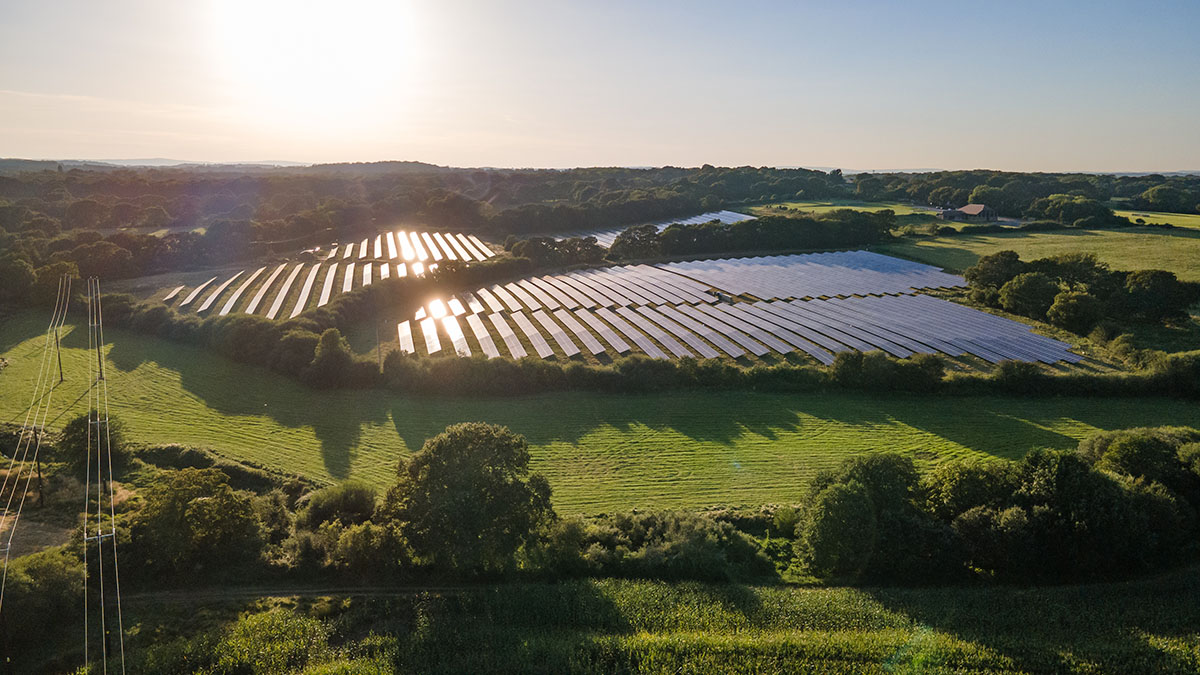
In this episode of the ESG in Action podcast, we’re shining a light on solar with Justin Leger, Co-Managing Director at Eden Sustainable.
Eden Sustainable is one of the UK’s leading developers of commercial and industrial solar energy solutions. They’re also a B Corp, and believe in profit with purpose: achieving commercial success, while delivering positive environmental and societal impact.
Alex Holsgrove Jones and Justin discuss:
- Building confidence in the benefits of renewable energy
- The need for collective effort in scrutinising supply chains to drive change
- Educating the next generation of talent for the sector
- The challenge of growing responsibly without losing sight of values
Listen to the full episode below, or on Spotify and Apple Podcasts. And don’t forget to catch up with the rest of the series – subscribe to make sure you don’t miss an episode.
Justin Leger (00:02)
We've got to give businesses the confidence and the information so that they can reach a conclusion that going green isn't just the right thing to do ethically, but commercially it works as well.
Alex Holsgrove Jones (00:18)
Welcome to ESG in Action. I’m Alex Holsgrove Jones, Knowledge partner and ESG lead for TLT, and we’re exploring how values-driven leadership, sustainable thinking and inclusive culture are transforming the business landscape. Each episode, I’m joined by a guest who drives ESG progress – from charity leaders to household brands – and they’ll be sharing the tangible impacts of ESG-led decision making.
Today, I'm joined by Justin Leger from Eden Sustainable, a certified B Corp developing commercial and industrial solar across the UK and we'll be asking how projects scale responsibly from cost and supply chains to community impact. Eden is widely recognised as one of the UK's leading developers of commercial and industrial solar energy solutions. Their mission is to be a leader in the transition towards a more sustainable future. This commitment drives everything they do, and is built on core values of trust, integrity, expertise, and care. They believe in profit with purpose, achieving commercial success, whilst delivering positive environmental impact. Justin, thank you for joining us. It's great to have you on the show.
Justin Leger (01:25)
Thanks very much. It's obviously great to be here, Alexandra, and I'm really looking forward to the conversation.
Alex Holsgrove Jones (01:32)
Perfect. So let's start with you. You started out as a lawyer. So what drew you into solar and more particularly to Eden?
Justin Leger (01:41)
So, I started my career as a lawyer because I enjoy problem solving and working through complexity and renewable energy transactions gave me plenty of that. If I'm being entirely honest, the role into being a lawyer was because of my sister having studied law, and I didn't want to be less clever than her. So I followed her down that way! So and obviously with law and renewable energy, I sort of sit at the intersection of law, finance, and infrastructure and public policy. So over time, though, I became more interested in the why deals existed and not just how to structure them and what they were delivering in the real world.
So, you know, clean power, long-term resilience, tangible environmental outcomes, they're the things that mattered to me much more so than we as lawyers closing transactions. So, and truthfully, I wanted to be the decision maker, not someone that could advise what could be done within the constraints of law. Moving in-house to a solar developer and Eden being an existing client of mine, that felt like a natural evolution.
I'm still dealing with contracts and risks and governance. I'm in an MD role now rather than the general counsel role. But these days I get to avoid six markups of a document with unrealistic deadlines and that constant anxiety we lawyers face of time recording! What really drew me to Eden was that clarity of purpose and sustainability here is it's not just a bolt on, it's not a marketing layer, it's ultimately what the business model was founded on and we're a B Corp. That's something that genuinely matters to myself and pretty much everyone within the Eden team. So you touched on it on the intro, as a lawyer, trust, care, integrity, they're all fundamental principles of the SRA rules and they're the values that shape day-to-day decision-making at Eden, whether that's how we treat employees, customers, suppliers, contractors, etc.
Alex Holsgrove Jones (03:55)
Great. So hearing what drew you to Eden really set the foundation and it's really a reminder that the transition is shaped as much by personal conviction as it is by technology or policy. When you look at the journey towards a sustainable future, what are the biggest hurdles you think we need to overcome?
Justin Leger (04:14)
That's a good question. So I think the biggest hurdle is the perceived complexity. So, I have these conversations pretty much every day with the MD and FD, or a sustainability lead within businesses and many organisations, they know they've got to act and that this energy transition, can feel overwhelming. You've got regulation, you've got grid constraints, you've got financing, supply chains, long-term commitments and changes in government policy, all of these things create uncertainty. So even when the intent's there, that uncertainty can slow decision-making and we see this inertia all the time at Eden. And most businesses have a sustainability lead, but they're often constrained by other competing interests within the business. So, the sort of short-term thinking is another challenge. So sustainability investments, they often deliver value over 20 or 30 plus years and while businesses understandably they've got pressures to focus on, annual budgets and procurement cycles and immediate return, we at Eden have got to bridge the gap between, and not just at Eden, but everyone else involved in this sector, we've got to bridge the gap between long-term value and the short-term decision frameworks. For me, that's critical. And a lot of short-term thinking coincides with FD tenures, lengths of government, energy historically being procured in one, two, three, five-year cycles. So ultimately, if I could remove one bottleneck, it would be the confidence in the benefit of things like solar and how that can be delivered. Organisations can trust in projects, will deliver returns and it will be delivered smoothly and without operational disruption.
Alex Holsgrove Jones (06:05)
And that confidence is really key, isn't it? Because a lot of organisations do want to go greener, but their worries are real. And you've touched on some of those just now, but the cost, long-term commitments, and even whether the energy supply will be there when they need it. So how would you reassure them? And how are new financing and delivery models helping make the transition easier if they are?
Justin Leger (06:31)
Well, again, a very good question. And those concerns are obviously completely understandable. And they're exactly the problems that the sort of modern solar and storage models are ultimately designed to solve. So, for example, at Eden, we've got several different structures. We've got a CapEx where the customer funds. We've got a power purchase agreement. So no upfront capital costs to a business. And businesses can buy clean electricity at a predictable price, which is often significantly lower than the grid rate for most businesses and over the long term, that supports budgeting, it supports energy security, it supports risk management, and in all cases, it delivers savings from day one.
So agreements, they'll run anywhere from 10 to 25 years, pricing can be flexible. If a customer believes energy prices will fail, we can structure market tracking pricing with a sensible floor and some guaranteed savings in between and if they prefer a larger benefit upfront during the first five years, know, tighter NFTs, tenure, etc, there are models that deliver higher saving upfront and taper over time. So indexation is another really good talking point. Should it follow RPI? No RPI is due to disappear, maybe CPI or should it be fixed? What's the customer's appetite risk here?
So, we've got PPAs that have fixed indexation if that's where the customer wants to go, but it's a slightly higher PPA rate. So it doesn't have to be a one size fits all. That's fundamentally what I'm trying to get across and the flexibility that we have being backed by a big fund that is exclusively delivering CNI projects is they've got an appetite to deliver projects for the long term so, they can be flexible in their approach.
And then from an energy security perspective, on-site generation reduces exposure to volatile grid pricing. You know, of course it does. So, from a cost perspective, solar is now one of the cheapest forms of electricity in the UK and I don't think anyone can argue with that now and going greener no longer means that you've got to take a disproportionate risk within a business and in all cases, it actually reduces it. So, the challenge for us as an industry involved in not just solar but in renewables is education. So, we've got to give businesses the confidence and the information so that they can reach a conclusion that going green isn't just the right thing to do and ethically, but commercially it works as well.
Alex Holsgrove Jones (09:08)
Yeah, I mean, we've talked a lot about cost there because obviously it's a really key driver. But as you've just mentioned at the end, there's ethical considerations as well and solar projects aren't just about panels on roofs. There's a global supply chain behind them. You've got to look at where the raw materials come from, who's involved in extraction and manufacturing. What about the working conditions? And these are all tough questions.
Can you share some examples of companies getting this right using their influence to drive ethical practices and compliance?
Justin Leger (09:43)
Okay, I can certainly share an example with Eden, not necessarily sure I can for others, but first and foremost, really important question and it's one that the sector needs to address openly. And we've got to do it credibly as well. Solar panels don't just appear out of anywhere. There's mining, there's manufacturing, there's the logistics, that's behind every installation.
Those processes, they carry real environmental and societal impact. What this responsibility doesn't stop ultimately at is the sort of carbon saving and carbon reduction and it sits with us as developers and our customers to ask those difficult questions about where materials come from, how work is treated, whether there's environmental standards and they're actually being met. That being a key point. And due diligence, much as we do as lawyers, it's not just a box ticking exercise. It's ultimately an ongoing process that we have to continue.
So at Eden, we're part of a B Corp framework, which we touched on before, and that helps structure those conversations. It forces us to look beyond the sort of headline of performance metrics and cost and we've got to therefore consider transparency and accountability throughout our whole supply chain and that includes supplier audits. We've got to document policies on labour standards. We've got to have clear evidence and compliance with international standards and norms. So, and let's be honest about this. No supply chain is perfect. And I'm not going to sit here today and suggest that it is and particularly solar has been a very fast scaling global industry. So expecting perfection just isn't realistic. But what is realistic is we continue to improve and there's a willingness to use our sort of collective purchasing power responsibly.
So, Eden have worked collaboratively through Solar Energy UK and other trade associations with suppliers to raise standards across the industry and share best practice and apply collective pressure where it's needed and that collaboration, it does matter.
We as individual companies, especially Eden as a smaller developer, we just don't have the leverage to drive systemic change on our own. But that collaboration doesn't mean that we've compromised in any way and there have been occasions where we have been prepared to walk away because acceptable thresholds weren't being met, whether that's acquiring a project, because if we're developing the project, we're already using the right materials with the right standards behind it. But we've looked at acquiring projects and when we've done our DD, we've said, well, hang on a minute, no, we're not familiar with that panel. Can you give us a traceability of it? No, we haven't got any further information. Okay, that's probably not for us then. A customer recently at the 11th hour, we had done all the design work on multiple sites, turned around and said, I'm not happy with the panel you're proposing to use, even though we were satisfied and said, we're going to have to use this panel from Europe as opposed to it coming from China. Ultimately, raw materials were all coming from the same place. But nevertheless, we had to do a full redesign and change all of our installation processes to allow for that.
That wasn't easy commercially, but it was the right thing to do ethically and for our customers. As I said, Eden alone, we're not going to solve this problem. And that's why industry-wide collaboration for me is essential and it's those collective efforts to improve transparency, accountability and look right the way across the whole sector and supply chain. That's where meaningful change will happen and ultimately, if this energy transition is going to maintain public trust, because there are lots of things going on that we're seeing in the press at the moment in terms of renewables and what should we or shouldn't we be doing, we've got to be prepared to have those uncomfortable conversations around ethical sourcing and be prepared to back them with action.
Alex Holsgrove Jones (14:27)
Yeah, absolutely. You know, you're so right, the power of collective action and collaboration are key and that has come through with all of our guests, no matter what topic that they are discussing. So, let's bring it a little bit closer to home from global supply chains to local communities. So, Eden also focuses on giving back, engaging with communities and inspiring the next generation.
What does that look like in practice and what impact are you seeing on student’s aspirations and pathways into green jobs?
Justin Leger (14:59)
Okay, so as a good one and a timely one, I received an email this morning from our head of IT and marketing introducing me to a lecturer at Exeter University with the students wanting to get more engaged with businesses and really wanting to get into the solar sector. So, I'll touch on more what I do, but only this morning have we been asked, can we help again? Ultimately, sustainability doesn't stop at carbon reduction and the things that we do in the business. But it's also about people and opportunity. I was given an opportunity hence why I'm here today. For me and for the original owners of Eden, community engagement has always been part of Eden's culture.
So, we've worked with schools, colleges, universities to show students what green careers actually look like in practice. Not everyone realises that this energy transition needs lawyers and these engineers, these project managers, these financial specialists, these data experts, it needs people that are going to go up on roofs and install these things, health and safety. It's a myriad of different job roles and I've personally spoken across multiple schools, so there's an academy trust that we did a roll out for, we did 12 installations and I think I personally spoke at 10 of the schools and I would talk to the children that had an interest in sustainability, so that could be to high schools and they were across various year groups and they would all come together and put me on the spot and I'd walk along with a solar panel and they would say, well, how does that work? And, you know, what's good about, you know, wind or why would you do wind not solar? And, you know, they would really put me under the spotlight. And it gave me a really good opportunity to talk about, what is sustainability in practice? They probably hear this term much more than in my generation of going to school, but what does it actually mean?
I also still go back to Exeter College and I talk to the law students and more often than not, I'm trying to put them off at career in law. But again, I've now had the ability to work within private practice and work within in-house and how the law shapes what we can do in a sustainable industry and all the different elements of law, whether it be corporate construction, planning, property that I was in, any part of law can apply in the sustainability sector. We've brought graduates into Eden. In fact, Victoria, works in my team, she's an Exeter law grad. She's absolutely fantastic.
So she came in and did some work experience. So again, we were putting out work experience placements and off the back of that, she came then did a summer placement. Then off the back of that, she's now employed. We're now training her to be through Eden, a solicitor doing the SQE.
We've got Rosie who's come in and she's now doing a degree in ops and management. We are trying to give back in terms of both our time and resource and ultimately it costs the business to do this, but it's for the benefit of not just them, the business and the wider community as a whole. So, and for us seeing talent grow, and knowing the impact extends beyond individual projects, that for me is the most rewarding part of the job and certainly being in the role I'm in now.
So, I guess looking ahead, what excites me most is scaling with integrity and that demand for clean energy is only going to increase and the challenge is growing responsibly without losing sight of values and quality and ethics and that's what we need to impart on the next generation and we're very much in a growth mindset and something that we want to do is to continue to keep giving back. And in actual fact, we've got someone coming in to do a sort of marketing placement with us next. So, you can see we're not just about putting solar panels on the roof, but actually how do we give back? And I must shout out Tracy Elliott, who is one of the old owners of Eden, who's continuing to fight the good fight for Solar Energy UK, all on a pro bono basis. And that's all about the next generation and how do we bring them on the journey and how do we get more people skilled in the renewable energy sector?
Alex Holsgrove Jones (19:52)
Yeah, I mean, that's really key, isn't it? The skills gap and also speaking to children in schools, because, you know, 20 years ago, a lot of the jobs you're talking to them about wouldn't have existed. So their teachers may not be in a position to credibly give them information about these kinds of roles. The role of businesses is absolutely critical in taking this forward. Just before we let you go, Justin, I'd really like to finish with something practical for our listeners. So, if you could ask them, to do one thing this week to support a sustainable future, whether that's at home or at work, what would it be?
Justin Leger (20:28)
So, I'd say look at your own sphere of influence and start there. So, it's asking where your organisation's energy comes from, questioning procurement choices or simply starting the conversation. It might not yet have happened and those small actions we've seen compound quickly but only when they're backed by intent. So, giving it lip service in terms of sustainability, etc, is not necessarily going to achieve the required outcome. Listen, sustainability isn't about being perfect, it's about being proactive, and we see that within Eden ourselves, know, perfect is the enemy of the good. So that's a mantra that we have within Eden. So, if you know high energy businesses that can benefit from those behind the meter solutions or look at how do they reduce their consumption, etc. Then point them in the direction of those that are in this marketplace and can help them do that. Obviously, the draw for businesses is the saving money. But also, you save on the carbon and actually it's a win-win scenario. It's just for some businesses; they need that little push in the right direction. But we all know people in business or in a sector or know someone who knows someone and for me, and this is, if you read anything I put out on LinkedIn, it's all about collaboration. So, there's loads to go at. We don't need to all be competitors. We need to work together to unlock the industry together. And this is the way we should be sharing information.
We need to work collectively together. So yeah, it's who's around you? Who do you know? Impart some information on them.
Alex Holsgrove Jones (22:20)
Great. So the ripple effect is really powerful. Collective action is really powerful and don't try to be perfect. Do something rather than nothing.
Justin Leger (22:29)
Exactly that.
Alex Holsgrove Jones (22:52)
Thank you so much for joining us. It's been really great hearing about how Eden is shaping a more sustainable future. So, thank you so much for your time.
Justin Leger
Well, thanks. It's been a pleasure. And, you know, for me, these conversations really matter. So, it's great for me to be asked and to provide a bit of information and focus on turning in turn into action.
Alex Holsgrove Jones (22:52)
Great. And to everyone listening, thank you for being part of these conversations. They're really how change starts. We hope today's discussion has sparked ideas for your own work, your teams and your communities. If you enjoyed this episode, don't forget to subscribe and share. And until next time, keep driving positive change and putting ESG into action.
Related services

Get in touch







%20%C3%94%C3%87%C3%B4%20790px%20X%20451px%2072ppi21.jpg)
%20%C3%94%C3%87%C3%B4%20790px%20X%20451px%2072ppi%20London.avif)


%20%E2%80%93%20790px%20X%20451px%2072ppi%20LONDON9.jpg)
Related insights

AI in Motion: Balanced algorithms - addressing bias in AI

Why work-related stress is a health and safety issue

From intention to action: ESG tips you can use from our podcast guests

Climate risks and stranded assets: Protecting your property portfolio

Aligning sustainability with opportunity: The business case for biodiversity net gain
How can carbon credits and insetting help you achieve your net-zero targets?

AI in Motion - How to make sustainable AI a reality

ESG as part of investment strategies - What pension trustees need to know

Preparing for change: turning the Employment Rights Bill into social ESG advantage

Employee Ownership - How an EOT can support your ESG agenda

Pub and bar: The growing importance of knowing your supply chain

Climate change risk - Five steps to assess climate risk across your real estate portfolio

Why nature-related risk is the next strategic priority for pension schemes

Climate transition plans - legal opinion on disclosure liabilities for directors and companies

Extended Producer Responsibility - hospitality sector in focus

Limiting construction's environmental footprint using climate conscious drafting



Retail Agility: Navigating the AI frontier in retail




Rethinking Hospitality: Embracing Challenges, Unlocking Growth




TLT advises Eolas Architects on transition to employee ownership

TLT advises The Guinness Partnership on £400 million real estate joint venture

ESG in Action: Nature recovery in action: What Belmont Estate can teach business

ESG in Action: Where capital meets conservation with Rebalance Earth

ESG in Action: How to work well in high-pressure environments with the Mindful Business Charter

ESG in Action: Turning clauses into climate action with The Chancery Lane Project

ESG in Action: From nice to necessary: The business case for wellbeing

ESG in Action: Financing change and changing finance with Triodos Bank

ESG in Action: Working better with Working Families: Flexibility in the workplace

ESG in Action: The future starts at school: Embedding sustainability early with The Green Britain Foundation

ESG in Action: Inside the Government Legal Department’s social mobility agenda

ESG in Action: Climate resilience in real terms: Breaking sustainability silos with Santander

ESG in Action: Hospitality and sustainability working together for future successes

ESG in Action: Beyond returns: Inside the world of responsible investment

ESG in Action: Trailblazing with Ablaze: Helping young people succeed
ESG in Action: Power from the panels: Profit with purpose with Eden Sustainable

ESG in Action: Top-down and bottom-up momentum: The next chapter of social mobility with SMBP

ESG in Action: Balancing the basket with the British Retail Consortium



Community, connection and collaboration - TLT and Forest Green Rovers FC
Placing sustainability at the heart of learning - TLT and the Ministry of Eco Education


A partnership for sustainable action: TLT and Belmont Estate
BNG - TLT and Belmont Estate talk nature positivity

What does the next generation of our cities look like?

