
Podcast
The Balancing Act: The long game in regeneration
What really unlocks long‑term regeneration: capital, contracts – or people?
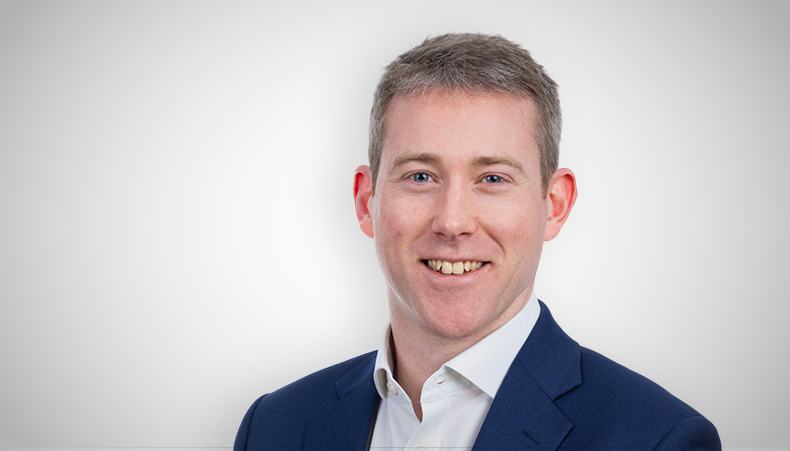
In this episode of The Balancing Act,we're joined by Pete Gladwell, Group Managing Director for Public Investment at Legal & General, to explore how credible partnerships, place‑led ambition and long‑term capital combine to deliver regeneration that lasts.
Pete has vast experience in deploying institutional investment across cities and communities, with the conversation looking beyond traditional procurement and contractual models to examine what actually makes partnerships work when conditions shift, risks crystallise and projects stretch over decades.
The episode explores:
- Why leadership and ambition deliver far more impact than an unnecessary procurement process
- How long‑term investors approach risk, return and impact when backing places
- What genuine alignment looks like between public bodies, housing providers and institutional capital
- Why trust is built through momentum and delivery – not just governance structures
- How places can drive their own markets through partnership, rather than waiting for growth
Listen to the episode below, or subscribe on your usual podcast platform – including Spotify and Apple Podcasts – to make sure you don’t miss an episode.
This episode was recorded with participants in their roles at the time. Roles and affiliations may have since changed.
David Meecham: Hello and welcome back to The Balancing Act, the podcast focused on the realities of delivering regeneration in the real world. Across earlier episodes, we've explored why regeneration schemes are often the first to stall when markets tighten. We've looked at why trust, leadership and long-term capital matter just as much as legal structures and funding models. This episode explores how credible partnerships, strong leadership and a place-led investment approach are what truly unlock long-term regeneration and delivery. I'm delighted to be joined by Pete Gladwell, Group Managing Director for Public Investment at Legal & General, who brings a wealth of experience in deploying long-term capital to support public services, communities and growth. Hello, Pete.
Pete Gladwell: Good to be here. Thank you for inviting me.
David: Pleasure. Thank you for coming on the podcast. So in a break from tradition, I'm going to ask you, why is it that Pete Gladwell is sitting here today to talk about regeneration? How was your journey from starting off as a youth worker to now?
Pete: Yeah, it's a bit random, isn't it, when you think about the early days of youth work. And it's funny, I talked to some people at university recently who were saying, how can they get into this space? I said, I'm probably the worst example of any kind of pre-programmed or pre-planned career path. But no, I did computing at Oxford, so I was very interested in numbers side of things. And then I ended up doing youth work, so was determined not to work in the city and wear a suit, which is, course, where we are sat as we record this episode. I was also working at DTZ part-time, so was doing part-time youth work three days a week, part-time DTZ, the old property consultancy that sadly, that is no longer with us. But that was a really fascinating dichotomy because I'd be doing youth work and trying to raise 60 pounds for a sumo suit for the kids parties. And at the same time, writing whole reports about how someone with Tishman Speyer, we're investing £600 million into Berlin real estate and thought, well, if there's a way of bringing these two worlds together such that some of that £600 million has a positive impact in young people's lives, that could be quite exciting. That could be quite a fun way of kind of living life. Doing the two literally in the same week really brought that contrast home. So we ended up moving to London and I joined Legal and General. And then then it's been really interesting being at L&G because initially, I was on the side that was dealing more with pension funds and bringing new money into our platform. We're really successful that we actually aggregate a lot of capital, particularly long-term capital into Legal and General's platform. And then we had the very interesting challenge of, right, well, we've set out a store. How can we actually deliver on this and invest these huge proportions of society's capital to do what we said we do? And that's this combination of doing good and having a positive impact but also generating really fantastic financial returns. And that's obviously a massive part of the job as well and a part of the job that I'm very proud of. So that's kind of led me to this point where my team and I work across the different pools of money in L&G. That's everything for very kind of short term, quite high-risk taking money to very long term 30-40 year money. And we kind of bring it together and find the best combinations of that to meet the need in places and get a better performance for people who have entrusted their pensions to us as well.
David: That sounds great. And we'll come on and talk about risk appetite and what that means for you and investment decisions and, and, and…So bringing it back round to regeneration and, probably in your context, particularly investment, the use of partnerships, challenges associated with that. We've had a number of contributions from varying types of organizations who have talked about the challenges of which there are many, both legal and funding and commercial. But in the context of L&G and particularly in the context of the white paper that L&G issued last week on your partnership with Hyde, how does that track through to what L&G are trying to do with regeneration and partnerships?
Pete: Yeah, it's an exciting time, I think, because whether you're talking about the social housing white paper with the partnerships, RP model, and obviously, the Hyde partnership is a really good precursor of an example of what that could look like in practice with 1000 homes or some of the big regeneration partnerships we have with local authorities, combined authorities up and down the country or even some of the big partnerships we've had with people like the cabinet office where we've over a billion to create these civil service hubs, for example. Clearly they do have the ups and downs because numbers move, the economic climate moves. But being really clear on the purpose and the objectives from the start on both sides does help you stand that test of time. You can't just have the nice fluffy vision statement that needs to feed through very clearly to a shared ambition, and then that needs to feed through very clearly to actions within a preset time that actually lead to delivery. Because obviously, there is no impact until you've actually delivered. The starting point for us is always very much around, look, where's the social need for investment here? What's the difference that our capital could make? We need to make a financial return on it and there are different financial returns to take on depending on the risk we're taking. But that's where the starting point is and that's where it gets exciting.
David: And so for you, what is social need? What does that mean in terms of the output?
Pete: Well, it can vary place by place. I mean, it's absolutely not for L&G to go around saying what we think our investment should be doing is, creating thousands of social homes, because sometimes the right answer will be our investment is creating a new knowledge district and that's the social need. So for us, it's very much about working with partners who understand the need for investment in their sector or in their place and then trying to work out if our capital is the right type of capital to meet that need, to generate the social outcomes, the environmental outcomes, and then build the right partnership around that to actually enable that infrastructure in place to actually get that delivery going.
David: I suppose thinking about that, Pete, it's how do you get a shared ambition when the two parties may not actually have objectives that truly align?
Pete: Well, I think a lot of this comes down to how you choose your partner and what kind of a partner you're looking for. If you go out and run a procurement process, it's the corporate equivalent of a curb crawl. You are looking for people who will prostrate themselves to you to try to sell you their goods, works and services. It's a corporate curb crawl and you're running a procurement process because you want to find people who will go through a procurement process. That isn't how you go about finding a long-term partner. You go about finding a long-term partner by meeting people who you think could have the right alignment with you and then creating, checking that they do, creating that shared ambition because there is sufficient alignment and then, as I say, delivering it. And that's just a very different type of partner. there isn't that much difference if you look at alignment. So let me just give you the example: the first board meetings we had as a combined board of the new partnership army with Hyde and L&G. I can almost guarantee if you had sat in that room and tried to pick who was representing Hyde and who was representing L&G, you would have found it impossible to work out who was from which organisation. It was obvious who the board were and who the executives were - I was on the board this time - the questions it's important that we raised and the executives were responding and did a phenomenal job. But there was no distinction between the L&G people were all sat there going, well, how do we make as much money as possible from this? The Hyde people all saying, we don't want to make any money from this. This is about their customers. Actually, we were all asking all of these questions about the financials and the customers because Hyde are a really financially astute housing association. They are about taking care of their customers and L&G is a very financially astute organization who is rated V1, G1, C1 because we really care about our customers as well. that's a really good example of, I'm struggling off the top of my head to think of points where the boards of the two organisations clearly weren't aligned with each other. And you think of a typical regeneration scheme. If you have an investor, a long-term investor as a partner, they need to create a thriving place because we will be seeking to generate income from a typical bill to rent scheme for 20, 30, 40 years to pay our annuities. So we can't afford to just knock up some cheap scheme, leave it to wreck and ruin and move on to the next one. We need that long-term income. So we are absolutely aligned with the public sector body to make sure it's highly sustainable, to make sure we're creating a thriving place, a place where people can thrive. And there's a full alignment between those partners from the start. There will be points that how much do you pay for the land where there is still a commercial negotiation? But the point being the outcomes are really there. And that's very different when you're in partnership with some partners, depending on if you're a partnership with other partners.
David: That's a point. Picking up on the Hyde partnership, or rather, not necessarily Hyde as a particular organisation, but how do you know that you're going to have found the right partner for any particular partnership?
Pete: Yeah, I mean, we tend to look for that ambition that it's really important that, and particularly if you're talking about places, I'm only going to live once. So I want to be using that life to make a difference. And I want to be partnering with people who actually want to make a difference. And that's almost the number one thing. The second thing after the ambition is the focus on delivery, because you can have really fantastic, exciting conversations with the leader of place but then we need them to focus and we will focus on actually driving that delivery through week after week until we get it done and then continue to focus on the outcomes we want to drive, many of which are often longer term. And then there's that kind of collaboration around, look, how do we create the right structure? I say, if they kind of go down the route of great ambition, great focus, but we're going down a kind of two-year procurement process with lots of lawyers on both sides, it's going to turn transactional and we're not going to get the focus on the outcomes and delivery one. So that would be a kind of red flag as well.
David: Gotcha. Sorry, I was smiling at the reference to lots of lawyers because obviously I'm not going to comment on that.
Pete: No, no, no. I mean, can I just say lawyers and advisors are absolutely essential to these things, but it's people who come with the right mindset about delivery rather than let's run a long process and make as much fees as we can dragging this out - that's where it all goes wrong.
David: Absolutely. And that's part of the rationale behind these types of conversations is to understand and to explore as a lawyer sitting in a law firm, what is it that these conversations look like? So you're saying to me, you know, it's really important for me to ensure that, in essence, I trust the person that I'm going to have as my partner. That doesn't sound like that's a quick process to me. What is the difference between the timeline of taking part in a procurement process, ignoring the limitations of what a procurement process does and whether or not it achieves the right outcome, but what is, practically speaking, the difference between entering a procurement process and entering into these discussions to work out whether you've got the right partner.
Pete: I think you're still after your procurement process. You're going to have to get to the point of deciding if you trust the person, right? So I think you can short circuit a lot of that and move straight to the point of saying: here's the ambition, here's the focus. We're going to get this regeneration scheme done together. Now, if the person on the other side of the table repeatedly doesn't stick to deadlines or doesn't push forward with delivery in the way they've said they would, or the vision or focus starts to drift, then immediately that trust starts to be eroded. Whereas if you're sat opposite someone, I've got a really good example, but we haven't announced it yet, so I can't talk about it. But if you're sat opposite someone where you've never met them before, but immediately you like the sense of ambition, and when they said something, they'll do it. And then the next meeting in two month’s time, lots has moved on. You're keeping on making progress. The trust builds. You might have lunch and get to know them. You might spend time with the university and the city council and the combined authority to check they're all on the same page, but you're already making progress in the meantime towards delivery.
David: That's the bit that I'm really keen to understand because it's the distinction between running a competition, ending up with a preferred bidder and as you say, then having to work out whether or not you actually trust that preferred bidder further down the line when actually they may well have been erased at the bottom in order to be able to get them to win which is nobody's preferred outcome. And what it sounds like for you with this in terms of it takes time, it takes effort on your part and the partner to overcome almost parasocial barriers between the two of you to work out whether or not actually I can do business with this person who's sitting opposite me.
Pete: My point, I just really want to be clear on is you're doing business, you're making progress whilst you're building that trust. So rather than building the trust and then saying, right, what should we talk about? So whether it's with Marvin Rees in Bristol Temple Island or Pat Richie with Newcastle Helix or Andy and the team with Hydro. In all of these partnerships, there will be that initial meeting. The first time I met Marvin, I can still remember, as the Mayor of Bristol, he was literally saying “look, we've got this site, we need to make this work, we need to deliver it.” Here's a guy called Colin Moulton, could you work with us on delivery? And trust started off pretty low because we just had a random mayor and a chap who I'd heard good things about but never done business with saying we want to work with you on this scheme. But then when you're building progress and building momentum and we meet with Marvin and the VC of the university and Colin and they've done a ton of work and we've done a ton of work and we've got architects on board, they think “LMG are serious about this. They're people who actually deliver thing” and we think, well, these guys are serious about this. They're focused on delivery and it's been the same with Kate Josephs and Sheffield - there are people who you just know you can trust to get things done. And as I say, that really is the exciting thing because then suddenly the alchemy happens and we can start to really move the needle on growth and regeneration in places.
David: Moving on from that particular topic, Pete, you've just mentioned about backing places and actually maybe we could explore that in a bit more detail in terms of what that means for you, L&G in getting a decision through your investment committee that they particularly want to invest in that particular place?
Pete: I mean, I can't stress enough that all of these are big teams within L&G that people like Ben Rogers, who's the Head of Regeneration, or people like Catherine Rainsford who were involved in the Hyde thing because often what you find in these situations is we're using multiple pools of money or teams within L&G and a lot of what's enabled us to kind of push the envelope in this is that internal cohesion and purpose. So, a typical deal if you go back to Temple Island, because we were talking about that earlier, has four different pools of money within L&G investing in that scheme. And so it will need to go through the investment committees for those different pools of money with reference to each other. One of them will be saying, look, how does this compare to a guild that we could have invested in? The answer is it's sufficiently more attractive to make it really worth doing. Another will be looking at the IRR on the development funding that we're putting in. Another will be looking at from a build to rent perspective. Another will be looking at from an affordable homes perspective. And it needs to stack up for each of those pools of money. So part of the role my team and I play is pulling those together, understanding the requirements for each one. And then each one will go through the relevant investment committees on that combination of risk return and the impact piece being really important as well.
David: It sounds as though you've almost got the partnership working internally at L&G across all of those investment committees and that must be quite a challenge sometimes.
Pete: Yeah, I didn't have any idea. I grew up in Gloucester, son of two teachers, so I had no idea what working in a big corporate is like. But it's an amazing thing when you can get a big corporate pulling in the same direction. you can deploy hundreds of millions of pounds to change places and have a really fantastic impact on people's lives up and down the country. That's really exciting, but you're right. Getting that big corporate pulling in the same direction, four different teams all pulling in the same five, because the Regen team, led by Ben, is a really important element of that, is not the work at the moment. And we're fortunate that you've got a lot of people at L&G who like this combination of impacts. They work there because they actually care about making a difference as well as the financial return. Without that, you'd be pretty screwed I think.
David: And hopefully you've got an external partner who you already trust and believe and is going to be the right partner for you therefore that element of it, although you clearly need to a lot of plates all at the same time, that element should be pretty much nailed on by the time you're going back out to them.
Pete: Yeah, absolutely. But if I'm honest, there is an important dynamic around that where people sometimes underestimate that my team and I, when we're taking a structure like this around internally, need to know that that proposition is credible. Actually we will be backing a place or a partner internally to teams and saying, good, this is worth taking seriously. XYZCC are a serious entity. They actually want to make this happen with us.
So there's a credibility test for us internally as well. If someone says that we're really excited to do this with L&G and then they turn around six months later and say, sorry, we've changed our mind, that's a risk for me and my team that we have to be careful of as well.
David: And are there any particular geographical areas that are sweet spots for L&G? I mean, you've obviously referenced Bristol, Sheffield, Newcastle.
Pete: Yeah, but you know, the fascinating thing about this is so little of it is down to the underlying economics of a place. And people always think L&G will just want to invest in the richest places or the places with the biggest economic growth. And actually, it really tends to be more about leadership of a place and ambition of a place, because the amount we can invest into a market can fundamentally shift that entire market. If you look at the regen schemes we've done in Cardiff, which my colleague again, Tom Roberts, to give credit where it's due has really led on that. We've invested over a billion pounds around that station. That fundamentally shifts the economy of Cardiff. And so rather than waiting for a market, you can actually help a place create its market, create its supply of Grade A space attract new occupiers but all built on that shared ambition and collaboration. But you need real leadership within a place to make that happen. And so the sweet spots are often places that have, that's why I said ambition focus rather than, well, we're looking for 5% GDP growth because you can start to invest enough that the growth can really come.
David: So therefore nowhere is off the table - I know that sounds like a very binary question.
Pete: Nowhere’s off the table, but if I'm frank, of the things nationally that concerns me is a lot of the smaller places won't have the same capacity to work with us that some of the big core cities or the combined authorities would have. I think that's a real reason for moving into the combined authority system is it gives more resource for places and more capacity for places and more of that kind of commercial expertise and experience that people like Colin who we referenced earlier have. So when I say nowhere's off the table, some places do struggle to engage and that's where we struggle as well. But I'd love to crack that because it's a shame we end up investing more in some of kind of bigger, better resource places than we do in others.
David: One of the things that we've had as a common theme on these discussions is that point around resourcing and capability and the need, as you say, to have leadership that has really strong ambition and drive and is vocal. In a way that is going to provide reassurance and confidence to organisations such as L&G. And one of the things that we've spoken about with other guests is the need for almost a playbook, a repository for sharing of information, sharing of knowledge, sharing of experience, so that areas are able to capitalise on the experience of others who've done it and know what they're doing.
Pete: There's a lot in knowledge, but there's also a mindset thing. The last event you and I were at, it was fascinating for me because we met a fantastic professional who was very passionate about the scheme that she was responsible for stewarding. And she almost said something along the lines of, “this scheme is so valuable, I'm going to have to run a procurement process because it's such an amazing scheme.” It blew my mind slightly because I kind of, just thought you, literally cutting off all of the best investors in the world by, as I say, it's like a corporate curb crawl. You're looking for a certain type of partner by doing that. But to understand the mindset of “my scheme's too good not to run a procurement” rather than thinking “this scheme means so much to me that I need to go out and find the best partner to deliver it and then put the legal structure around it, working with experts” then it's just a fascinating mindset shift that people like Pat Richie clearly have gone through and other people we've referred to on this podcast already. But it's a shift that we need to see happen to this delivery pick up.
David: So Pete, a different tack. How can we get better? How can the sector be better?
Pete: Well, I think the ambition is an important thing because a lot of these partnerships have the potential to change people's lives. That's the exciting thing about the Hyde partnership or Change Cities, like the various ones I mentioned up in the country. But they can also really move economic growth and that's what the country really needs at the moment. So, the exciting thing I think about Hyde was they were ambitious because they could see the limit that their debt covenants put on them in terms of their ability to deliver. By the way, nothing against banks – it’s entirely understandable a bank would want to put some debt covenants in place and recognise the role of pension funds and equity to do far more and to enable them to help far more people get an affordable home. And it's the same with, a lot of cities have typically thought we've got really exciting ambitions and the only way we can do this good is either on our own balance sheet, borrow money from Public Works Loan Board, or we go out and procure a developer. Both of these examples are examples where we can be more ambitious and deliver more if we bring the right type of investment into play and I don't just mean Legal & General by the way there are other long-term pension funds other insurers this is not about L&G.
David: Other providers are available.
Pete: Well they are but and local government pension schemes I mean Greater Manchester Pension Scheme is one of our closest partners whether it's affordable homes or you know all the work we do with Bruntwood a fantastic developer so tapping into this long-term money with that ambition and focus on I'm really excited about whatever it is, my city, my community, my housing association, how it can deliver more. How can I tap into long-term investment to drive that investment, to drive that growth, to generate those social outcomes? And working with the likes of L&G to create those structures is where I think we can do far more as a country than we do at home. I think we're just kind of, we're just, even L&G who I like to think is near the forefront of this, we've probably done a few of these. Less than ten, though and there's no reason why we have to only do ten. So we've got UKREiiF coming up and I'm really hoping will be the start or moving on significantly of several more. But also to say it'd be great if other investors do partnerships with other housing associations like we're doing with Hyde, for example, as well. There's real potential for this across the industry.
David: But just bringing it back to the people aspect. I do think listening to you talk and where you started off in life in terms of your sumo suits and being a youth worker and really wanting to make good. You must be really proud of what you do.
Pete: That's very kind of you to say. We are always driven to do more we've got some with a London borough at the moment, which is using pension fund equity to fund the retrofit of social housing, which I'm really excited about. So it's nice to look back on things we've done ten years ago, but really for me, the excitement is always where we can continue to push this, where we can take it next. I think local government pension schemes have a huge role to play sitting alongside us in some of this as well. I'm pretty driven and actually there's a funny competition between a few of us in this space, there where different financial institutions… there are some people in this industry who work for other institutions who also really want to do good stuff. And there's a very nice competition where we like being the first person to get something done or a new model done, learning from each other. So that's a good type of competition, I think, for the country for us all to have as well.
David: So just on that point, who inspires you? Who's the champion?
Pete: So there’s some people in the public sector who I really have admired. I really admired the way Howard Bernstein shaped Manchester. I think a lot of the success Manchester's actually seeing now and Greater Manchester really goes back to the likes of Howard. Again, no procurement process, just being clear on who he wanted his partners to be and then holding them to account to deliver for his city. And you do see people like Henry Kippin up in the Northeast or Kate very much in Sheffield and Tom continuing that ethos of ambition. People like Pat, Tom Reardon, Eamonn Boylan who's sadly no longer with us, but real city leaders who know what they want for their place and have brought the right partners in to help deliver it.
I can't immediately think of someone on my side of the table, on the investment side of the table who was doing this 20 years ago and that's what's quite exciting is, I think those of us who are doing it the moment have a chance to really shape it and hopefully leave a good legacy that will no doubt get surpassed by people who come after us.
David: Well, that's a perfect spot for us to wrap up, Pete.
Pete: But thank you very much for your time and thanks for joining.
David: Thanks for listening to The Balancing Act. If you enjoyed this episode, please subscribe on your usual podcast platform. To hear more conversations about shaping next gen cities, visit TLT.com or follow us on LinkedIn.
Related services

Get in touch
%20%C3%94%C3%87%C3%B4%20790px%20X%20451px%2072ppi%20copy12.jpg)
%20%C3%94%C3%87%C3%B4%20790px%20X%20451px%2072ppi2.jpg)



%20%C3%94%C3%87%C3%B4%20790px%20X%20451px%2072ppi%20MANCHESTER5.jpg)




Get in touch

Related insights

The Electronic Communications Code in court: Five lessons operators should be acting on now

The Electronic Communications Code: Building a resilient telecoms portfolio

The PRS Database Regulations: what lenders, receivers and insolvency practitioners need to know before taking control of a tenanted property

The Electronic Communications Code: Key considerations for public bodies

Developing land with telecoms apparatus: How the Electronic Communications Code can impact project delivery
The Electronic Communications Code: Key landowner rights and operator risks
The Electronic Communications Code: What you need to know

Is your organisation's land portfolio ready for the new contractual controls register?

Martyn's Law notification guidance: the practical points to know and prepare for now


Government announces once-in-a-generation overhaul of the home buying and selling system

The EPC rollback: relief or risk for commercial landlords?

The Balancing Act: Three takeaways on regeneration beyond the contract


No more one-way rents: the upwards-only rent review ban is now on the statute book

The Balancing Act: Three takeaways on partnerships, capital and trust

The land use challenge: creating a system to deliver net zero

EV Charging Infrastructure in Northern Ireland: Outlook | TLT

Driving Demand: EVCI Funding and Development Opportunities | TLT


Evolving Cities: How are social values influencing our workplaces?



Rebalancing act: the impact of retail transformation on people and stores


Plugging into electric vehicle opportunities | Whitepaper



TLT grows real estate offering with appointment of commercial expert

TLT adds 29 lawyers creating one of the largest practices of its kind in the UK

TLT supports on sale of Belfast City Centre ETAP Hotel

TLT grows housing and regeneration team with appointment of legal director

TLT advises The Guinness Partnership on £400 million real estate joint venture

TLT and TCLP launch contract tool to combat climate change in the built environment

TLT Expands National Real Estate Practice | TLT

TLT Expands Real Estate Offering with Public Sector Expert | TLT
Charting a sustainable course for the property market
TLT appointed to Network Homes legal services framework

TLT Partner Appointed Chair of North West Fraud Forum | TLT

TLT Advises on Bristol Waste Management Acquisition | TLT

TLT Shortlisted for Firm of the Year at Scottish Legal Awards | TLT

TLT Wins Law Firm of the Year at Manchester Legal Awards | TLT

Energise2030: Data Centres, grid reform and the race for power

The Balancing Act: Unblocking regeneration - public land, risk and delivery

The Balancing Act: Regeneration by the community, for the community


The Balancing Act: Regeneration beyond the contract

The Balancing Act: Partnerships, trust and patient capital


The Balancing Act: Setting the scene for regeneration



BNG - TLT and Belmont Estate talk nature positivity
What does the next generation of our cities look like?
Issues and trends driving the shape of our cities: expert view from Savills & TLT

Office, Retail, and City Centres - What does the future hold?

Aldersgate interview with TLT: clean energy generation

The social housing whitepaper - what changes are on the horizon?
Break notices: ensuring that the break is validly exercised


