
Infrastructure Planning Blog
59: A solar decision, revised National Policy Statement for Ports and other news
Today's entry looks at the latest solar decision, the revised National Policy Statement (NPS) for Ports and an update to the Planning Inspectorate's interactive projects map.
Earth, Wind and Fire
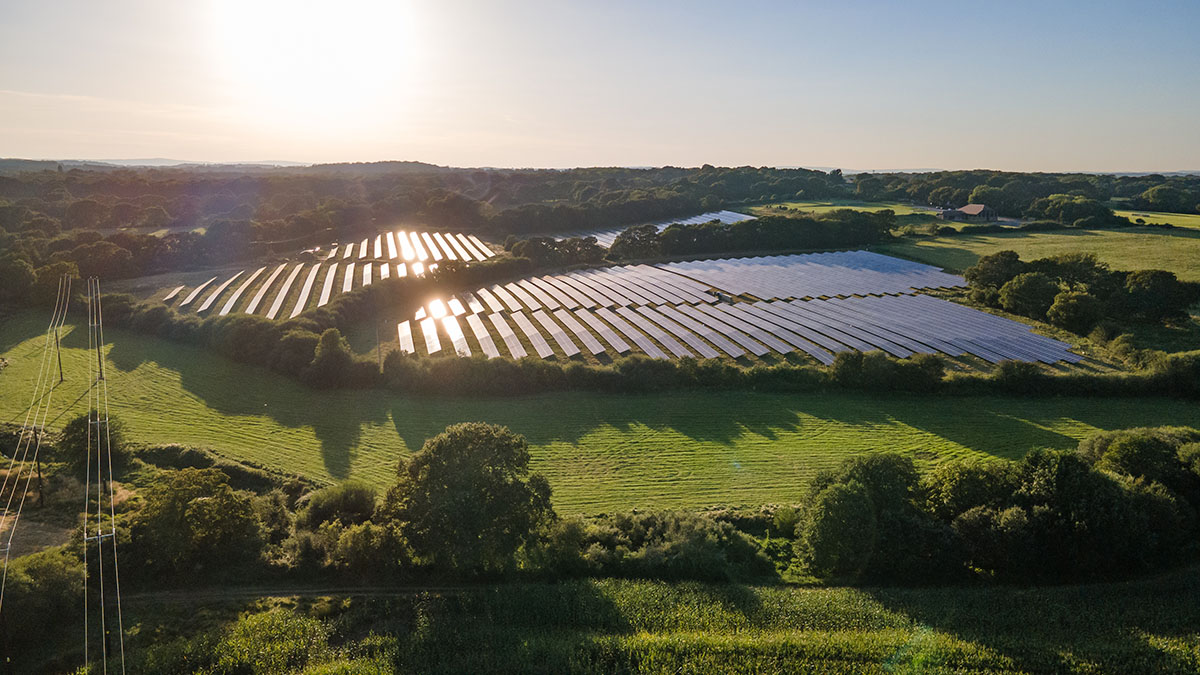
On 8 July 2026, the Secretary of State (SoS) granted consent for the One Earth Solar Farm. It is located across the Nottinghamshire and Lincolnshire border and would provide 740MW of generating capacity. The decision letter is here and the made Order here. The Examining Authority (ExA) recommended refusal on flood risk ground. The SoS has delivered a sharp kibosh of that recommendation.
Flood risk is often a key issue for solar farms given their location on flatter land that is less likely to be approved for housing.
This decision letter includes some important discussion regarding the sequential test.
The sequential test requires development in Flood Zones 2 or 3 (i.e., at higher risk of flooding) to direct development away from the areas at greater risk of flooding. Development should not be permitted if there are reasonably available sites at lower risk of flooding. The term "reasonably available sites" means those which are suitable for the type of development proposed, able to meet the same development needs and have a reasonable prospect of being developed at the same time as the proposal.
During the examination, the Applicant undertook a retrospective search of alternative sites and in doing so restricted its consideration to alternative sites within 10km which could deliver a minimum land parcel size of 250 hectares (rather than more numerous smaller parcels which would together make up the full site). The ExA was not troubled by the 10km search area or retrospective nature of the search but did not consider that the 250 hectare limit had been justified, particularly when other solar projects had evidenced that land parcel areas of a considerably smaller size could achieve the delivery of large-scale solar developments. The ExA therefore concluded that the sequential test had not been met, contrary to policy, and ascribed very great negative weight to that finding.
The SoS disagreed. On land parcel size, the SoS noted that "there is neither guidance nor policy that states a fixed land parcel size for searches for reasonably available land must be used". Preach! The SoS accepted that even if more than two disparate land parcels were proposed, this would significantly add to delivery timescales and have an impact on the efficient use of land, and in this case a 250 hectare limit would mean four distinct land parcels would be required (so was not, in the SoS' view, a realistic alternative to the Order Limits in any event).
The SoS also concluded that it was acceptable for the applicant in assessing alternatives to have regard to the willingness of landowners to grant the necessary land interests – "The [SoS] agrees … that unwilling landowners could potentially delay the development process (through the requirement of [compulsory acquisition]) and therefore even if alternative land were found, this land would be unlikely to be able to be developed at the same time as the Proposed Development to meet the 2029 connection agreement date".
Paragraph 4.20 of the decision, written perhaps with Kelly Clarkson's Breakaway playing in the background, is especially emphatic: "The [SoS] considers that there is no policy basis that evidence from other [nationally significant infrastructure project] assessments and decisions should form the basis of a conclusion on whether the Sequential Test has been met or that there are site search radius and site size area thresholds that should be applied". Many thanks, Secretary of State.
There is a note of caution for applicants: "the [SoS] notes that the site selection criterion regarding flood risk could have been more strongly worded so that avoiding areas of flood risk was clearly prioritised as part of the assessment of alternatives from the outset of the Proposed Development". However, this did not change the SoS' overall conclusion, who downgraded the ExA's weighting on this issue from very great negative weight to neutral.
For projects dealing with flood risk issues, there is some further useful commentary on fluvial flooding and the policy requirement to show that development would have a negligible effect on the risk of flooding elsewhere. Requirements 7(2) and 22 impose stringent post-consent controls to ensure flood risk is eliminated at the detailed design stage; these are worth reading.
Two further points to note from the decision letter:
- Best and most versatile (BMV) land: 660ha of the approx. 1,400ha site was BMV agricultural land. This was significant at a local level but not in the regional or national context (only 0.061% of the total Utilised Agricultural Area in the UK) and the latter is the measure which the SoS used to inform his conclusion. The loss would also be temporary (i.e., 60 years, following which the solar farm would be decommissioned).
- On the overall planning balance, as well as disagreeing with the ExA on the apparent failure of the sequential test, the SoS disagreed (stridently) with how the ExA had weighted that failure in the planning balance. The SoS says "… even if the [SoS] had agreed with the ExA that there was any policy failure in relation to the Sequential or Exception Test, in light of the substantial benefits of the Proposed Development and the clear findings of the Environment Agency that there will be a negligible real world increase in flood levels as a result of the Proposed Development, the [SoS] can see no reason why he would not still conclude that the benefits of the Proposed Development would outweigh the adverse impacts".
After a good a run, there is a bit of a gap now to the next DCO decision – Beacon Fen Energy Park on 22 August 2026.
Next Port of Call
A revised National Policy Statement (NPS) for ports was published on 6 July. It replaces the 2012 version and will be formally designated on or after 24 July.
We reported on the draft Ports NPS in blog 7 and the published version is structurally very similar. The key points of difference are:
- The published version confirms that for port projects directed into the Planning Act 2008 under section 35, the application must be decided in accordance with the decision making criteria set out in section 105 of the 2008 Act. In other words, the decision maker assumes that no NPS has effect in relation to that application. This is surprising and contrasts with other NPSs – see for example NPS EN-1, which says "EN-1, in conjunction with any relevant technology specific NPS, will be the primary policy for [SoS] decision making on projects in the field of energy for which a direction has been made under section 35".
- There is greater recognition of indirect economic benefits and local economic growth in framing the need and economic case for ports development. For example, the NPS notes that "ports … create a cluster effect, which supports economic growth by encouraging innovation and the creation and development of new business opportunities". However, this doesn't go as far as the energy and (draft) Heathrow NPS on designating ports as 'critical national priorities' or 'critical growth national infrastructure'.
- The published version strengthens the policy basis for port developments linked to offshore wind manufacturing, assembly, operation and maintenance.
- Biodiversity Net Gain (BNG) is more prominent, albeit this only applies for now to the onshore components of port development as far as the mean low-water mark. From 2 November 2026, the SoS will need to be satisfied that the biodiversity gain objective in any relevant Biodiversity Gain Statement (see here for the one relating to ports) has been met. In relation to offshore areas, the published NPS confirms "there are provisions in the Environment Act 2021 to allow Marine Net Gain to be made mandatory for NSIPs in the future. Marine Net Gain, intended for all in-scope new developments, is currently being developed by Government, which will provide guidance in due course".
- The published version includes a dedicated section on shore-side electrical power, increasing policy support for decarbonisation technologies that allow vessels to connect to the electricity network while berthed, replacing ships' generators.
Finally, the Planning Inspectorate's DCO map has been updated to show boundaries (i.e., Order Limits) as well as markers. It's a useful tool and highlights the scale and geographical range of projects promoted under the DCO regime so far.
This publication is intended for general guidance and represents our understanding of the relevant law and practice as at July 2026. Specific advice should be sought for specific cases. For more information see our terms & conditions.


Get in touch

%20790px%20X%20451px%2072ppi.jpg)

%20%C3%94%C3%87%C3%B4%20790px%20X%20451px%2072ppi2.jpg)







%20%C3%94%C3%87%C3%B4%20790px%20X%20451px%2072ppi.avif)
Related services
Get in touch


Insights & events

Infrastructure Planning Blog 73: Regulating regulators
Infrastructure Planning Blog 72: Latest solar DCO decision analysed

Belong v Seddon: Can PCSA liabilities survive following execution of a JCT contract?

Northern Ireland Planning and Environment update: Energy


Infrastructure Planning Blog 70: Statistics on major projects, tech updates, and applying the new NPPF

Infrastructure Planning Blog 69: Application stocktake as changes to the Planning Act 2008 regime start to take effect

Infrastructure Planning Blog 68: Morecambe and a wise decision?

Adjudication Enforcement in Focus: When is an Agreement Agreed?

Infrastructure Planning Blog 67: Put out more flags

Infrastructure Planning Blog 66: Full BNG for NSIPs guidance published

Infrastructure Planning Blog 65: A beacon of light

Infrastructure Planning Blog 64: What does the updated National Planning Policy Framework mean for infrastructure?

Infrastructure Planning Blog 63: Harry Potter and the grave error

Infrastructure Planning Blog 62: The end of the challenges to expansion of Luton and Gatwick Airports

Infrastructure Planning Blog 61: More updates to PINS' advice



Impact of flexible working on towns and cities - the market and legal considerations

Nick Evans joins TLT as partner placing the firm at the helm of infrastructure, planning, public law and future energy in the UK

TLT expands future energy and infrastructure expertise with new Partner appointment

TLT strengthens public sector infrastructure and future energy offering with two new partners

TLT strengthens construction expertise with third partner hire in six months
TLT adds 29 lawyers creating one of the largest practices of its kind in the UK

TLT grows projects infrastructure and construction team with appointment of new partner

TLT Partner Appointed Chair of North West Fraud Forum | TLT

TLT Shortlisted for Firm of the Year at Scottish Legal Awards | TLT

TLT Wins Law Firm of the Year at Manchester Legal Awards | TLT

TLT Recognised for Two Awards at The Lawyer Awards 2022 | TLT

TLT Shortlisted for Two Manchester Legal Awards 2022 | TLT

TLT advises Network Homes on £140m sale to Grainger

TLT advises One Housing Group on major affordable housing project

TLT advises Town and Country Housing on modular homes acquisition

TLT completes largest office acquisition on record in Northern Ireland


Preparing for the Procurement Act 2023 - construction industry focus
Issues and trends driving the shape of our cities: expert view from Savills & TLT

