Infrastructure Planning Blog
22: Duties, thresholds, clowns and delays
Today’s entry looks at an attempt to prevent the removal of the enhanced national landscapes duty, the impending thresholds for solar and wind, a killer clown in the Green Belt, and a delay to an offshore wind project.
National landscapes
Apparently, more than 200 organisations have written to the Prime Minister, urging the Government not to weaken or remove the legal protections for National Parks and National Landscapes. The claim is that the removal “will erode what makes them special and undermine their economic and environmental potential”.
I’m afraid I strongly disagree. Why? Because this appears to miss the fact that existing national policy secures the “highest level of protection” for these sites. The new duty has introduced substantial uncertainty: there have been 4 legal challenges, with some claiming the new duty prevents development entirely (upending the well-established principle that planning is about a balance and trade-off of benefits and disbenefits). It is simply not compelling to claim that there will be a free-for-all for development in these protected sites simply by going back to the position that existed before 2024.
You can read our views on the duty in Blog 3. Since that was written, we have the decision on the Gatwick Airport DCO. That decision reinforces the conclusions in that post not least because development is prevented until agreement is reached or arbitration completed. Given the government wants to “build, baby, build”, removing provisions like this, which introduce excessive uncertainty without much upside, should be pursued.
Crossing the threshold
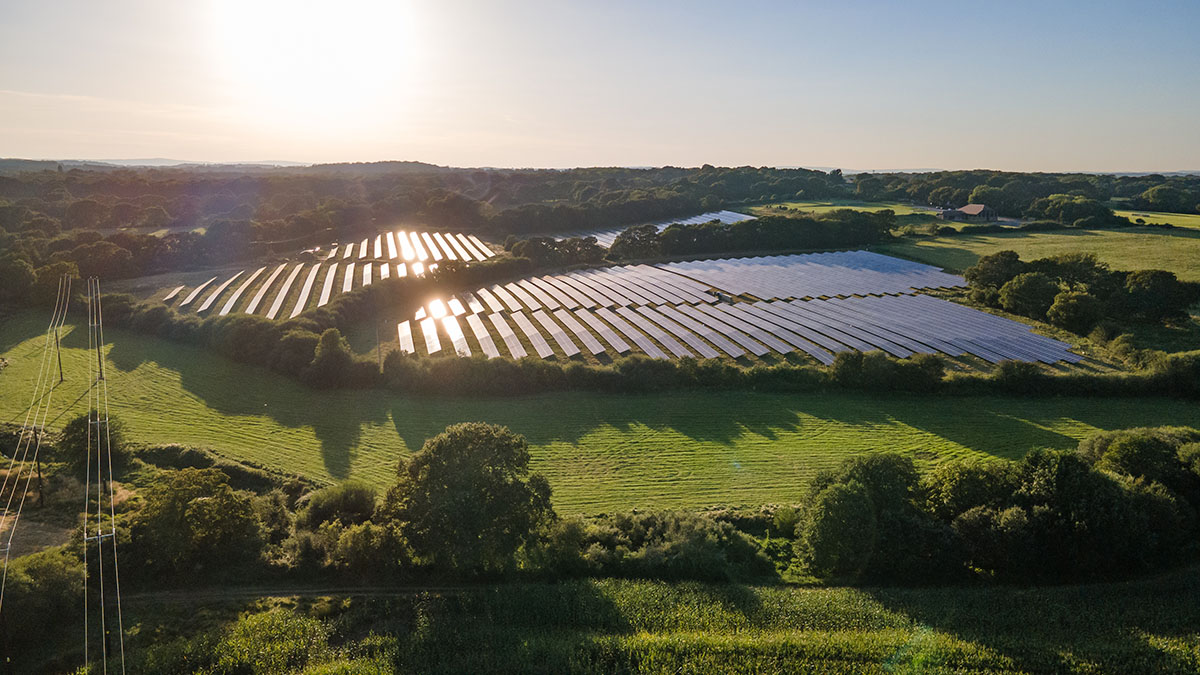
We now all know that the threshold for whether a solar project is a nationally significant infrastructure project is rising from 50MW to 100MW from 31 December 2025 onwards. Onshore wind will also re-enter the DCO world with a threshold of 100MW. The mechanism for introducing these changes was the Infrastructure Planning (Onshore Wind and Solar Generation) Order 2025.
Article 3 of that Order varies section 15 of the Planning Act 2008 so that it reads “A generating station is within this subsection if – it generates electricity from wind or directly from sunlight… and its [i.e., “a” generating station’s] capacity is more than 100 megawatts”.
Would a co-located development of 50MW wind and 50MW solar meet the threshold? That does not appear to be the Government’s intention but I’ve been wondering about those kinds of co-located wind and solar developments, and – given how interesting a person I am – whether the word “or” here could be read as conjunctive (i.e., so that a cumulative wind and solar threshold could be met by a combined 100MW) or disjunctive (i.e., each technology requires a minimum of 100MW).
To be clear, the policy objective appears to be the latter – but it’s worth noting how that question interacts with existing case law, and the approach in Scotland. In Drayton Manor Farms Limited v Stratford-upon-Avon District Council and separately in Durham County Council & Hartlepool Borough Council v Secretary of State for Levelling-up, Housing and Communities, the High Court confirmed individual solar schemes below 50MW which happened to be adjacent to another did not constitute a single NSIP where there was no functional or operational interdependence (e.g. each had their own grid infrastructure). This would probably not apply to co-located developments with shared grid infrastructure promoted by the same developer.
In Scotland, they use the same definition of “generating station” (under the Electricity Act 1989), and there are several examples of dual-technology/co-located technologies treated as a single generating station. For example, the Knockkippen Wind Farm project was brought forward as a single generating station combining 12 wind turbines, ground-mounted solar array and battery storage or take the Hollandmey Renewable Energy Development which was consented as a project bringing together 10 wind turbines, 15MW of ground-mounted solar array and 15MW of battery storage as one generating station. So, the fact that section 15 relates to “a” generating station wouldn’t necessarily help us decide between the two interpretations.
What does this all mean? We will have to see.
Very Spooky Circumstances
Outside of the NSIP world, and with a hat-tip to Nicola Gooch, there is an interesting application of the ‘very special circumstances’ test in the context of inappropriate development in the Green Belt. The planning application related to the ‘Fear Factory’ held in the Doncaster Green Belt every Halloween.
The Fear Factory, according to the website, is a scare attraction with mazes and challenges and features ‘Uncle Donk’, a murderous, zombie-clown. For those wondering, the FAQ on the website answers the question “will the actors touch me?” with “the residents of the Fear Factory will touch you but will not harm you”. If you are still unassured, the Fear Factory offers a ‘scaredy cat’ ticket (reserved, I believe, for people like my co-authors, Angus Walker and Tom McNamara).
The Fear Factory submitted a retrospective planning application to the council seeking permission for change of use of the land and retention of the various structures, including an ‘abandoned church’ and a ‘haunted trail’. You may be surprised to hear that these do not fall within the exceptions to inappropriate development in Green Belt (although, note that ‘outdoor recreation, cemeteries and burial grounds’ are so perhaps if there were a few ghost sightings, that conclusion could be challenged).
The applicant argued that the economic benefits, and the cultural and social value (“the event ‘enhances the cultural fabric of the area and Doncaster as a whole, offering an award-winning entertainment venue which offers a unique and exciting experience that brings people together and creates lasting memories"). On the former, the officer’s report said this was modest (given the event runs for two weeks a year), and on the latter, the claim was “subjective” and therefore of “limited” benefit.
The council, however, was possessed into determining that ‘there are substantial economic and social benefits arising from the development relating to the creation of jobs and generation of tourism for the area, benefiting the local economy and community more widely’ and granted permission. Uncle Donk, though dead, lives another day.
Dowsing delays
Finally, the Outer Dowsing Offshore Wind DCO project was due to be decided today but has been delayed until 5 November. The driver is, as you’d expect, habitat regulations assessment issues and various issues of an ornithological nature.
This publication is intended for general guidance and represents our understanding of the relevant law and practice as at October 2025. Specific advice should be sought for specific cases. For more information see our terms & conditions.


Get in touch

%20%C3%94%C3%87%C3%B4%20790px%20X%20451px%2072ppi%20MANCHESTER5.jpg)

%20%C3%94%C3%87%C3%B4%20790px%20X%20451px%2072ppi2.avif)
%20790px%20X%20451px%2072ppi.jpg)

%20%C3%94%C3%87%C3%B4%20790px%20X%20451px%2072ppi2.jpg)





Related services
Get in touch


Insights & events
Infrastructure Planning Blog 72: Latest solar DCO decision analysed

Belong v Seddon: Can PCSA liabilities survive following execution of a JCT contract?

Northern Ireland Planning and Environment update: Energy


Infrastructure Planning Blog 70: Statistics on major projects, tech updates, and applying the new NPPF

Infrastructure Planning Blog 69: Application stocktake as changes to the Planning Act 2008 regime start to take effect

Infrastructure Planning Blog 68: Morecambe and a wise decision?

Adjudication Enforcement in Focus: When is an Agreement Agreed?
Infrastructure Planning Blog 67: Put out more flags

Infrastructure Planning Blog 66: Full BNG for NSIPs guidance published

Infrastructure Planning Blog 65: A beacon of light

Infrastructure Planning Blog 64: What does the updated National Planning Policy Framework mean for infrastructure?

Infrastructure Planning Blog 63: Harry Potter and the grave error

Infrastructure Planning Blog 62: The end of the challenges to expansion of Luton and Gatwick Airports

Infrastructure Planning Blog 61: More updates to PINS' advice

Infrastructure Planning Blog 60: New Secretaries of State, NPS consultations, PINS advice and local authorities




Impact of flexible working on towns and cities - the market and legal considerations

1 September – all change (again) for the Community Infrastructure Levy



Nick Evans joins TLT as partner placing the firm at the helm of infrastructure, planning, public law and future energy in the UK

TLT expands future energy and infrastructure expertise with new Partner appointment

TLT strengthens public sector infrastructure and future energy offering with two new partners

TLT strengthens construction expertise with third partner hire in six months
TLT adds 29 lawyers creating one of the largest practices of its kind in the UK

TLT grows projects infrastructure and construction team with appointment of new partner
TLT hires transport and renewable energy specialist supporting the expansion of its planning team

TLT Partner Appointed Chair of North West Fraud Forum | TLT

TLT Shortlisted for Firm of the Year at Scottish Legal Awards | TLT

TLT Wins Law Firm of the Year at Manchester Legal Awards | TLT

TLT Recognised for Two Awards at The Lawyer Awards 2022 | TLT

TLT Shortlisted for Two Manchester Legal Awards 2022 | TLT

TLT advises Network Homes on £140m sale to Grainger

TLT advises One Housing Group on major affordable housing project

TLT advises Town and Country Housing on modular homes acquisition



Preparing for the Procurement Act 2023 - construction industry focus

BNG - TLT and Belmont Estate talk nature positivity

What does the next generation of our cities look like?
Issues and trends driving the shape of our cities: expert view from Savills & TLT