Infrastructure Planning Blog
36: Application Fees, the Holocaust Memorial, data centres and correction orders
Today’s entry looks at the Department of Energy Security and Net Zero (DESNZ) application fee proposals, the Holocaust Memorial Act 2026, the quashing of a data centre decision and correction orders.
Application Fees
DESNZ is consulting on changes to fees for planning delivery services for energy infrastructure developments. The consultation ends on Sunday. There’s no indication that other departments are proposing similar changes as far as we know.
The changes to fees would apply where DESNZ has primary legislative powers. This therefore includes decisions under the Planning Act 2008, the Electricity Act 1989 and the Energy Act 2004. The consultation document says that “DESNZ’s current fee regime has not been updated in a number of years and fees are not collected across all of the planning delivery services that DESNZ provides”.
A fixed fee model is being proposed. This means that each consenting application type is assigned a weighting based on its estimated typical processing time, derived from professional judgement.
Table 3 of the consultation document is worth a read. It shows that, for DCOs, where currently DESNZ charges no fee, the proposed fee will be £100,600(!). That’s in addition to the fee payable to PINS of course, so is a significant additional upfront cost for applicants.
DESNZ is proposing to implement the new model in August 2026. DCO applications with Examining Authority Reports submitted to DESNZ on or after 1 August 2026 will be within scope of the changes, as well as any resubmissions of applications previously refused. The model will then be subject to an annual review cycle.
The Holocaust Memorial
The Holocaust Memorial Act 2026 received Royal Assent on 22 January 2026. It is a short piece of legislation (just two substantive provisions) and can be found here.
It is a hybrid Act of Parliament (like HS2 and Crossrail), which means it would affect the general public but also have a more significant impact on specific groups, people or places and so has to follow a special parliamentary process. The Promoters had initially argued the Bill was not Hybrid, but lost that battle when many, including Mustafa Latif-Aramesh, argued that the Bill met the tests of hybridity.
Section 1 of the Act authorises the Secretary of State to incur expenditure for or in connection with the construction, use, maintenance or operation of a memorial commemorating the victims of the Holocaust and a centre for learning relating to the memorial.
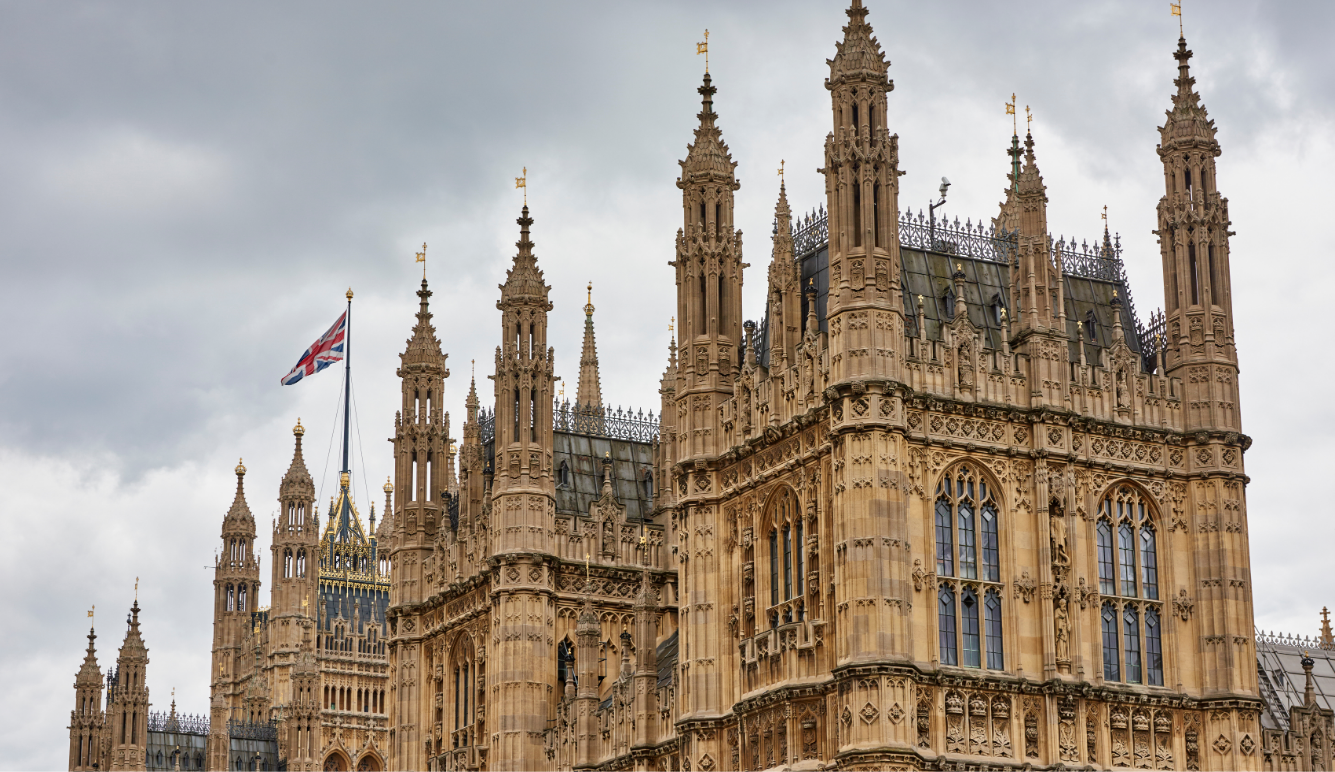
The proposed site for the development is Victoria Tower Gardens, next to Parliament. Its location next to Parliament is important, reflecting the importance of democracy and the dangers of allowing hate and intolerance to prevail.
While there is cross-party support for the concept of a Holocaust memorial and learning centre, significant concerns have been raised about its location, design, cost and security measures in place to protect it. The proposal has been litigated. In 2022, the High Court decided to quash planning permission for the development, on the basis of restrictions in section 8 of the London County Council (Improvements) Act 1900. Section 8 provides that land forming part of Victoria Tower Gardens shall be laid out and maintained for use as a garden open to the public, so (said the court) the use of the Gardens as a site for a memorial and learning centre would not be consistent with that duty.
Section 2 of the 2026 Act therefore removes this obstacle by providing that section 8 of the 1900 Act should not prevent construction or operation of the Memorial and Learning Centre.
The Act does not itself grant planning permission for the development. Planning permission is still required and a decision whether to grant or refuse permission will be retaken by a designated Minister within MHCLG, who remains isolated from the project to ensure fair, transparent and unbiased decision-making (noting that the applicant for planning permission is the Secretary of State for Housing, Communities and Local Government).
Fry, or Secure
An AI Data Centre in Bucks, which was approved under a called-in planning permission, has been through a bit of rigmarole. The Government conceded, as part of a judicial review, that there was a “serious error” in approving the development without an Environmental Impact Assessment. The Planning Inspectorate had concluded that the development was not EIA development. That conclusion was based on “the Energy Statement and Sustainability Statement, which between them outlined a suite of mitigation measures, including, for example, the adoption of the Climate Neutral Data Centre Pact relating to the sourcing of low-carbon energy..” However, those mitigation measures were not secured.
In a letter conceding the judicial review, the Government stated that “Following the Supreme Court’s decision in CG Fry & Son Ltd v SSHCLG [2025] P.T.S.R. 1823, the Secretary of State no longer considers these could be secured at Reserved Matters stage, contrary to the position taken in his defence of 16 September 2025 (which pre-dated the Fry judgment)”.
Importantly, the Secretary of State made no admissions on the remaining elements of the judicial review challenge, including whether there was a need to assess the climate emissions of running the computers as part of the screening process. As we get more data centre decisions, including potentially the first data centre DCO, this will be an interesting one to watch, not least because though the Government has conceded, the developer is proceeding with challenging the decision.
Correct me if I’m wrong
Last week saw the making of a correction order in respect of the Gatwick Airport Northern Runway Project DCO. It is (by Angus’ calculations) the 97th(!) correction order under the 2008 Act. Correction orders are not to be confused with correction slips. The latter are used to correct typographical or formatting errors. The former address more substantive (though minor) errors in the DCO, for example incorrect plot numbers in land plans.
The Gatwick Order runs to a full eight pages of correctable errors. Whilst on Gatwick, the hearing into the legal challenge to grant the DCO, brought by Communities Against Gatwick Noise Emissions, concluded on 23rd January. The key grounds of challenge are noise and pollution; climate change and emissions, overreliance on the Jet Zero Strategy and wastewater. The judgement is anticipated at the end of February, so we will cover that in a later blog.
We missed it at the time but another correction order was also made on 8 January 2026, this time in relation to the Port of Tilbury (Expansion) Order 2019. The request for the correction was made on 3 April 2019 – so nearly seven years ago! Correction slips can sometimes follow long after the event too – the Thames Tideway Tunnel Order 2014 was the subject of a correction slip as late as 2020.
This publication is intended for general guidance and represents our understanding of the relevant law and practice as at January 2026. Specific advice should be sought for specific cases. For more information see our terms & conditions.


Get in touch

%20%C3%94%C3%87%C3%B4%20790px%20X%20451px%2072ppi%20MANCHESTER5.jpg)

%20%C3%94%C3%87%C3%B4%20790px%20X%20451px%2072ppi2.avif)
%20790px%20X%20451px%2072ppi.jpg)

%20%C3%94%C3%87%C3%B4%20790px%20X%20451px%2072ppi2.jpg)





Related services
Get in touch


Insights & events

Infrastructure Planning Blog 72: Latest solar DCO decision analysed

Belong v Seddon: Can PCSA liabilities survive following execution of a JCT contract?

Northern Ireland Planning and Environment update: Energy


Infrastructure Planning Blog 70: Statistics on major projects, tech updates, and applying the new NPPF

Infrastructure Planning Blog 69: Application stocktake as changes to the Planning Act 2008 regime start to take effect

Infrastructure Planning Blog 68: Morecambe and a wise decision?

Adjudication Enforcement in Focus: When is an Agreement Agreed?
Infrastructure Planning Blog 67: Put out more flags

Infrastructure Planning Blog 66: Full BNG for NSIPs guidance published

Infrastructure Planning Blog 65: A beacon of light

Infrastructure Planning Blog 64: What does the updated National Planning Policy Framework mean for infrastructure?

Infrastructure Planning Blog 63: Harry Potter and the grave error

Infrastructure Planning Blog 62: The end of the challenges to expansion of Luton and Gatwick Airports

Infrastructure Planning Blog 61: More updates to PINS' advice

Infrastructure Planning Blog 60: New Secretaries of State, NPS consultations, PINS advice and local authorities




Impact of flexible working on towns and cities - the market and legal considerations

1 September – all change (again) for the Community Infrastructure Levy



Nick Evans joins TLT as partner placing the firm at the helm of infrastructure, planning, public law and future energy in the UK

TLT expands future energy and infrastructure expertise with new Partner appointment

TLT strengthens public sector infrastructure and future energy offering with two new partners

TLT strengthens construction expertise with third partner hire in six months
TLT adds 29 lawyers creating one of the largest practices of its kind in the UK

TLT grows projects infrastructure and construction team with appointment of new partner
TLT hires transport and renewable energy specialist supporting the expansion of its planning team

TLT Partner Appointed Chair of North West Fraud Forum | TLT

TLT Shortlisted for Firm of the Year at Scottish Legal Awards | TLT

TLT Wins Law Firm of the Year at Manchester Legal Awards | TLT

TLT Recognised for Two Awards at The Lawyer Awards 2022 | TLT

TLT Shortlisted for Two Manchester Legal Awards 2022 | TLT

TLT advises Network Homes on £140m sale to Grainger

TLT advises One Housing Group on major affordable housing project

TLT advises Town and Country Housing on modular homes acquisition



Preparing for the Procurement Act 2023 - construction industry focus

BNG - TLT and Belmont Estate talk nature positivity

What does the next generation of our cities look like?
Issues and trends driving the shape of our cities: expert view from Savills & TLT