Infrastructure Planning Blog
39: Fenwick Solar Farm, Sizewell C and EIA case law
This week’s bumper edition looks at the Fenwick Solar Farm decision, an important Scottish case about the environmental assessment for a wind farm and its associated grid connection, the latest Sizewell C challenge and the implementation of the Planning and Infrastructure Act 2025.
Boom!
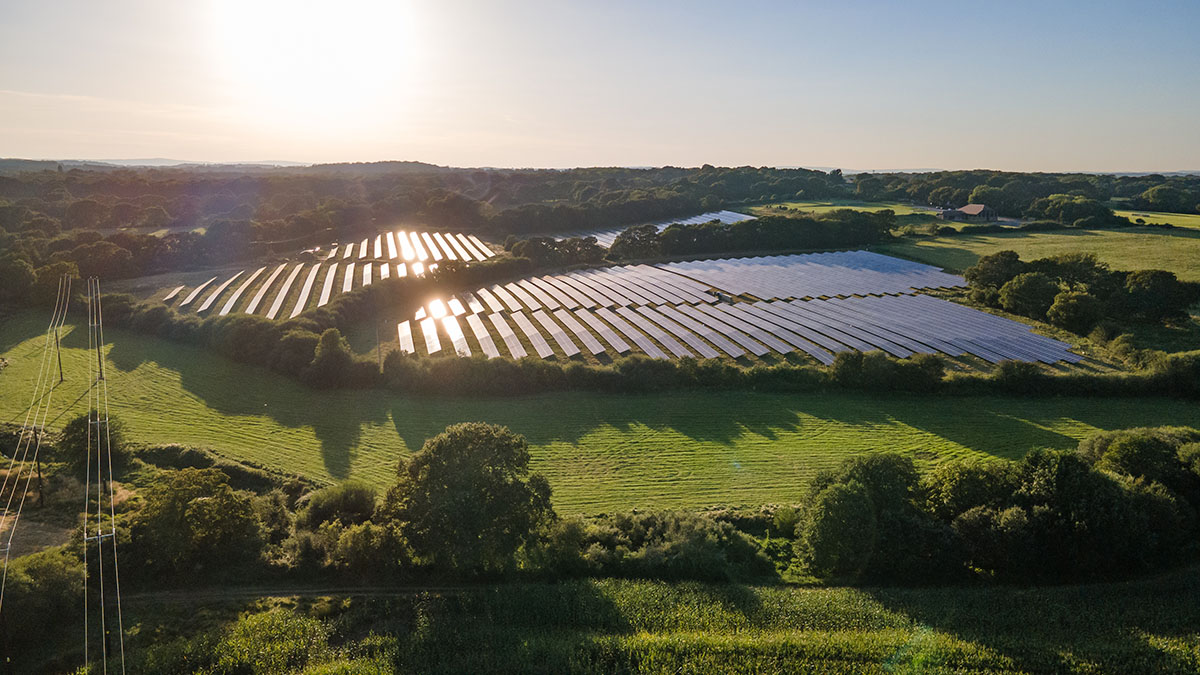
The Secretary of State (SoS) has granted consent for the Fenwick Solar Farm Project. The Order can be found here, the decision letter here and the Examining Authority’s report (recommending approval) here. The project is located to the north of Doncaster and has a generating capacity of up to 237.5MW. The developer is Boom Power.
There were only 55 relevant representations, three issue specific hearings, one compulsory acquisition hearing and 595 documents on the Planning Inspectorate project page, which is low these days. The decision letter is a mere 30 pages and was issued on time. Here are a few takeaways:
- The applicant sought consent for two potential grid connection options, either an underground cable to Thorpe Marsh substation or a connection to an existing 400kV overhead line tower located within the Order limits. This was because National Grid’s optioneering for the grid connection will follow post-grant of the development consent order (DCO). The SoS has granted consent to develop only a single option, via requirement 5.
- The DCO includes a requirement that two currently vacant listed buildings (Fenwick Hall and Lily Hall), which may be brought into residential use, must be subject to an operational noise assessment. The applicant will also be required to demonstrate it has incorporated appropriate mitigation to ensure the noise levels identified in the environmental statement are complied with (at Fenwick Hall and Lily Hall, the noise levels assume residential use). This was imposed to ensure the provision of a suitable residential environment should the buildings be brought into residential use (even if they aren’t).
- In common with most DCOs now, the biodiversity net gain (BNG) requirement includes specific minimum BNG requirements for habitat units (20%), hedgerow units (20%) and watercourse units (10%). A more general commitment to achieve 10% BNG overall does not seem to be enough.
Don’t go bacon my heart
In an important opinion delivered on 17 February, Scottish Ministers’ decision to approve the Wull Muir wind farm in the Scottish Borders was quashed by the Court of Session. The challenge was brought by Raeshaw Farms Limited, which is owned by billionaire investor Louis Bacon. Raeshaw operates a farm and estate close to the proposed wind farm and objected to the development.
The Court was considering whether the wind farm and its required off-site grid connection constituted a single project for the purposes of environmental impact assessment (EIA) (or was the grid connection a separate project the environmental effects of which could be assessed later). The reporter’s decision addressed this issue in the following terms (which merit setting out in full):
“An objector asserts that, as the appellant has not detailed the grid infrastructure that will be necessary to connect the proposal, it is impossible for the full environmental effects of this proposal to be assessed. I disagree. Whatever grid connection solution is ultimately proposed will (if it requires planning permission) be subject to its own evaluation. It is not part of the current proposal. The objector’s reference to the term “salami slicing” is misdirected. That properly refers to an attempt to circumvent the objectives of the EIA Directive and regulations by dividing what is in reality a single project into separate parts. In this instance, there has been no attempt to avoid the need for an EIA. The development proposal has been subject to EIA in the normal way and if a subsequent proposal for a grid connection were EIA development, that too would require to be assessed in accordance with the EIA regulations”.
The Court rejected this analysis. It found as follows:
- There had been a failure to conduct a “fact-specific evaluation” of whether the wind farm and its required off-site grid connection constituted a single project for which an EIA report that analysed the potentially significant cumulative effects of both aspects was required. The decision instead focused too narrowly on the way in which the application was framed rather than considering what was the true nature and scope of the project. The fact-specific evaluation requires consideration of multiple factors identified in case law, for example does one part of the proposal rely on the other; are both aspects of the proposal being promoted by the same entity; will they be determined by the same or separate consenting processes; what are the timescales for determination, etc.
- Salami-slicing is not about deliberately attempting to circumvent the objectives of the EIA Directive and regulations by dividing a single project into separate parts. What matters is the effect that a project is likely to have on the environment, so if by dividing a project into separate parts you fail to identify effects that are reasonably capable of assessment, that’s salami-slicing whether it was deliberate or not. Too much emphasis was also placed on the potential need for EIA in relation to the grid connection, yet that need was not a given.
- The decision erred in giving weight to the benefits of a completed, connected wind farm without also assessing the foreseeable disbenefits of the infrastructure needed to connect it to the grid.
The case has been remitted back to Scottish Ministers to consider afresh the issue of whether the whole project requires an EIA assessment. This is important. The court was not saying that a wind farm and grid connection will always be a single project for EIA purposes. But you do need to consider whether they are, properly, the same or separate projects.
Does this simply mean that, in many cases, a pragmatic approach may well be to accept that a generating station and associated grid connection are the same project, particularly where that grid connection will serve the generating station alone?
The level of assessment and reporting will then depend on the information reasonably available at the time of preparing the Environmental Statement (ES). After all, the purpose of an ES is to include the information reasonably required for reaching a reasoned conclusion on the significant effects of development on the environment, taking into account current knowledge and methods of assessment and as far as natural changes from the baseline can be assessed with reasonable effort on the basis of the availability of environmental information and scientific knowledge. Some guidance from Government on these important issues would be welcome.
Sizewell objectors taken to Tasc
The Court of Appeal has dismissed the latest attempt by Together Against Sizewell C Limited (TASC) to judicially review decision-making in relation to the Sizewell C Development Consent Order (DCO), granted in 2022. The Court of Appeal’s order including reasons can be found here.
This particular challenge centred on the publication of an external hazards report by the Office for Nuclear Regulation in 2024 as part of the nuclear site licensing process. Having considered that report, TASC wrote to the Secretary of State in 2025 requesting that he exercise his powers under the Planning Act 2008 to change or revoke the DCO. The SoS declined to do so.
TASC alleged that the external hazards report included a commitment by Sizewell C Limited to build two overland flood barriers (OFBs) to protect the site from flooding, should climate change be worse than is reasonably foreseeable. As the OFBs had not been proposed as part of the project considered during the examination process for the DCO, TASC said their impact on designated nature conservation sites and the environment, and consideration of alternative mitigation solutions, had not been assessed as part of the appropriate assessment of the project under the Conservation of Habitats and Species Regulations 2017.
The Court of Appeal rejected this argument. It held there was fundamental uncertainty as to whether and if so, when OFBs may need to be provided in this case. The inchoate nature of any scheme or design for their provision meant that it was open to the SoS, as competent authority, to take a staged approach and to conclude that consideration of cumulative effects of any later change to the project, if and when OFBs were subsequently applied for, may be deferred to that later stage. Echoes, then, of the Wull Muir decision above – multi-phase consenting and assessment is a tricky and much litigated issue.
Interestingly, the High Court had declared the case totally without merit. Section 13 of the Planning and Infrastructure Act 2025 provides that no appeal shall lie to the Court of Appeal from a refusal to apply for judicial review in a case within section 13 or 118 of the Planning Act 2008, if the High Court decides that the application for permission for judicial review is totally without merit. Section 13 of the 2025 Act only came into force on 18 February 2026, so did not apply in this case (and I think it is arguable that it was not a case within section 13 or 118 in any event).
Planning and Infrastructure Act 2025 latest
Finally, whilst on the subject of the Planning and Infrastructure Act 2025, a raft of further provisions came into force on 18 February. I have mentioned s13 above. The other provisions of Part 1 (Infrastructure) that came into force on 18 February are:
- s1, which requires the SoS to review a national policy statement (NPS) every five years;
- s2, which simplifies the Parliamentary laying requirements for certain changes to NPSs (e.g., where a change is made to reflect a court decision); and
- s10, which authorises examining authorities to make orders regarding the costs of any person who is an interested party or who makes a written representation.
For those interested in the full list, it can be found here. The next date for your Planning and Infrastructure Act diaries is 1 April 2026, when (only) s91 comes into force (this requires Natural England to publish an annual report on the exercise of its functions in relation to environmental delivery plans). There is still plenty that needs to be commenced though, perhaps most notably the (effective) abolition of pre-application consultation under s5.
This publication is intended for general guidance and represents our understanding of the relevant law and practice as at February 2026. Specific advice should be sought for specific cases. For more information see our terms & conditions.


Get in touch

%20%C3%94%C3%87%C3%B4%20790px%20X%20451px%2072ppi%20MANCHESTER5.jpg)

%20%C3%94%C3%87%C3%B4%20790px%20X%20451px%2072ppi2.avif)
%20790px%20X%20451px%2072ppi.jpg)

%20%C3%94%C3%87%C3%B4%20790px%20X%20451px%2072ppi2.jpg)





Related services
Get in touch


Insights & events
Infrastructure Planning Blog 72: Latest solar DCO decision analysed

Belong v Seddon: Can PCSA liabilities survive following execution of a JCT contract?

Northern Ireland Planning and Environment update: Energy


Infrastructure Planning Blog 70: Statistics on major projects, tech updates, and applying the new NPPF

Infrastructure Planning Blog 69: Application stocktake as changes to the Planning Act 2008 regime start to take effect

Infrastructure Planning Blog 68: Morecambe and a wise decision?

Adjudication Enforcement in Focus: When is an Agreement Agreed?

Infrastructure Planning Blog 67: Put out more flags

Infrastructure Planning Blog 66: Full BNG for NSIPs guidance published

Infrastructure Planning Blog 65: A beacon of light

Infrastructure Planning Blog 64: What does the updated National Planning Policy Framework mean for infrastructure?

Infrastructure Planning Blog 63: Harry Potter and the grave error

Infrastructure Planning Blog 62: The end of the challenges to expansion of Luton and Gatwick Airports

Infrastructure Planning Blog 61: More updates to PINS' advice

Infrastructure Planning Blog 60: New Secretaries of State, NPS consultations, PINS advice and local authorities




Impact of flexible working on towns and cities - the market and legal considerations

1 September – all change (again) for the Community Infrastructure Levy



Nick Evans joins TLT as partner placing the firm at the helm of infrastructure, planning, public law and future energy in the UK

TLT expands future energy and infrastructure expertise with new Partner appointment

TLT strengthens public sector infrastructure and future energy offering with two new partners

TLT strengthens construction expertise with third partner hire in six months
TLT adds 29 lawyers creating one of the largest practices of its kind in the UK

TLT grows projects infrastructure and construction team with appointment of new partner
TLT hires transport and renewable energy specialist supporting the expansion of its planning team

TLT Partner Appointed Chair of North West Fraud Forum | TLT

TLT Shortlisted for Firm of the Year at Scottish Legal Awards | TLT

TLT Wins Law Firm of the Year at Manchester Legal Awards | TLT

TLT Recognised for Two Awards at The Lawyer Awards 2022 | TLT

TLT Shortlisted for Two Manchester Legal Awards 2022 | TLT

TLT advises Network Homes on £140m sale to Grainger

TLT advises One Housing Group on major affordable housing project

TLT advises Town and Country Housing on modular homes acquisition



Preparing for the Procurement Act 2023 - construction industry focus

BNG - TLT and Belmont Estate talk nature positivity

What does the next generation of our cities look like?
Issues and trends driving the shape of our cities: expert view from Savills & TLT