TLT’s Future Energy Women’s Network brings together leaders from across the sector to share ideas, perspectives and experiences on the issues shaping the energy transition, as well as their careers and progression.
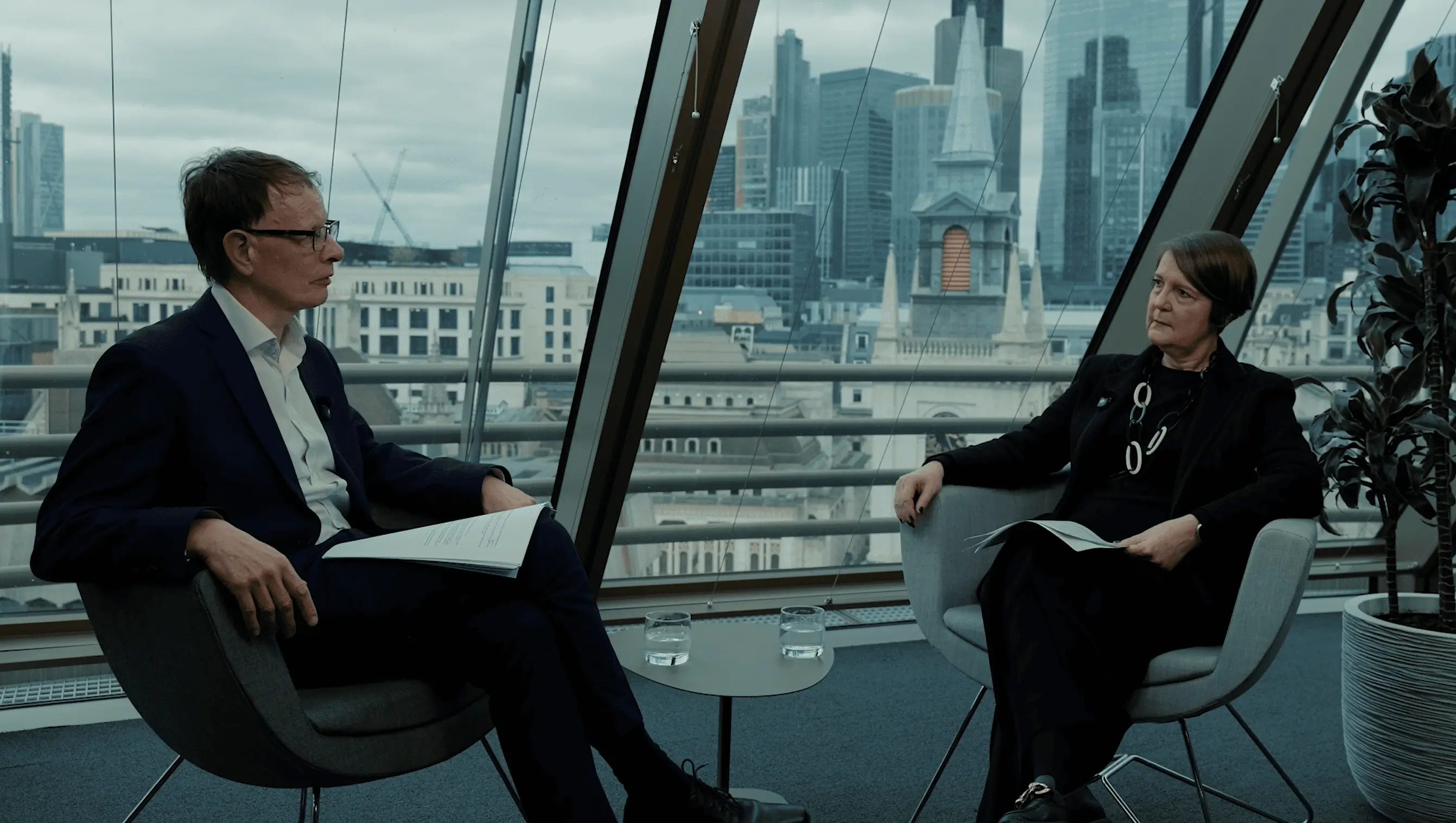
To mark the launch, senior women from across our future energy team came together to record a series of short conversations, sharing their perspectives on the industry, the challenges and opportunities clients are navigating, and insights from their own career journeys.
Real-time insight on the market and careers shaping future energy
Across the conversations, it’s clear that the market is moving rapidly, with multiple pressures landing at once. Grid reform, planning constraints, funding challenges and delivery risk are all shaping how projects move forward and where opportunity lies.
The women in our future energy teams unpack what evolving market issues mean day to day for clients and the sector. Land, grid access, funding and delivery decisions cannot be looked at in isolation, and the challenge is often how to bring them together under tight timelines. That need for joined-up thinking runs across each discussion and reflects the approach clients are increasingly looking for.
The conversations in the carousel below bring together voices from across our future energy team, offering a clear view of the market alongside personal insight into building careers in the sector. They share their experiences of their professional journeys in future energy, including progression into senior roles, the role of sponsorship and visibility, and how networks like TLT’s Future Energy Women’s Network can support development over time.
What the conversations cover?
- Real estate and land strategy
The growing importance of land, alongside planning constraints and access to grid, in shaping how projects are brought forward. - Planning and legislative change
The continued pressure to secure consent quickly, alongside evolving policy and regulatory frameworks. - Funding and investment
How financing models are shifting and the impact of grid reform on lender appetite and project structures. - Construction and delivery
Programme pressure, supply chain challenges and delivery risk, and how these are being managed in practice. - Corporate work and M&A
Changing deal timelines, investor behaviour and the wider market dynamics shaping activity. - Policy and regulation
Ongoing regulatory change and what clients should be watching as the landscape continues to evolve.
The future energy sector is complex, fast-moving and continues to evolve. What stands out is the need for practical thinking, collaboration and the ability to work across disciplines to move projects forward.
The content accurately reflects market conditions at the time of recording on 29 April 2026.
Meet the Future Energy team
Connect with our Future Energy team today – leading advisers to the global future energy sector..



%20%C3%94%C3%87%C3%B4%20790px%20X%20451px%2072ppi%20copy10.avif)

%20%C3%94%C3%87%C3%B4%20790px%20X%20451px%2072ppi2.avif)


%20%C3%94%C3%87%C3%B4%20790px%20X%20451px%2072ppi%20London.avif)




Video transcripts
MARIA
Hello and welcome to the launch of TLT’s Women in Future Energy Network.
This is a network that we've designed to bring together senior stakeholders who are involved in Future Energy across our brilliant sector and to provide an opportunity for networking, sharing insights, experience and connection.
Today I'm joined by Kay Hobbs, TLT’s Head of Future Energy from a corporate perspective, and thank you for joining.
KAY
Hello, nice to be here.
MARIA
So, Kay, we've worked together for a very, very long time and the sectors evolved significantly over that period. What first attracted you to a career in future energy?
KAY
Well, I'm going to be completely honest, as a trainee I just fell into it. Back then I think corporate future energy was a lot more niche than it is now. This is 20 years ago, and I found it pretty exciting, working on some of the UK's most groundbreaking large transactions – and that's really rare at the start of your career. And I just felt a passion straight away for it.
This is a sector that is having a real-world impact and I could see the direction of travel. I wanted to be a part of it, and I just wanted to make my mark on the sector. So here I am, 20 years later – and it's crazy to say that.
We're obviously women in this sector. From your perspective, what more can we do to encourage women into this sector? It’s changed a lot, I think it's fair to say, but it is still probably male dominated. What do you think we could do more?
MARIA
You’re absolutely right. And the sector has come a huge way in terms of various networks and forums that provide a platform for networking.
And maybe that networking just needs to be at a slightly different time of the day, taking into account other commitments. But I think it's providing the opportunity to network amongst friends and colleagues in our network in a really sort of positive collaborative way.
And I think being ambassadors for the great talent that we've got in our sector and the contribution that women in future energy make should absolutely be recognised and celebrated.
So, Kay as a senior leader within TLT. What advice would you give to those who are aspiring to get into those senior roles, not just the legal profession, but in our sector more widely?
KAY
There is a lot of advice you could give, but if I had to distil it into one key piece of advice, I think it's this. And I don't think being in a senior role is just about being technically excellent. That is a given.
Being in a senior role is more about leadership, judgement, making difficult decisions, influencing – and I think it's really important to choose an organisation that is truly going to support you and sponsor you to help develop that skill set, not just develop the technical excellency.
I've been really lucky in my career that I've had sponsors like you around me that have opened the doors, they've backed me, they've believed in me when I probably didn't believe in myself.
And I think that's the best way to harness talent and really maximise people's potential. I think in choosing the right organisation that is really going to support you to maximise your potential is absolutely key.
And just on that, Maria, you know, you've been in a senior role for a very long time now. What's at the top of your to-do list right now?
MARIA
You're absolutely right, Kay. And look, nearly 30 years and an absolute privilege to have worked in future energy, in the future energy sector for that entire period supporting our clients.
We've just been through the biggest grid reform that the UK has ever seen and it's now about supporting those clients through the next cycle of their projects and plans from all aspects of the legal advice that we provide. Ranging from real estate, through infrastructure planning, right the way through your world of corporate M&A.
So being side by side with clients, continuing to share those market trends and insights, I think is absolutely valuable. But there's no doubt that the next decade is certainly going to be an exciting one, particularly as the UK continues to strive to hit those net zero ambitions.
KAY
Thanks very much for your time today. I hope that's been insightful as to our experiences as women in this sector.
Please do look out for some of our other Energise2030 programmes and videos on our website. And if you'd like to be part of the TLT Women in Future Energy Network, then please do get in touch. We'd be delighted to have you on board.
LOWRI
Hello and welcome to TLT's Women in Future Energy Network, a conversation with series.
I'm joined by Krista, and today we're talking about the network, our career journeys, and what's in store for the future energy real estate.
So, Krista, you've been part of creating the TLT's Woman in Future Energy Network. What was the inspiration behind it?
KRISTA
I suppose that I recognised that women at a senior level face a distinct set of challenges and you know, most of the time we just quietly get on with it, find ways to cope, much like men do. But I think there are silent stressors that sometimes go unrecognised.
So the inspiration behind the network is really just to create a safe space where people can come to share information, share experiences, and really just to know that then they're not alone.
So, we hope that it will become a bit of a community. Something that people will look forward to coming to, and it will add genuine value both personally and professionally.
So, we've both recently been promoted to legal director, which we're really proud of. Looking back at your career, could you talk me through one of the obstacles you've had to face?
LOWRI
So I hate to say it, but probably one of the biggest obstacles was COVID.
I was a junior - well, we both were – five days in the office, learning through osmosis and in an open plan environment, listening to our seniors.
And I think probably one of the biggest projects that I worked on as a junior was because I heard a partner arranging an in-person and meeting that I just asked if I could go along to. So, going from that to five days at home and gradually going back into the office has been a big learning curve.
Now, that's not to say it's not a bad thing because TLT World – TLT’s commitment to flexibility, to make sure it works for both clients and colleagues have been a result of that. And it's been invaluable. It means that we probably get better focus time with our colleagues and with clients through teams meeting rather than ships passing in the night, so to speak, in the office.
And we do actually get – I think because we're at home more – incentivized to go out and see clients further afield. I think last year, one month I went to Bristol, Cardiff, London, Manchester and Liverpool in one month just to see people, which was great and you really get that face to face client experience.
KRISTA
We both work in the future energy real estate team here at TLT. Please could you talk me through a couple of key issues that some of our clients are facing at the moment?
LOWRI
I think anyone in the energy sector right now knows about the grid reforms. And whilst probably years ago everybody was banging on about the fact there wasn't enough connection, so we desperately needed it – there are teething problems with any new scheme.
And the grid reform has basically introduced a sort of queue for energy clients to ensure that people can hit their connection dates and are not delayed because of other projects that may be struggling to get them in the time frame that they're required.
But clients are becoming increasingly frustrated by the unknowns of the grid connection reforms and we're just trying our best to make our way through it.
Another issue is planning. We're finding increasingly that LPAs are under resourced both in terms of actual man resource and capacity, but also in energy expertise. And coupled with that, we're having increasing planning costs, which is altogether leading to uncertainty for investors in both connections and financial forecasting. And it's quite difficult, I think, for developers to sort of find their way through that currently.
KRISTA
Yeah, completely agree.
LOWRI
On that vein, and looking forward, what do you see as a trend for the next 12 months for our clients?
KRISTA
The biggest trend I think we're seeing now is that land isn't just a development asset, it's a strategic asset for clients. It's never been more important to secure land and understand it's worth. And the competition doesn't just come from other developers, now it's coming from data centre developers, real estate funds. It's fierce and it's important for our clients to understand the value of their projects.
And doing all this against the backdrop of grid reform is of course even more of a challenge.
LOWRI
Absolutely couldn't agree more.
KRISTA
Thank you for watching. We hope this has been a useful insight into our experience in working in real estate future energy.
Please keep a look out for other In Conversation videos which are part of our Energise2030 series, all available on our website.
And of course, if you'd like to be involved with our Women in Future Energy Network, please don't hesitate to get in touch.
Lorem ipsum dolor sit amet, consectetur adipiscing elit, sed do eiusmod tempor incididunt ut labore et dolore magna aliqua. Ut enim ad minim veniam, quis nostrud exercitation ullamco laboris nisi ut aliquip ex ea commodo consequat. Duis aute irure dolor in reprehenderit in voluptate velit esse cillum dolore eu fugiat nulla pariatur.
EMILY
Hello and welcome to the next instalment of TLT's Women in Future Energy Network series. Today I'm joined by Victoria, and we will be talking about our experiences working in the future energy sector and some recent market trends.
So, Vic, your career has spanned multiple firms and countries, all within the future energy sector. What is the biggest change you've seen in the sector during your career?
VICTORIA
I sound like a dinosaur when you say I've gone from multiple countries, multiple law firms! But what we've seen is that initially when the renewable sector first started out, there was single asset financing. Lenders were not familiar with the kind of technology. They were still risk averse, but now, it's evolved.
You're no longer dependent on government subsidies. Lenders are considering merchant revenues instead of just fixed revenues and they're combining both. We are seeing more portfolio financing as well. So definitely an evolution and a kind of shift in the market.
You've recently been promoted to partner, so well done. What advice have you got for anyone starting their career now?
EMILY
I would say that this is a sector that requires specialists – specialist lawyers, engineers, market analysts, developers.
As a junior entering this sector, I would say don't be afraid to specialise early. It is a sector that is evolving and there are always challenges but there is so much work to be done.
VICTORIA
So talking about challenges, grid is a challenge that renewables industry is facing at the moment. From the lender perspective, what do you see as the biggest challenge regarding grid?
EMILY
There's no sugar coating this is there. You know, grid reform has had a massive impact on developers and the viability of projects. Some of them have had their, their grid connections pushed out, but with long delays.
Some of them have had increased costs that have made that, that project not viable. And from a funding perspective that there's so much uncertainty around when those connection dates are going to be available for projects, which is a difficult thing for a funder relying on that certainty, as we've had previously – relative certainty.
But we are seeing Gate 2 offers come through now for those Phase 1 projects, which is a real positive and we're seeing those projects come into funding.
And we're also talking with lenders about how they can think about alternative structures because there's so much capital to deploy into the renewables sector and still an appetite. It's just making that structure work in this in this challenge.
But you know, the market does adapt quickly to change. So, what do you think we can expect to see in the next months, years?
VICTORIA
I think that your immediate challenge that you've identified is obviously how lenders mitigate this – Gate 2 connections, Gate 2 delays.
I think in the next few months or maybe six months, I think lenders will be funding more ready projects where you've got your EPC, you've secured grid, you know, permitting certainty. Lenders would like those projects for a longer term.
And how it will evolve? There will be more portfolio financing and definitely hybrid projects. So, different technologies – solar, wind – a combination of the three or combination of two, and then more platform financings at a whole core level where there's a diversification of risks from development projects, construction projects and operational projects, where the operational projects will offset the risk at the development level.
VICTORIA
Thank you for watching. We hope you enjoyed that little snapshot of the funding trends in the market at the moment. There are more videos on our website, so please feel free to take a look.
If you'd like to join the TLT’s Women in Future Energy Network, we'd love to hear from you.
TASH
Hello and welcome to the next instalment of TLT’s Women in Future Energy Network series. Today I'm joined by Maddie and we're going to be talking about some of our career highlights and some of the construction issues which are impacting the sector at the moment.
Madi, so coming to you, first of all, what does the average day look like for a construction lawyer?
MADI
Well, most of my days are spent helping clients deliver the physical assets that sit behind the energy transition.
So, I focus on getting projects from contract to construction whilst making sure that clients understand and manage associated risks.
Typically, this involves me helping clients shape their procurement strategies for these projects, negotiating key project documentation, but also helping clients in the delivery of those projects as issues arise.
The key thread through all of what I really do though is practical problem solving, so ensuring that clients can build, operate and finance these renewable projects with confidence.
So, Tash, with the future energy sector in mind, I know that you've got a very interesting career with over 15 years of experience in the energy sector. So, what makes the sector so interesting for you?
TASH
It's a sector that never stands still. Technologies develops really rapidly, and legislation is constantly shifting. If you look at the battery storage and grid infrastructure, for example, we're seeing new solutions being deployed increasingly rapidly to meet demand.
For an advisor, this means we're at the sharp end of change. We get to support our clients, developing solutions for what comes next rather than a reliance on reacting to the market after it's already happened.
MADI
Absolutely.
Now I suppose go in a little bit beyond legal services then. What are you seeing our key clients increasingly look for outside of the day-to-day legal advice that they also need?
TASH
That's a very good question. And you hear a lot of chat in the market about being the extension of in house legal, working as one team. That's something which is no longer lip service. This is something which in-house legal expect panel firms to deliver.
They want panel firms to come together to collaborate on training, on horizon scanning, on legal technology. The expectation is that panel firms will come to them with solutions.
In-house legal are being asked to deliver a lot, probably with a lot less resource in some cases, and hence the panel firms are now their go to for the sort of broader solutions that they need.
The other area is around the deployment and the utilisation of legal technology and AI. And again, it's about clients wanting their legal firms to identify areas where technology and AI can provide efficiencies, can provide cost savings and come to them with a solution.
So rather than in-house legal coming out and saying, ‘we think we've got this problem’, the expectation is that the law firm takes on that responsibility and really adds value by doing that.
Madi, coming back to the technical side, what issue is at the top of our clients’ to-do list from a construction perspective at the moment?
MADI
Undoubtedly in my experience currently programme is front and centre for our clients who are delivering and procuring energy projects.
There are many external factors that are impacting construction programmes, meaning that they are becoming increasingly exposed.
Some of these factors include long delivery times for key components and materials needed for the projects, as well as constraints in manufacturing capacity and lots of ongoing geopolitical pressures.
Now the combination of these factors mean, that quite often these construction projects are in delay before works even start on site.
So, the key focus for our clients from a construction perspective is making sure the programmes have been stress tested so that where there are any sort of supply chain or delivery issues that these are identified and that they are known and that the risks associated with those issues are mitigated, rather than sort of just assuming those issues away.
Thank you so much for watching. We really hope this has given you a valuable insight into the construction issues that are being faced in the sector, but also some insight into the future energy sector more widely.
Please look out for the other videos as part of our wider Energise 2030 series on our website. Also, if you're interested in joining TL T’s Women in Future Energy Network then please do get in touch.
ANTONIA
Hello and welcome to the next instalment of TLT’s Women in Future Energy Network series. I'm joined today by Kay, and we are here to talk about our experiences in the M&A and future energy sector.
Kay, what in corporate law in the Future Energy sector would you say makes it a particularly interesting place to work?
KAY
Good question. So, I think corporate law in the future energy space is particularly interesting because we are advising on transactions that are at the intersection of law, policy and real-life impact.
We are working on transactions that are fast paced. They can be technically complex at times and there are continual developments on the commercial side, on the financing side, on the regulatory side that mean that we need to be agile and innovative as to how we can cater for and overcome some of these twists and turns in the transaction documents.
So, in short, there is never any two days that are ever the same and we are constantly kept on our toes in this space.
ANTONIA
As a senior leader, what do you think is the most important thing that you can do in order to encourage more women in the sector?
KAY
Well, I've been really fortunate that even since the early days of my career, I've been really supported by the people around me.
And now that I'm in that senior role, it's my duty to pass the baton on and pick up the baton and do that for other women in this sector.
It's my role to identify talent, to encourage it, to support it. Yes, I can give them advice on my story and my back story, but it's not just about advising them how to get the roles. It's about me standing in the room saying that's the person for the role. And I think if we've got role models doing that, it's only going to encourage other women into the sector. It's going to unlock confidence; it's going to unlock progression. And I just want to be part of that.
And so, turning to some of the nuances that we see on a day-to-day basis on the M&A side of things, what impact do you think grid reform has had on the M&A space?
ANTONIA
The grid reform has created uncertainty over quite a prolonged period of time that has invited a more cautious approach by investors to all phases – not necessarily just the grid related one, even though particularly the grid related one that has slowed transaction timelines and in turn that has stretched developers that have seen each of the sale processes take longer than that they were anticipating.
We’re already seeing that change for a number of projects that have been successful in that process and investor appetite has definitely increased.
With that in mind, what do you see as the trends in the M&A future energy sector for the next 12 months?
KAY
A lot of what you've just said really that uncertainty around grid cost, grid connection dates is definitely making investors more selective.
There is a value shift not just to RTB projects, but to projects that now have a Gate 2 Phase 1 offer. So, we will see a lot of focus on those types of projects. Alongside that, I think it's fair to say that there are a number of players in the market who maybe didn't do as well in Gate 2 as they were hoping across their whole portfolios.
And as a result of that, we are seeing them now on the acquisition trail to fill the hopper, perhaps in a way that we wouldn't have seen before. So, I think that's definitely going to increase buyer competition.
And then alongside that, we are going to see a continued trend towards bigger and better projects coming to market. We've already seen a number of DCO projects change hands over the last 12 months. We will definitely see more come to market over the next 12 months.
KAY
Thank you for watching. I hope that was an interesting snapshot into the life of a clean energy M&A lawyer.
Please do keep an eye out for our other Energise2030 videos on our website and if you would like to join our TLT Women in Future Energy Network then please do reach out, we'd love to have you on board.
AMBER
Hello and welcome to the next instalment of TLT's Women in Future Energy Networks - In Conversation with series. I'm Amber Bains and today I'm joined by Juliet Stradling and Helen Raynsford, and we'll be talking about our career journeys and the key changes that we're seeing in terms of grid reform and energy regulation. So, Helen, you recently joined us as a partner in our team. What made you want to join TLT?
HELEN
Thanks, Amber. For me, the answer is simple. The pace of change in the energy sector at the moment, it's just phenomenal. And I wanted to be in a team that was really operating at the forefront of the energy transition. I wanted to work on the most complex energy regulatory matters. I wanted to work on novel structuring and for technologies that are new and really innovative.
So, for me what sets TLT apart is its market leading future energy practise because it really does that work – and it does it in a really unique way. It's as you know, a group of over 180 lawyers who work across a range of legal disciplines from planning to property construction, grid finance and corporate - the full lot. And in working together in that collaborative way, we can really advise our clients in the way that they understand and advise the project, so we can really work together in the most effective way.
Question back to you now, Amber, congratulations on your promotion to Senior Associate. What's one piece of advice you would give to someone looking for a career in this sector?
AMBER
Thank you. I think my key takeaway would be to build your network both internally, so with your immediate colleagues, but also colleagues outside your immediate team, but also crucially externally – so clients, people you might meet at networking events. Being able to phone a friend in this kind of sector is absolutely invaluable given that energy is so fast moving and it's project driven. It not only improves your own advice that you give clients, but it also helps to increase your passion for what you do because you're working with other really talented people.
Juliet, energy regulation can often be complex. What makes it such an interesting area to work in?
JULIET
So, I think it's probably the sort of breadth of the area. And I think energy regulation often seems like it's super specialised and possibly even slightly sort of on the dull side. But actually, I think that the things that come across our desk on a daily basis are, you know, incredibly varied. We don't often do the same thing twice and we see a whole range of commercial contracts and different regulatory issues.
And we also work across TLT. So, you know, a range of different legal disciplines and for a range of different clients. So, you know, our clients range from renewable generators, large government departments or licenced suppliers. So, they all have a slightly different perspective and different issues facing them.
HELEN
Amber, grid connection reform has been a major focus for the sector for some time. What should our clients be most aware of now in the coming months?
AMBER
So now that Gate 2 offers are starting to be issued, the focus needs to shift to project delivery. Developers need to ensure that their projects are progressing, that they're hitting milestones and that they avoid termination risk because no one wants to lose their place in the queue. In particular, battery developers need to be aware of the conversations that are being had around how to address the oversupply of storage. And also, if you're a data centre or another demand side project, there is upcoming demand reform which will not only impact projects who've already undergone the TMO4 process, but will also capture distribution level demand projects which were previously outside the scope of Gate 2.
Juliet and Helen – beyond grid reform, what are the key upcoming changes in the energy regulation sector that we should be looking out for?
HELEN
An area that I find particularly interesting at the moment is how the government is repurposing the CFD scheme, the support scheme for renewables, in order to address rising consumer costs.
And it's going to do so, it's stated a reason for doing so, is to break the link between electricity price and gas price. Now, decoupling gas and electricity pricing has been a major topic for the industry for some time. But actually, this issue has been really brought to the fore with recent geopolitical shocks. And I think the industry now is going to have to respond to these proposals. And we're here to help our clients think through how they can rethink their investment decisions and how to restructure deals and their contracts in order to respond to these changes.
JULIET
The other thing that I think is really interesting is Desnez's recent review of Ofgem and some of the proposals in there. In particular, there's a proposal to increase the scope of off Ofgem’s regulation.
So, there's a new concept of the energy system value chain. And the idea would be that that would allow different activities to be designated as a regulated activity fairly quickly and without further primary legislation. And that would be able to plug any gaps in the sort of regulatory net. And there have been gaps in recent years, possibly installers of low carbon technologies in people's homes. They haven't been subject to Ofgem direct regulation.
Another interesting area where Ofgem is going to have increased powers is to bring enforcement action against individuals where they're a designated person in a particular role at a regulated entity. And the other area is that Ofgem will have the power to bring enforcement action against connected companies to the regulated entity.
Much will depend on the detail and the wording, but I think clients are really going to want to watch how these policies evolve and look at their corporate structuring and the way their businesses operate.
HELEN
Thank you Juliet – and thank you for watching. We hope it's been a useful snapshot into changes in energy regulation and grid connection reform.
And if you'd like to find out more in the Women in Future Energy Network, or if you'd like to join us, do get in touch, we'd love to have you.

Insights & events

Infrastructure Planning Blog 73: Regulating regulators


FCA and PRA finalise new high loan-to-income mortgage framework – what lenders need to do now

Fire and rehire reform delayed until March 2027: what employers must do now

Pub & Bar - five points for planning special events

Tax Matters October 2026: What you need to know and act on this month

DMCCA subscriptions regime: Are you ready for 1 January?

FCA's CFD pricing findings: the Consumer Duty lessons every financial services firm needs to act on

FCA sets out roadmap to expand consumer access to investments

From risk to resilience: Practical tips for navigating supplier contracts in times of economic uncertainty

ICO secures data protection improvements from leading AI developers: What this means
Infrastructure Planning Blog 72: Latest solar DCO decision analysed

SFO whistleblower rewards: why financial services firms need to act now

The Electronic Communications Code in court: Five lessons operators should be acting on now


Belong v Seddon: Can PCSA liabilities survive following execution of a JCT contract?

.png)














TLT celebrates growing recognition in Birmingham and the Midlands

TLT Scottish growth reflected in strong Legal 500 and Chambers rankings
Another strong year of recognition for TLT in Chambers UK 2027

TLT advises student property business on sale to MCR Property Group

Two top TLT Partners retain ‘Green Ambassador’ status

TLT advises diagnostic imaging company on acquisition of Burgess Diagnostics

TLT secures HALA reappointment as affordable housing sector enters a new era of growth

TLT advises industrial component supplier on management buyout

TLT advises McCarthy Marland on sale of waste management business


TLT secures triple award shortlisting at British Legal Awards
Continued success for TLT in The Legal 500 UK 2027 Guide

TLT advises shareholders of PDC Group on sale to legal services platform
TLT Commended at Financial Times Innovative Lawyers Awards Europe 2026
Public sector AI adoption at pivotal point, new TLT report finds

TLT strengthens Real Estate offering with appointment of social housing specialist as Partner

Energise2030: Data Centres, grid reform and the race for power

ESG in Action: Nature recovery in action: What Belmont Estate can teach business

ESG in Action: Where capital meets conservation with Rebalance Earth

ESG in Action: How to work well in high-pressure environments with the Mindful Business Charter

ESG in Action: Turning clauses into climate action with The Chancery Lane Project

ESG in Action: From nice to necessary: The business case for wellbeing

ESG in Action: Financing change and changing finance with Triodos Bank

The Balancing Act: Unblocking regeneration - public land, risk and delivery

ESG in Action: Working better with Working Families: Flexibility in the workplace

The Balancing Act: Regeneration by the community, for the community

ESG in Action: The future starts at school: Embedding sustainability early with The Green Britain Foundation


The Balancing Act: Regeneration beyond the contract
Energise2030: Developing energy projects for the long-term

The Balancing Act: Partnerships, trust and patient capital

ESG in Action: Inside the Government Legal Department’s social mobility agenda

DMCC Act subscription contract rules: Everything you need to know



SMConnect Webinars: Practical Insight for leaders in SMCR roles


International Fintech Case Study: Brexit Contract Migration | TLT

UK Utilities Case Study: Employment Law and Brexit Planning | TLT

TLT oversees an international acquisition of a specialised South West business

TLT advises on the £90m sale of long-standing client's business


Advising a fast-growth eCommerce consultancy on a share capital sale and reinvestment

Bitesize ERA - Episode 8: Preparing for the new trade union access rights to the workplace

Investing in Canada: Five essential tax questions with TLT and BLG

UK tax considerations for international investors: Five essential questions with TLT and Holla

Bitesize ERA - Episode 7: Modernising trade union ballots under the ERA reforms

The Netherlands as a gateway to Europe: Five essential tax questions with TLT and Holla Legal & Tax

TLT’s Future Energy Women’s Network video series: Insights from women working across the future energy market
Bitesize ERA - Episode 6: Delivering change under the ERA reforms